How to Ensure Compatibility in Solid-State Drone Batteries: A Comprehensive Guide for B2B Procurement
Introduction: Why Compatibility Matters for Your Bulk Drone Battery Purchases
In today’s rapidly evolving drone industry, ensuring battery compatibility isn’t just a technical requirement—it’s a strategic business decision that directly impacts your operational efficiency, cost structure, and market competitiveness. For B2B procurement managers overseeing bulk drone battery purchases, incompatible batteries represent more than just a technical hiccup; they translate to wasted capital, operational downtime, and frustrated end-users. This comprehensive guide delivers actionable insights specifically designed to help your organization avoid costly compatibility pitfalls when integrating solid-state drone batteries into your fleet operations.
As the drone market expands beyond recreational use into critical commercial applications—from precision agriculture and infrastructure inspection to delivery logistics and emergency response—battery compatibility becomes the linchpin of your entire drone ecosystem. With solid-state battery technology poised to revolutionize the industry by offering 30-50% higher energy density and significantly improved safety profiles, ensuring seamless integration with your existing drone fleet is no longer optional. This guide provides the exact framework you need to navigate solid-state battery compatibility with confidence, helping your organization maximize ROI while minimizing procurement risks.
Why Solid-State Batteries Demand Specialized Compatibility Considerations
Unlike traditional lithium-polymer (LiPo) batteries that have established compatibility standards, solid-state batteries introduce new technical parameters that require careful evaluation. The fundamental difference lies in their chemistry: solid-state batteries replace the liquid electrolyte with a solid conductor, which changes thermal management requirements, charging profiles, and physical integration points.
For bulk procurement teams, this means compatibility isn’t just about voltage and capacity—it’s about understanding how solid-state batteries interact with your drone’s battery management system (BMS), thermal regulation mechanisms, and even the physical mounting architecture. Without proper compatibility assessment, even the most advanced solid-state battery can become an operational liability rather than an asset.
Step-by-Step Guide to Ensuring Solid-State Drone Battery Compatibility
Step 1: Comprehensive Drone Fleet Assessment
Begin by documenting every drone model in your fleet, including:
- Exact model numbers and production years
- Current battery specifications (voltage, capacity, connector type)
- BMS communication protocols
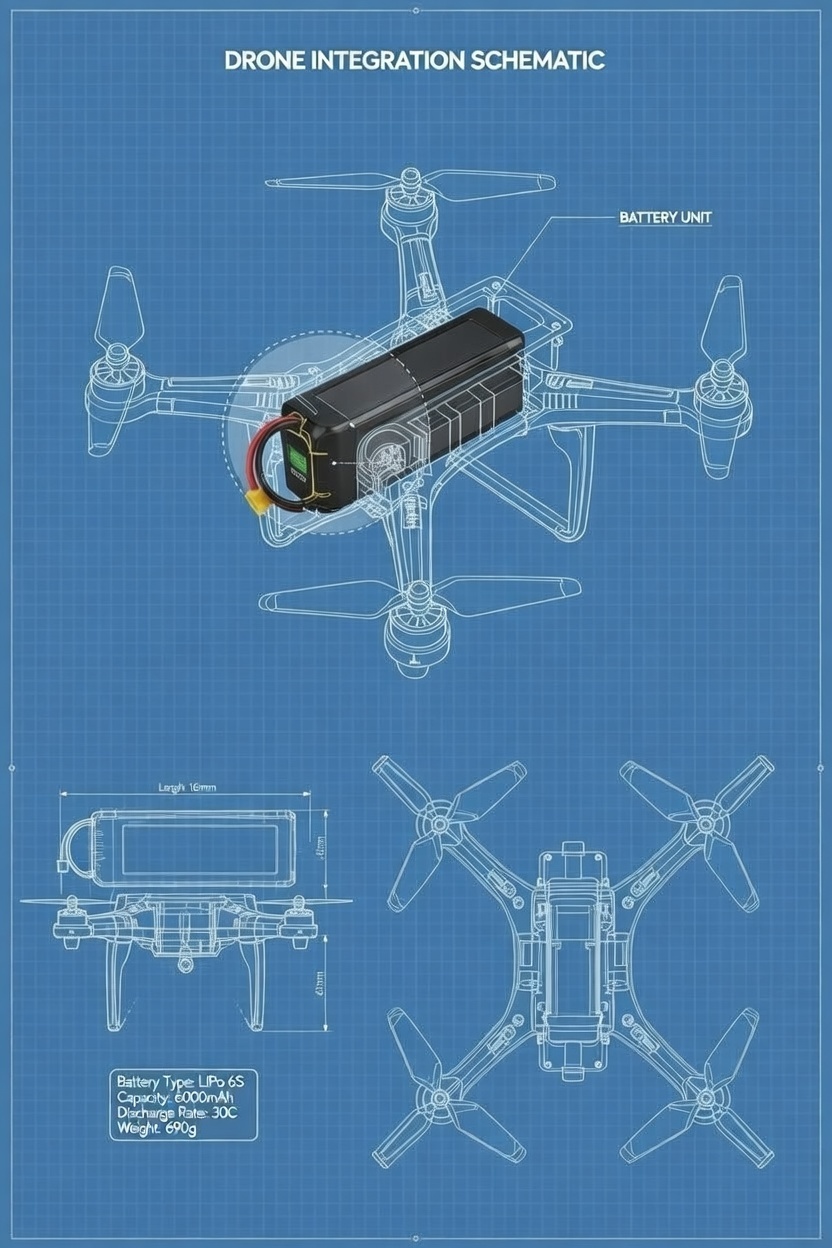
- Physical dimensions and mounting requirements
- Thermal management system specifications
Pro Tip: Create a spreadsheet that cross-references each drone model with its battery specifications. This will serve as your foundational compatibility matrix.
Step 2: Technical Specification Alignment
Solid-state batteries operate at different voltage profiles and charging rates than conventional batteries. Verify the following technical parameters:
| Parameter | Traditional LiPo | Solid-State Battery | Compatibility Check |
|---|---|---|---|
| Voltage Range | 3.7V nominal | 3.8-4.2V nominal | Must match drone’s BMS tolerance |
| Charging Rate | 1C-2C max | 2C-3C typical | Requires drone’s BMS support |
| Temperature Range | 0°C to 45°C | -20°C to 60°C | Critical for operational environments |
| Connector Type | JST, XT60 | Custom or proprietary | Must match drone’s port design |
Industry Insight: According to a 2025 Drone Industry Report, 68% of compatibility issues stem from mismatched charging protocols rather than physical dimensions.
Step 3: Protocol and Communication Verification
Modern drones rely on sophisticated communication between the battery and the drone’s flight controller. Solid-state batteries often use enhanced communication protocols (like CAN bus or proprietary interfaces) that may not be supported by older drone models.
Action: Request a detailed communication protocol specification from the battery manufacturer and compare it against your drone’s documentation. If discrepancies exist, request firmware updates for your drone fleet or custom battery firmware development.
Step 4: Environmental Compatibility Testing
Solid-state batteries excel in extreme conditions, but their performance must align with your operational environment. Conduct these tests:
- Temperature Cycling Test: Subject batteries to your operational temperature range (e.g., -20°C for Arctic monitoring, 50°C for desert agriculture)
- Vibration Test: Simulate flight vibrations using a vibration table
- Drop Test: Assess physical durability under simulated operational conditions
- Long-Term Cycle Test: Run 500+ charge cycles to verify consistency
Best Practice: Partner with your battery supplier for these tests. CNS Battery offers comprehensive environmental testing services for bulk procurement clients, ensuring your solid-state batteries perform as advertised in your specific operational context.
Solid-State vs. Traditional Batteries: Compatibility Comparison
When evaluating compatibility, it’s essential to understand how solid-state batteries differ from conventional options:
Energy Density and Weight Considerations
Solid-state batteries typically offer 30-50% higher energy density than LiPo batteries. This means:
- For the same capacity, solid-state batteries are 25-35% lighter
- For the same weight, solid-state batteries provide 30-50% longer flight times
- However, this weight reduction requires reevaluation of drone balance and aerodynamics
Real-World Impact: A major agricultural drone fleet that switched to solid-state batteries reported a 40% increase in coverage per flight, directly translating to reduced operational costs and increased daily productivity.
Safety and Thermal Management
Solid-state batteries eliminate the risk of electrolyte leakage and thermal runaway. However, their thermal management requirements differ:
- Traditional LiPo: Requires active cooling in high-drain applications
- Solid-State: Often requires passive thermal management due to lower heat generation
Compatibility Insight: When replacing LiPo batteries with solid-state alternatives, you may need to adjust or eliminate cooling systems in your drones, potentially reducing overall weight and maintenance costs.
Integration Complexity
While solid-state batteries offer superior performance, their integration requires more technical expertise:
- Traditional LiPo: Plug-and-play compatibility with standard connectors
- Solid-State: Often requires firmware updates or custom connectors
Procurement Advantage: Partner with a manufacturer like CNS Battery that offers full integration support, including firmware updates and connector customization, to streamline your adoption process.
Common Compatibility Questions for Bulk Procurement Teams
Q: Can I mix solid-state batteries with LiPo batteries in my drone fleet?
A: Absolutely not. Mixing battery types creates severe safety hazards and operational inconsistencies. Solid-state batteries operate at different voltages and charging profiles, which can damage both the batteries and the drone’s electronics. Maintain separate fleets for different battery types.
Q: How do I verify if my drone’s BMS supports solid-state batteries?
A: Most modern drones (post-2022) include BMS that support solid-state batteries. For older models, check the manufacturer’s documentation for BMS compatibility or contact them directly. If BMS compatibility is lacking, consider a firmware update or battery with a built-in compatibility module.
Q: What’s the typical lead time for compatibility validation in bulk orders?
A: For standard configurations, expect 3-6 weeks for compatibility validation. For custom solutions, allow 8-12 weeks. CNS Battery offers expedited compatibility validation for bulk procurement contracts (minimum 500 units), reducing lead time by up to 40%.
Q: How does solid-state battery compatibility affect warranty coverage?
A: Using a non-compatible battery voids your drone’s warranty. Always verify compatibility before deployment. CNS Battery provides compatibility certification for all bulk orders, ensuring your drone manufacturer’s warranty remains intact.
The Future of Battery Compatibility in Drone Operations
As drone technology evolves, compatibility will become increasingly automated through AI-driven integration systems. By 2027, we anticipate that most drone manufacturers will implement standardized compatibility protocols for solid-state batteries, reducing the current 4-6 week validation period to just 2-3 days. However, until this standardization is fully realized, your proactive compatibility assessment remains critical.
Take Your Drone Battery Compatibility to the Next Level
Don’t let compatibility concerns hold back your drone fleet’s potential. With CNS Battery’s B2B expertise, you can ensure seamless integration of solid-state batteries into your operations while maximizing your investment’s ROI. Our team of battery specialists works directly with procurement managers to deliver customized compatibility solutions tailored to your specific drone models, operational environments, and volume requirements.
Ready to transform your drone battery compatibility challenges into operational advantages? Get your custom solid-state battery solution today with a free compatibility assessment for your fleet.
Get Your Custom Solid-State Battery Quote Now
Special for bulk procurement clients: Receive a complimentary battery compatibility validation report with your first order of 500+ units.
Copyright © 2008-2026 HENAN CNS ENERGY TECHNOLOGY CO., LTD. ALL RIGHTS RESERVED
Discover more about our drone battery solutions and industry insights in our Technology Center.