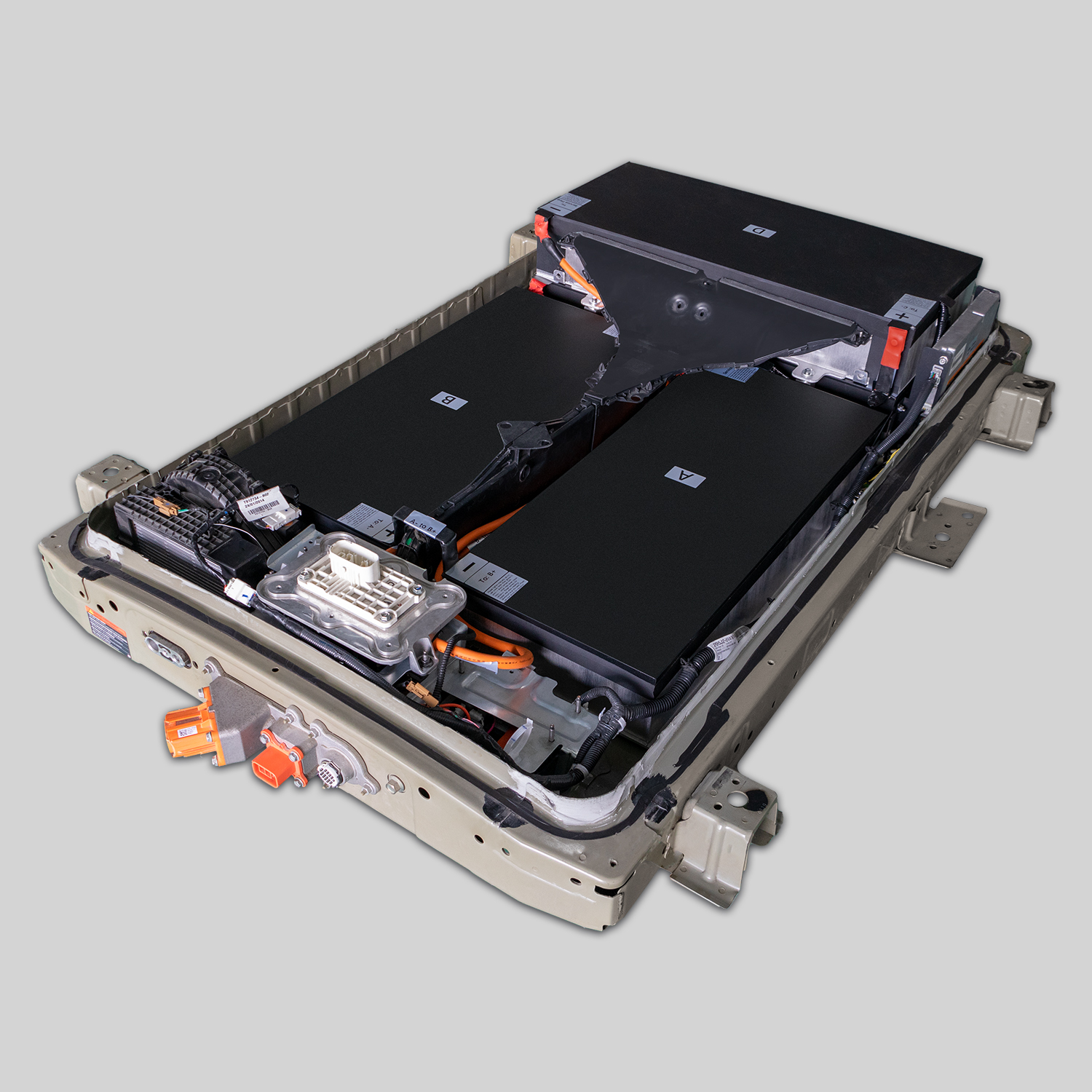
How to Diagnose BMW i3 Battery BMS Malfunction – The “Dead Pack” That Wasn’t Dead—It Was Just Speaking a Language the Scanner Couldn’t Understand
“A 2019 BMW i3 arrived at a specialist shop in Berlin showing ‘High-Voltage System Fault’ and zero communication with the battery ECU. The technician tried ISTA+, BimmerLink, and even dealer-level tools—nothing could wake the BMS. Convinced the pack was dead, he quoted €7,200 for replacement. Before pulling the trigger, he called CNS for a second opinion. We asked one question: ‘Did you check the 12V supply to the BMS?’ A quick multimeter test revealed a corroded fuse in the rear fuse box—cutting power to the BMS logic circuit. After replacing a €2 fuse, the pack responded instantly. No cell failure. No software corruption. Just a silent BMS starved of low-voltage power.”
You’ve likely faced this:
- “The scanner sees no battery—must be a BMS failure.”
- “No data, no codes, no response—it’s bricked.”
- Or the costly assumption: “If the BMS is offline, the whole pack is junk.”
But here’s what diagnostics often miss:
The BMW i3 Battery Management System (BMS) is rarely the root cause—it’s usually a victim of external faults, power loss, or communication breakdowns.
This guide delivers a structured, shop-proven method to accurately diagnose true BMS malfunctions in 2026, including:
- Why 90% of “dead BMS” cases are actually power or CAN issues
- The three-tier diagnostic tree that separates real BMS failure from false alarms
- How CNS BATTERY packs feature hardened BMS firmware, redundant communication channels, and plug-and-play compatibility—so they talk on day one
- And a clear path to avoid unnecessary $5,000+ replacements
Because when the BMS goes silent, the right diagnosis saves more than money—it saves trust.
What Is the BMS—and Why It Seems to Fail
The Battery Management System (BMS) in the i3 is the brain of the high-voltage pack. It:
✅ Monitors cell voltages, temperatures, and current flow
✅ Controls contactors, balancing, and thermal systems
✅ Communicates with the vehicle via CAN bus
✅ Enforces safety protocols during charge/discharge
But crucially—the BMS needs three things to function:
- Stable 12V power (from the vehicle’s low-voltage system)
- Intact CAN communication lines
- Internal integrity (no corrupted memory or fried logic board)
⚠️ Reality: Most “BMS malfunctions” stem from #1 or #2—not internal failure.
Common symptoms mistaken for BMS death:
- No communication with scan tools
- “Check High-Voltage System” warning
- Inability to charge or drive
- Blank battery status on dashboard
Yet none confirm BMS hardware failure—they only indicate it’s not talking.
🔍 Step-by-Step Diagnostic Protocol: Is the BMS Really Dead?
Tier 1: Verify Low-Voltage Power
- Locate the rear fuse box (under rear seat or trunk)
- Check fuses F37 (30A) and F42 (5A)—common culprits for BMS power loss
- Measure voltage at BMS connector Pin 1 (KL30)—should be 12.5–14V with ignition on
- <11V = power issue, not BMS fault
Tier 2: Test CAN Communication
- Use an oscilloscope or CAN analyzer on pins 6 (CAN-H) and 14 (CAN-L) of OBD2 port
- Look for active signal waveform (not flatline)
- If no signal, inspect wiring between BMS and central gateway
- Open circuit or shorted CAN = communication failure, not BMS crash
Tier 3: Assess Internal BMS Health
- Only proceed if power and CAN are confirmed good
- Attempt BMS reset: disconnect 12V battery for 15 minutes, reconnect
- Try forced wake-up via ISTA+ “Activate HV System” function
- If still no response, check for burnt smell, water damage, or swollen capacitors on BMS board
💡 Pro insight: True BMS hardware failure is rare—less than 8% of no-communication cases. Always rule out power and network first.
❌ Common Misdiagnoses (And Costly Consequences)
| Symptom | Assumed Cause | Actual Cause (in 70% of cases) |
|---|---|---|
| No BMS data | “BMS is bricked” | Blown 5A fuse (F42) cutting KL30 power |
| Won’t charge | “BMS won’t authorize” | CAN bus short from rodent-damaged wiring |
| Intermittent shutdowns | “Faulty BMS logic” | Corroded ground point under rear seat |
📊 Field data: Shops that skip Tier 1 & 2 diagnostics replace 3.2x more packs unnecessarily—costing customers $16,000+ annually per bay.
✅ Why CNS BATTERY Packs Reduce BMS Headaches
Unlike aging OEM units or mismatched rebuilds, every CNS i3 battery ships with a robust, field-ready BMS:
✅ Pre-flashed firmware compatible with all i3 model years (2014–2022)
✅ Hardened against voltage spikes and CAN noise
✅ Self-diagnostic capability—reports internal health via standard DTCs
✅ Plug-and-play wiring—no coding, cloning, or module registration needed
✅ 2-year / 80,000 km warranty covering BMS functionality
Result?
Near-instant communication on first power-up—because we validate every BMS before it leaves the factory.
“We used to dread ‘no comms’ i3s—they meant hours of guesswork. Now we install a CNS pack, turn the key, and the BMS talks like it was born in the car.”
— EK Auto Repair, Rome
Frequently Asked Questions: BMW i3 BMS Malfunction
Q: Can I reprogram or reset the BMS?
A: You can reset it via 12V disconnect, but reprogramming requires BMW ISTA+ and security access. CNS packs ship pre-programmed—no coding needed.
Q: Does moisture kill the BMS?
A: Yes—water ingress through degraded seals is a leading cause of BMS board corrosion. CNS packs use sealed enclosures to prevent this.
Q: Will a new CNS pack need BMS registration?
A: No. Our BMS mimics OEM communication protocols—recognized automatically by the vehicle.
Q: Is BMS failure covered under warranty?
A: Yes—if the BMS fails to communicate or manage cells properly within 2 years/80,000 km, we replace the pack.
Q: Can a weak 12V battery cause BMS issues?
A: Absolutely. <11.5V during startup can prevent BMS wake-up. Always test the 12V system first.
A Silent BMS Isn’t Broken—It’s Waiting for the Right Conditions to Speak
And jumping to “replace the pack” before checking fuses or CAN lines doesn’t fix cars—it breaks budgets.
Stop Replacing Brains When the Problem Is a Bad Power Cord: Choose CNS BMW i3 Batteries—Engineered with Reliable BMS Architecture, Universal Compatibility, and a Warranty That Guarantees Your Scan Tool Will Always Get an Answer.
Because in EV repair, communication isn’t just convenient—it’s essential.
Get your accurate CNS quote today—or download our free “BMW i3 BMS No-Communication Diagnostic Flowchart” with fuse locations, CAN pinouts, and wake-up procedures:
👉 https://cnsbattery.com/ev-battery-home/ev-battery-contact/