How to Choose the Best Low-Temperature Drone Battery for Real Estate
The real estate industry is no longer just about open houses and glossy brochures. In 2024, it is defined by immersive visual storytelling. For real estate professionals, capturing the majestic sprawl of a property at golden hour or showcasing the architectural integrity of a commercial building requires a drone that performs flawlessly. However, when the temperature drops, standard drone batteries often fail to deliver, leaving professionals grounded when the light is best.
Choosing the best low-temperature drone battery is not merely a technical specification; it is a strategic investment in reliability, operational efficiency, and the ability to close deals regardless of the season. This guide navigates the complexities of lithium polymer technology to help real estate professionals select a battery that thrives in the cold.
Understanding the Science of Cold Weather Flight
Lithium polymer (LiPo) batteries are the standard for commercial drones due to their high energy density and discharge rates. However, their chemical composition is sensitive to temperature. When the mercury falls below 15°C (59°F), the internal resistance of a standard LiPo battery increases. This resistance leads to a voltage drop, which the drone interprets as a low battery, triggering an emergency landing—even if the battery is fully charged.
For real estate photography, this is a critical failure. Imagine losing connection over a sprawling estate just as the sun breaks through the clouds. The best low-temperature drone batteries utilize advanced electrolyte formulations and cell stacking technologies that reduce internal resistance. These batteries are engineered to operate efficiently at temperatures as low as -30°C (-22°F), ensuring that the drone’s flight time and stability remain consistent with the manufacturer’s specifications.
The Real Estate Professional’s Checklist
Selecting the best low-temperature drone battery involves more than just checking a “cold weather” box. It requires a holistic evaluation of the battery’s specifications against the specific demands of real estate photography.
1. Energy Density and Flight Time
Real estate photography often involves complex flight paths to capture the flow of a property. The best low-temperature drone batteries maintain a high energy density, typically measured in Watt-hours per kilogram (Wh/kg). A higher energy density means a lighter battery can produce more power. For real estate professionals, this translates to longer flight times without adding weight that could destabilize the drone during cinematic maneuvers.
2. Discharge Rate and Stability
High-resolution real estate photography demands a rock-steady platform. The discharge rate, measured in “C,” indicates how quickly the battery can deliver power. A high discharge rate ensures that the drone’s motors receive a consistent power supply, even during rapid adjustments to frame a shot. For real estate, a battery that supports a continuous discharge rate of 20C to 30C is ideal, providing the headroom needed for smooth operation.
3. Intelligent Battery Management Systems (BMS)
The best low-temperature drone batteries feature sophisticated Battery Management Systems (BMS). These systems do more than just monitor charge levels; they actively manage the temperature of the cells. For real estate professionals operating in variable climates, a BMS that includes low-temperature charging protection is essential. This feature prevents the battery from charging if the internal temperature is too low, protecting the investment and ensuring safety.
4. Compatibility and Integration
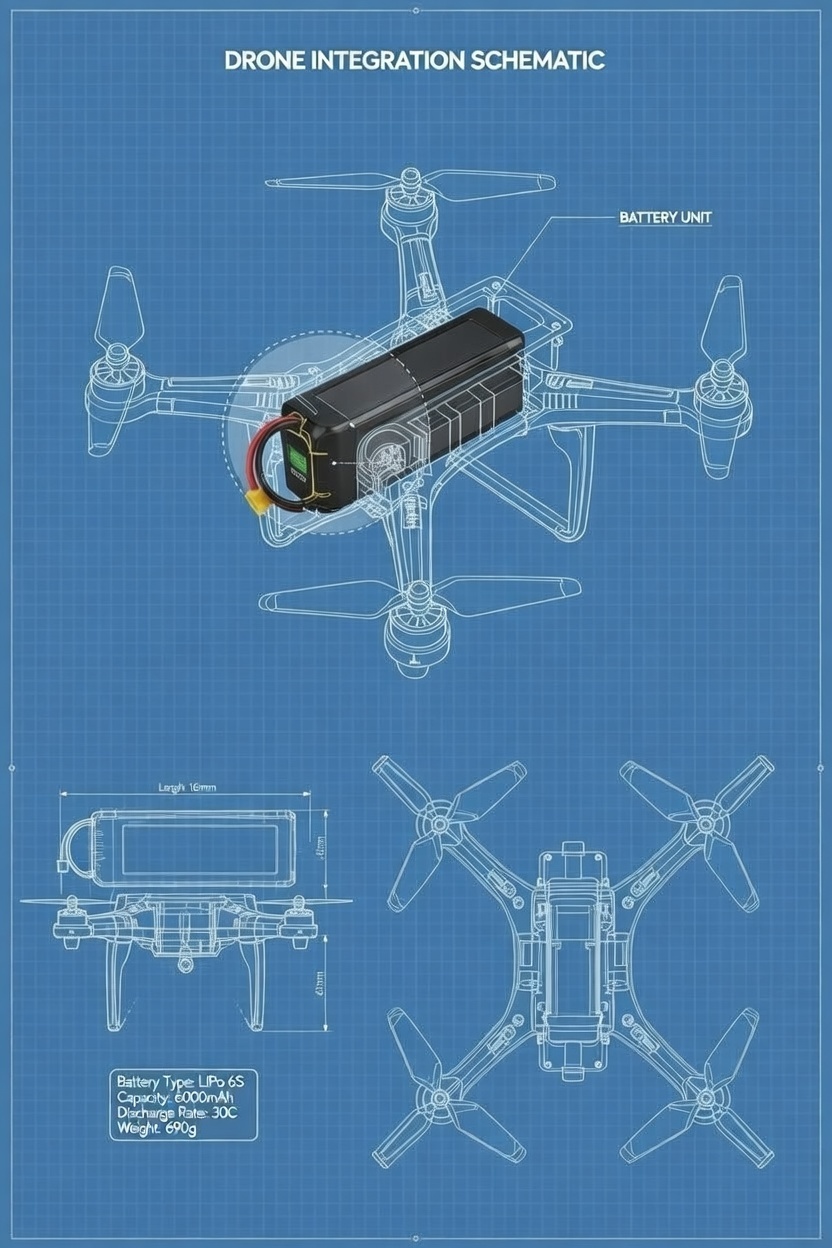
A battery is only as good as its integration with the drone. The best low-temperature drone batteries are designed as plug-and-play solutions for mainstream commercial drones. They feature standard connectors like XT60 or JST and are programmed to communicate seamlessly with the drone’s flight controller, providing accurate battery level readings in the pilot’s app.
Best Practices for Battery Maintenance
Even the best low-temperature drone battery requires proper care to deliver peak performance. Real estate professionals can extend the lifespan of their batteries and ensure reliability by following these best practices.
Pre-Flight Preparation
- Pre-Conditioning: Always store batteries at room temperature before a flight. If batteries must be transported in a cold vehicle, use an insulated case with hand warmers to maintain the temperature.
- Full Charge: Always begin a cold weather flight with a fully charged battery. A full charge generates more heat during the initial discharge, helping to warm the cells.
In-Flight Management
- Throttle Discipline: Avoid rapid, full-throttle maneuvers immediately after takeoff. Gentle flying allows the battery to warm up gradually.
- Monitor Voltage: Keep a close eye on the voltage levels in the drone app. If the voltage begins to sag significantly, it is time to land.
Post-Flight Care
- Cool Down: Allow the battery to cool down to room temperature before charging. Charging a hot battery can cause damage.
- Storage Charge: If the battery will not be used for more than a week, discharge it to the storage level (usually around 50%) to preserve the cell health.
Case Study: Transforming Winter Photography
To illustrate the impact of the best low-temperature drone battery, consider the experience of a commercial real estate firm in northern Europe. This firm specializes in luxury mountain properties, a market that is highly active during the winter months due to the ski season.
The Challenge:
During the winter, temperatures regularly dropped to -10°C (14°F). Using standard LiPo batteries, the firm’s drones experienced a 40% reduction in flight time. Additionally, the drones would often trigger low-voltage warnings and force land, risking damage to expensive camera equipment and losing critical sales opportunities.
The Solution:
The firm partnered with a battery specialist to develop a custom high-voltage LiPo solution. This battery featured a specialized electrolyte that remained fluid at low temperatures and a BMS that optimized power delivery.
The Results:
After implementing the new batteries, the firm reported the following improvements:
- Flight Time: Restored to 95% of the standard summer performance.
- Reliability: Zero forced landings due to low voltage during the winter season.
- Operational Efficiency: The ability to fly in the early morning light, which is preferred by clients, increased the number of listings photographed by 30%.
This case study demonstrates that the best low-temperature drone battery is not a luxury; it is a necessity for real estate professionals who operate in colder climates.
Expert Insights
To further validate the importance of selecting the best low-temperature drone battery, insights from industry experts are invaluable.
Dr. Elena Rodriguez, Battery Chemist:
“The key to cold weather performance is the electrolyte. Standard electrolytes thicken as they cool, slowing the movement of lithium ions. The best low-temperature drone batteries use a blend of organic carbonates with low freezing points. This allows the ions to move freely, maintaining the voltage under load.”
Mark Thompson, Commercial Drone Pilot:
“In real estate, you don’t get second chances with lighting. I used to be limited to flying between 11 AM and 2 PM in the winter. Since switching to a battery designed for sub-zero operation, I can now capture the ‘blue hour’ before sunset, which gives my listings a dramatic edge that clients love.”
Conclusion
For real estate professionals, the camera is only half the equation. The best low-temperature drone battery is the silent partner that ensures the camera reaches the perfect vantage point, regardless of the weather. By prioritizing energy density, discharge rate, and intelligent management systems, professionals can overcome the limitations of the cold and capture the essence of a property in any season.
The transition to a reliable cold-weather solution begins with a conversation. Real estate firms looking to elevate their aerial capabilities are encouraged to explore custom battery solutions that meet their specific operational needs. With the right technology, the winter sky is no longer a barrier but an opportunity.
Explore our range of high-performance drone batteries designed for extreme conditions. Visit our homepage to learn more about how we can help you capture the perfect shot, every time.
Contact our experts for a personalized consultation and take the first step towards uninterrupted aerial excellence.