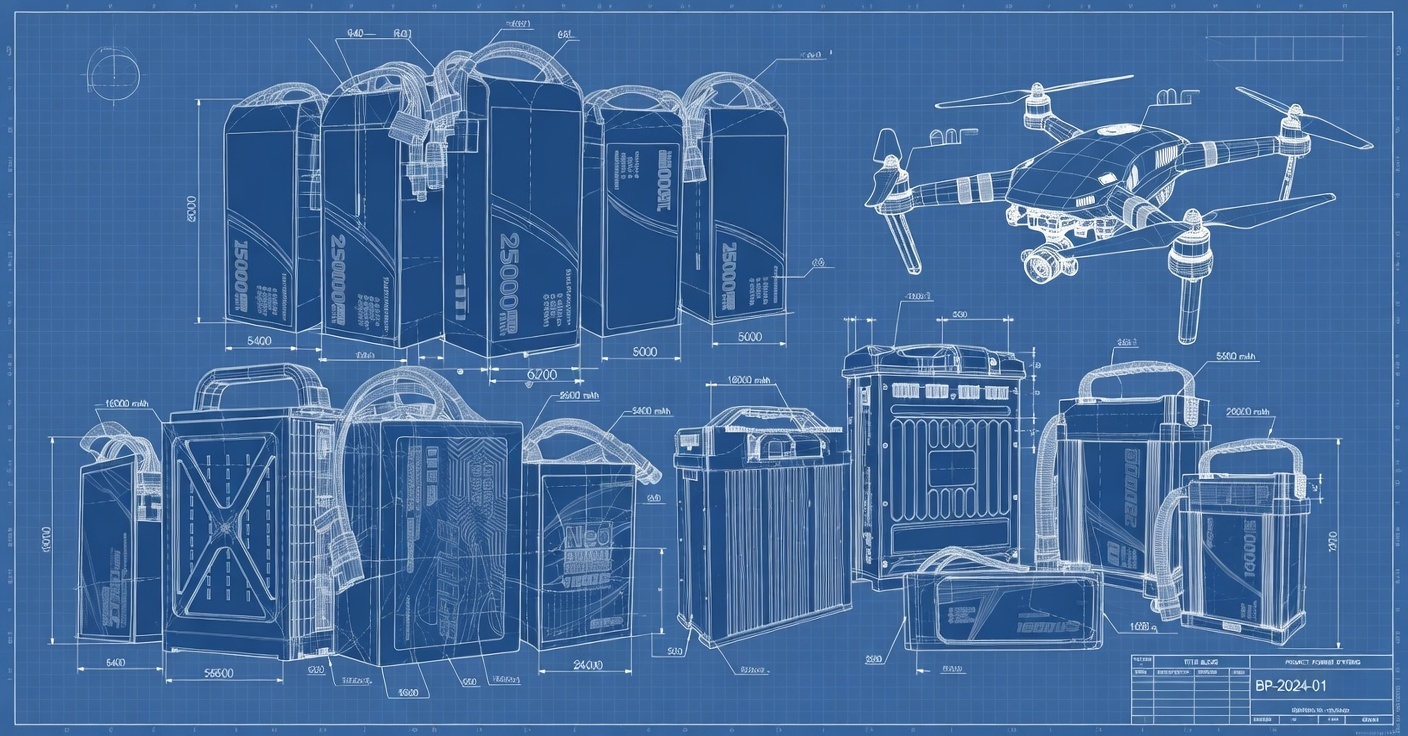
Here is a comprehensive, SEO-optimized article designed to help logistics operators choose the best high-capacity drone batteries.
The Heavy Lift: Overcoming Range Anxiety in Drone Logistics
The drone logistics industry is booming. From delivering medical supplies to remote villages to transporting e-commerce packages across cities, unmanned aerial vehicles (UAVs) are revolutionizing how we move goods. However, for logistics operators, the transition from “cool tech demo” to “profitable business model” hinges on one critical factor: flight time.
In the world of logistics, time is money. A drone that needs to recharge every 10 minutes is an operational bottleneck, not a solution. The primary challenge facing logistics fleets today is Payload vs. Endurance. The heavier the package, the faster the battery depletes. If you are struggling to extend your delivery range without sacrificing payload capacity, you are not alone. This guide will walk you through the technical specifications and strategic choices necessary to select the best high-capacity drone battery for your logistics operations.
Why Standard Batteries Don’t Cut It for Logistics
Most consumer-grade drones use standard Lithium Polymer (LiPo) batteries. While these are fine for aerial photography, they fall short in logistics for two main reasons:
- Energy Density: Standard batteries often lack the Wh/kg (Watt-hours per kilogram) ratio needed to lift heavy packages for long distances. If your drone is heavy-lift, you need a battery that is light but powerful.
- Cycle Life: Logistics drones fly multiple missions per day. Standard batteries degrade quickly under high-stress discharge cycles, leading to high replacement costs.
To solve this, logistics operators must shift their focus from “standard” to high-capacity, high-energy-density solutions specifically engineered for industrial use.
The Technical Trinity: What to Look for in a Logistics Battery
When evaluating a high-capacity drone battery, logistics managers should look beyond just the mAh (milliamp hours) rating. You need to balance three key technical aspects: Voltage Configuration, Discharge Rate, and Physical Design.
1. Voltage and Cell Configuration (S-Rating)
For logistics, 6S (22.2V) and 12S (44.4V) configurations are the industry standard.
- 6S Batteries: Offer a good balance of power and weight, ideal for medium-range delivery drones.
- 12S Batteries: Provide higher voltage, which translates to higher RPM for motors without drawing excessive current. This is crucial for heavy-lift drones as it reduces heat generation and improves efficiency.
2. High Discharge Rate (C-Rating)
Logistics drones require a lot of power to take off and climb, especially when fully loaded. Look for batteries with a high continuous discharge rate (C-Rating).
- A standard 25C battery might struggle with a heavy payload.
- For logistics, aim for batteries rated at 30C to 50C continuous discharge to ensure the motors have the power they need without the battery overheating.
3. Ruggedized and Waterproof Design
Drones don’t fly in vacuum-sealed labs; they fly in the real world. Rain, dust, and humidity are enemies of electronics.
- IP Rating: Ensure your battery has a high IP rating (such as IP67) to protect against water and dust ingress. A single rainstorm can destroy a non-waterproof battery.
- Shock Resistance: The battery casing must be robust enough to withstand the vibrations of heavy motors and potential rough landings.
The Energy Density Arms Race
The holy grail for logistics operators is maximizing Energy Density. This is the amount of energy stored relative to the weight of the battery. The higher the energy density, the longer your drone can fly with a given payload.
Currently, the market offers a spectrum of technologies:
| Battery Technology | Energy Density (Wh/kg) | Best Use Case |
|---|---|---|
| Standard LiPo | 180 – 220 | Short-range scouting, not ideal for heavy logistics |
| High-Voltage LiPo | 240 – 260 | Standard logistics, good balance of cost and performance |
| Semi-Solid State | 280 – 380 | Long-endurance mapping & heavy payload delivery |
Note: Semi-solid state batteries represent the cutting edge. With energy densities reaching up to 380Wh/kg, these batteries can increase flight endurance by up to 30% compared to traditional options, making them the best choice for long-haul logistics.
The Smart BMS: Your Logistics Command Center
A high-capacity battery is useless without a sophisticated Battery Management System (BMS). In a logistics fleet, you cannot afford battery failures mid-mission. A robust BMS does the following:
- Cell Balancing: Ensures every cell in the battery pack charges and discharges evenly, preventing “weak cells” that drag down performance.
- Real-Time Monitoring: Tracks voltage, current, and temperature. For logistics, this means you can monitor the health of your fleet’s power source from a tablet or ground station.
- Fail-Safes: Protects against over-charging, over-discharging, and short circuits. If a motor fails or the drone draws too much current, the BMS cuts power safely to prevent fire or explosion.
When choosing a battery, verify that it has a Bluetooth-enabled BMS or telemetry output so you can integrate battery health data directly into your fleet management software.
Fast Charging: The Key to High Throughput
In a warehouse or distribution center, drones need to turn around fast. If your battery takes 2 hours to charge, your drone is grounded for 2 hours. For logistics, fast-charging capability is non-negotiable.
- 1C vs. 3C Charging: Standard batteries charge at 1C (meaning it takes 1 hour to charge if you put in the same current as the capacity). Advanced logistics batteries support 3C or even 5C fast charging.
- Impact: A 3C charge rate means you can recharge a depleted battery in approximately 20 minutes. This allows for rapid swap-and-go operations, maximizing the number of deliveries per drone per day.
Case Study: Optimizing for Heavy Payload
Let’s look at a practical example. Imagine you are operating a drone that needs to deliver a 5kg package over a distance of 10km.
- The Problem: A standard 6S 10000mAh battery might only provide 12 minutes of flight time with that load, which isn’t enough.
- The Solution: You need a higher capacity and higher voltage solution.
- The Spec: A 12S 22000mAh High-Voltage Battery with a 30C discharge rate.
- Why? The 12S voltage provides efficient power to the motors, reducing heat. The 22000mAh capacity provides the necessary “fuel” for the long journey. The 30C rating ensures the drone has the grunt to take off with the 5kg weight.
This combination ensures the drone has the necessary thrust-to-weight ratio and the energy reserves to complete the mission safely and return to base.
Top 5 Tips for Purchasing Logistics Drone Batteries
Before you finalize your purchase, keep these expert tips in mind to avoid costly mistakes:
- Verify the Cycle Life: Ask the manufacturer for the cycle life at 100% Depth of Discharge (DOD). A good logistics battery should last over 600 cycles to be cost-effective.
- Check the Connector Type: Logistics fleets often standardize on XT90 or AS150 connectors for high current handling. Ensure the battery matches your drone’s connector to avoid voltage drop and heat buildup.
- Consider the Form Factor: Don’t just buy a powerful battery; buy one that fits. Measure your drone’s battery bay. Some high-capacity batteries are physically larger and may not fit without modifying your airframe.
- Look for UN38.3 Certification: Since you are likely shipping these batteries between warehouses or distribution hubs, they must be certified for air transport (UN38.3).
- Total Cost of Ownership (TCO): Don’t just look at the upfront price. Divide the price by the number of cycles. A $200 battery that lasts 200 cycles costs $1 per flight, while a $400 battery that lasts 1000 cycles costs only $0.40 per flight. The expensive one is actually cheaper.
Conclusion: Powering Your Logistics Future
Choosing the best high-capacity drone battery for logistics is about more than just picking the biggest number off the shelf. It is a strategic decision that impacts your safety, your delivery radius, and your bottom line.
By focusing on High Energy Density (to fly further), High Discharge Rates (to lift heavier), and Robust BMS (for safety), you can unlock the full potential of your drone delivery fleet. Remember, the goal is not just to fly, but to fly efficiently, safely, and profitably.
Ready to Optimize Your Fleet?
Finding the perfect balance of power, weight, and safety can be complex. If you are looking for a partner to help you navigate the technical specifications and find a customized solution for your logistics needs, the experts at CNS Battery are ready to assist.
Contact our experts today to get a free consultation and personalized assessment report for your logistics drone batteries.