Here is the SEO-optimized article crafted for the Nissan e-NV200 audience, designed to provide professional value while guiding readers toward a solution.
How to Check Nissan e-NV200 Battery SOH Like a Pro
Owning a Nissan e-NV200 is a smart choice for urban logistics and eco-friendly driving. However, like any electric vehicle (EV), the battery’s health is the heartbeat of your car. As a professional in the EV battery industry, I often get asked: “How do I know if my battery is still in good shape?” Checking the State of Health (SOH) isn’t just about looking at the dashboard bars; it’s about understanding the data.
If you are noticing a significant drop in range or just want to be proactive, this guide will show you how to check your Nissan e-NV200 battery SOH like an expert. And if your diagnosis shows the battery is beyond its prime, we have the perfect solution for you.
🛠️ Why Standard “Bars” Are Misleading
Before we dive into the technical steps, let’s address a common misconception. Many e-NV200 owners rely solely on the “battery bars” displayed on the dashboard. While convenient, these bars are a “buffered” representation. The car hides the true minimum and maximum charge to protect the battery, meaning you might still see 12 bars even if your actual capacity has dropped significantly (e.g., from 100% to 70% capacity).
To check SOH like a pro, you need to look at the raw data.
🔌 Step 1: Use a Professional OBD2 Scanner
The first tool in your arsenal is a professional-grade OBD2 scanner. While generic code readers are cheap, they won’t access the Nissan Leaf/e-NV200 specific battery management system (BMS) data.
What to look for:
You need a scanner that can access the “Consult-III” protocol or specifically supports Nissan EVs. Once connected, navigate to the battery section and look for the parameter “Rated Capacity” or “Remaining Capacity.”
- Pro Tip: Compare the “Rated Capacity” (when full) to the original specifications of your pack (usually 24kWh, 30kWh, or 40kWh modules depending on your configuration). If the rated capacity is significantly lower than the original spec, your SOH is declining.
📊 Step 2: Analyze the “Bar” Drop Rate
This is a field trick used by technicians. Since the dashboard bars are linear but the battery degradation is not, observing how quickly the bars drop after a full charge can indicate SOH.
- Charge to 100%: Ensure the battery is fully saturated.
- Drive a Short Distance: Drive approximately 10-15 km (6-9 miles) on a flat road.
- Observe the Drop: When you stop, observe how many bars disappear within the first 10 minutes of resting.
- Healthy Battery: Should hold 12 bars for a significant distance (e.g., 20-30 km).
- Degraded Battery (Low SOH): If the bars drop rapidly from 12 to 10 or 9 immediately after a short drive, it indicates high internal resistance and low SOH. This is often a sign that the battery cells are sulfated or imbalanced.
🔋 Step 3: Check Individual Module Voltages
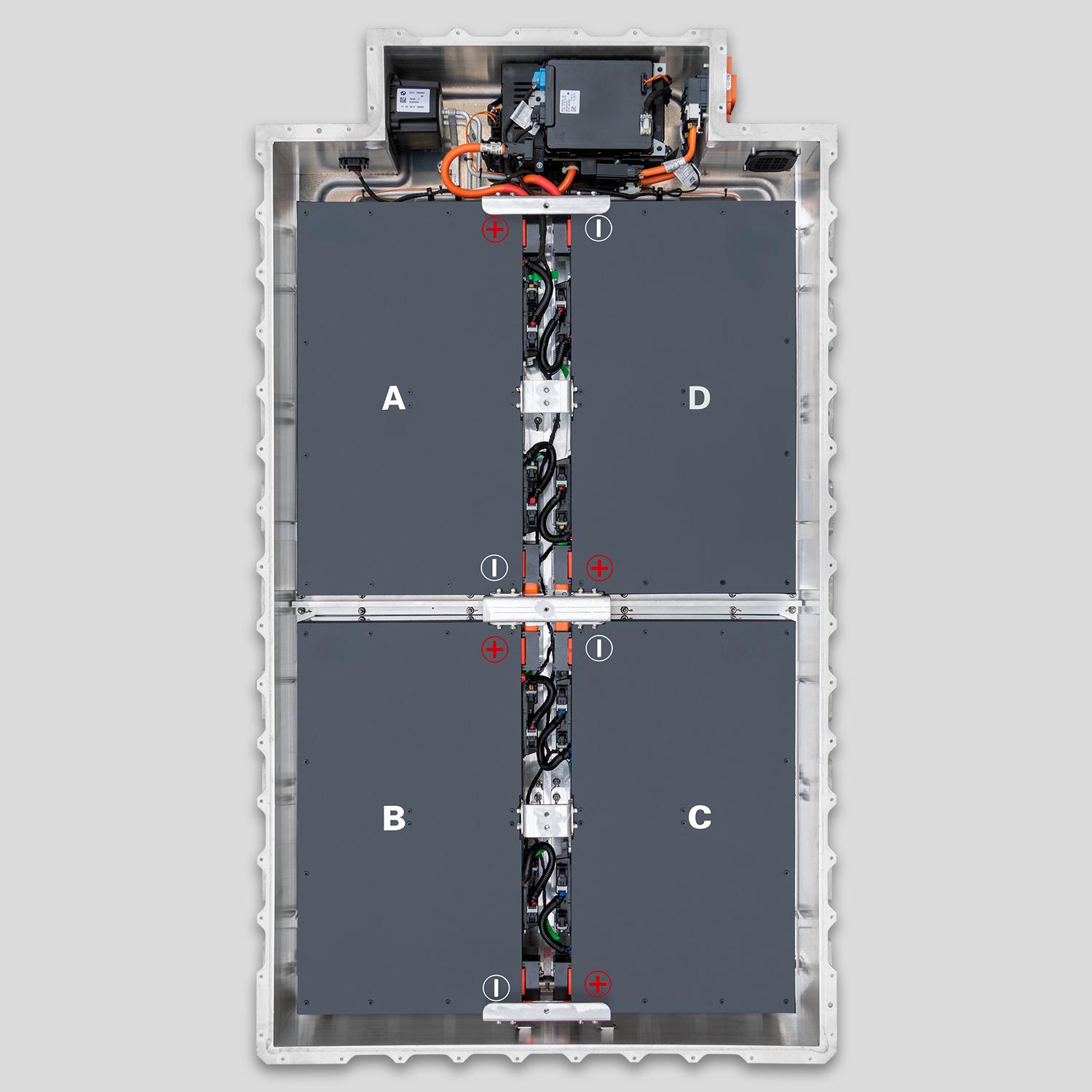
The e-NV200 battery pack is composed of multiple modules wired in series. A “professional” level check involves looking at the individual module voltages via the OBD2 interface.
Look for the “Cell Block Voltage” or “Module Voltage” data stream.
- The Rule: All modules should read very close to the same voltage (e.g., ~3.8V to 4.0V when full).
- The Red Flag: If one module reads significantly lower (e.g., 3.4V) while others are high, that specific module is “dead” or “weak.” This imbalance forces the BMS to stop discharging early, drastically reducing your usable range even if the other modules are fine.
🔄 When to Consider a Professional Replacement
If your diagnosis confirms a low SOH, you have a few choices: live with the reduced range, attempt risky and often ineffective DIY module swaps, or invest in a professional solution.
At CNS BATTERY, we specialize in providing OEM-compatible, high-performance replacements for Nissan vehicles, including the e-NV200.
Why our solution is different:
We don’t just refurbish old junk. We build packs using brand-new CATL lithium-ion cells. This means you get a battery that performs like new, without the exorbitant cost of a dealership replacement.
Key Benefits:
- Brand New Cells: Unlike recycled or salvaged batteries, we use fresh, high-grade cells for maximum longevity.
- OEM Precision: Our packs are engineered to fit the e-NV200 chassis perfectly, utilizing the original connectors and cooling systems.
- Unbeatable Warranty: We back our confidence with a 2-year / 80,000 km warranty, covering defects and performance degradation.
- Cost Efficiency: Save over 50% compared to original manufacturer prices.
Ready to revive your e-NV200? Don’t let a bad battery sideline your business or commute. Contact our technical experts now for a free quote and customization.
📝 Pro Maintenance Tips to Extend SOH
Even with a new battery, maintaining SOH is crucial. Here are my top tips from years in the field:
- Avoid Deep Discharges: Try not to let the battery drop below 10-15% regularly. Lithium batteries prefer “top-ups.”
- Limit 100% Soak Time: While it’s fine to charge to 100% for long trips, try to keep the charge between 20% and 90% for daily use to reduce stress on the cells.
- Temperature Management: If you live in a hot climate, park in the shade when possible. High temperatures are the enemy of lithium-ion longevity.
💡 Conclusion
Checking your Nissan e-NV200 battery SOH doesn’t require a degree in engineering, but it does require looking beyond the dashboard. By using an OBD2 scanner to check rated capacity and module voltages, you can make an informed decision about your vehicle’s health.
If your battery is failing, remember that a high-quality, new-cell replacement from CNS BATTERY offers the perfect balance of performance, safety, and value. We are committed to reliable battery innovation, helping you extend your range and improve safety.
Get back on the road with confidence. Reach out to us today to discuss your e-NV200 battery upgrade.
❓ Frequently Asked Questions (FAQ)
Q1: What is a good SOH percentage for a Nissan e-NV200?
A: A brand new battery is at 100% SOH. Most manufacturers consider a battery to be at the end of its “useful life” when it drops to 70-80% of its original capacity. If your range has dropped by more than 20%, it is generally recommended to consider a replacement.
Q2: Can I replace just one bad module in my e-NV200?
A: Technically, yes, but it is highly discouraged. Mixing old, degraded modules with a new one creates an imbalance. The old modules will drag down the new one, leading to rapid degradation and potential safety issues. We recommend replacing the entire pack or a complete section of modules for optimal performance.
Q3: How long does a CNS BATTERY pack last?
A: Our packs are built with brand-new CATL cells, designed for durability. We offer a standard 2-year / 80,000 km warranty, but with proper care, these batteries are engineered to last significantly longer, often matching or exceeding the lifespan of the original factory battery.
Q4: Is the installation difficult?
A: The installation is designed to be a direct OEM replacement. For a professional technician, it typically takes 1-2 hours. We provide comprehensive installation guides and video tutorials. However, due to the high voltage involved, we strongly recommend having a certified EV technician perform the work to ensure safety and maintain warranty validity.
Q5: Do I need to reprogram the BMS after installing a new battery?
A: Yes, the Battery Management System (BMS) usually needs to be reset or reprogrammed to recognize the new battery’s full capacity. Our technical support team provides guidance on this process to ensure seamless integration with your e-NV200.