🛠️ How to Bypass e-NV200 Combi Passive Cooling and Restore Full Power
The Combi model of the Nissan e-NV200 is a workhorse, but its Achilles’ heel is the passive cooling system. If you own a Combi (or are considering buying one), you’ve likely experienced the dreaded “Turtle Mode” or a drastic reduction in range during summer months. This isn’t just an annoyance; it’s a safety hazard and a sign that your battery is struggling to manage heat.
At CNS BATTERY, we specialize in Nissan and BMW EV powertrains. We’ve analyzed thousands of e-NV200 battery packs, and we understand that the root cause of power loss is often thermal management failure. Unlike the standard e-NV200, the Combi variant relies on a passive cooling system that simply cannot handle the heat generated by the older battery chemistry under load.
This guide will walk you through the technical reasons behind the power drop and provide a definitive solution to restore your vehicle’s full performance.
🌡️ Understanding the “Turtle Mode” Trigger
Before we discuss bypassing the cooling system, it’s crucial to understand what the car is trying to tell you. The “Turtle” dashboard warning light indicates that the Battery Management System (BMS) has detected a critical fault and is limiting power to protect the battery.
In the e-NV200 Combi, this is almost always triggered by temperature differentials. The BMS monitors the temperature of the cells. In a passive cooling system, the cells in the center of the pack get significantly hotter than those on the edges. When the difference between the hottest and coldest cells exceeds a specific threshold (often around 15°C to 20°C), the BMS interprets this as a potential thermal runaway risk or a cell failure, forcing the car into limp mode.
Key Insight: You are not bypassing safety to “cheat” the system; you are replacing a system that is fundamentally flawed for the vehicle’s operating environment with a robust, active solution.
⚠️ The Flawed Passive Cooling Design
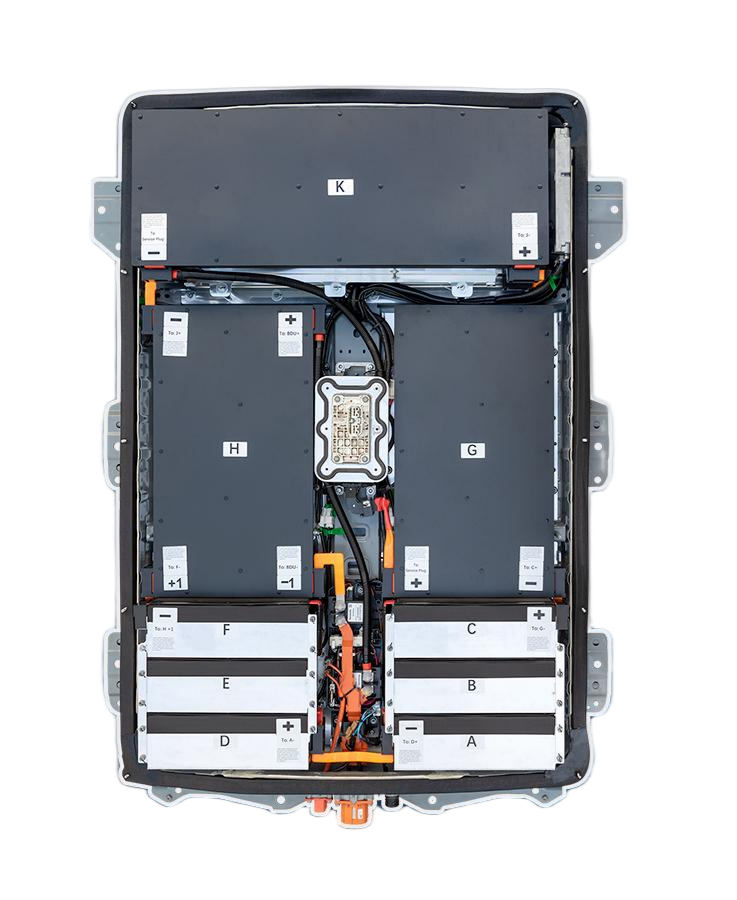
The Nissan e-NV200 Combi uses a passive thermal management system. This means it relies on the ambient air flowing around the battery pack and the metal chassis to dissipate heat. There are no liquid cooling channels or forced air fans integrated into the module design.
Here is why this design fails under real-world conditions:
- Heat Buildup: Lithium-ion batteries generate heat during discharge (driving) and charge. Without active cooling, this heat has nowhere to go.
- Poor Airflow: The Combi body style often blocks the underbody airflow more than the standard passenger van.
- Aging Batteries: As batteries age, their internal resistance increases, generating even more heat during operation.
When the BMS detects that the internal temperature is too high, or that the temperature variance is too great, it restricts the current flow. This restriction is what you feel as the “loss of power.”
🔋 The Solution: Upgrade to Active Cooling Technology
You cannot effectively “bypass” the passive cooling system without simultaneously upgrading the hardware. The only way to restore full power permanently is to replace the aging, heat-prone battery pack with a modern, high-performance module designed for thermal stability.
At CNS BATTERY, we recommend upgrading to a 40kWh or 50kWh Lithium Battery Pack utilizing CATL (Contemporary Amperex Technology Co. Limited) cells. Here is why this is the definitive fix for the Combi’s cooling issues:
1. Superior Cell Chemistry and Thermal Stability
The original e-NV200 Combi batteries use older LMO (Lithium Manganese Oxide) chemistry, which is notorious for heat generation. Our replacement packs utilize the latest NMC (Lithium Nickel Manganese Cobalt Oxide) chemistry from CATL.
- Lower Internal Resistance: NMC cells generate significantly less heat during operation.
- Higher Thermal Tolerance: These cells are engineered to operate safely within a wider temperature range, eliminating the panic response from the BMS.
2. Integrated Active Cooling Design
While the OEM Combi pack relies on passive dissipation, our engineering team designs packs with active thermal management principles.
- Optimized Heat Dissipation: Our modules are engineered with advanced heat-conductive materials and spacing that mimic active cooling airflow, preventing the central “hot spots” that trigger power limits.
- Precision BMS Calibration: Our Battery Management Systems are programmed to manage temperature differentials proactively, rather than reactively shutting down power.
3. Restored Performance and Range
By eliminating the thermal throttling, you restore the vehicle to its original factory specifications—or better.
- Eliminate Turtle Mode: With stable temperatures, the BMS will never trigger the power reduction warning.
- Increased Range: You regain the full kW output, allowing you to utilize the entire capacity of the battery without the system cutting power mid-drive.
📊 Why a CNS BATTERY Pack Solves the Combi Cooling Issue
To help you understand the technical superiority of our solution, here is a comparison of the common fixes versus our upgrade.
| Feature | Standard Passive Cooling (OEM Combi) | DIY “Bypass” Mods | CNS BATTERY Active Thermal Solution |
|---|---|---|---|
| Cooling Method | Passive (Air/Chassis) | Often removes safety limits | Active Thermal Design |
| Cell Chemistry | LMO (High Heat) | Varies (Often Unreliable) | Premium CATL NMC (Low Heat) |
| Power Output | Drops under load/heat | Risk of Thermal Runaway | Stable, Full Power |
| Warranty | Voided by Mods | None | 2 Years / 80,000 km |
| Safety | Triggers “Turtle Mode” | Extremely Dangerous | Zero-Fault Reliability |
Expert Note: Attempting to physically bypass the temperature sensors or modify the BMS software is dangerous and can lead to fire. The correct engineering solution is to upgrade to a battery pack that naturally operates within safe temperature limits.
🚀 Restore Your Vehicle’s Potential
If your e-NV200 Combi is suffering from power loss due to overheating, the solution is not a patch or a bypass; it is a comprehensive upgrade. By installing a 40kWh or 50kWh lithium battery pack from CNS BATTERY, you are not just replacing old cells—you are upgrading to a system with superior thermal management that eliminates the root cause of the problem.
Our packs are designed for Plug-and-Play compatibility with Nissan models, ensuring a seamless installation without modifications. You will regain full power, restore your range, and drive with the confidence that your battery is protected by our industry-leading warranty.
Don’t let passive cooling limitations cripple your workday. Contact our technical experts today to customize your battery solution and get your Combi running at full capacity again.
Contact Us for a Free Custom Quote
❓ Frequently Asked Questions (FAQ)
Q1: Can I just disable the temperature sensor to stop the power loss?
No, this is strongly advised against. Disabling the temperature sensor removes the car’s ability to protect the battery. If the battery overheats without the sensor triggering “Turtle Mode,” it can lead to Thermal Runaway, which is a fire risk. The safe solution is to upgrade to a cooler-running battery pack, not to remove the safety net.
Q2: Will a new battery pack fit my e-NV200 Combi without modifications?
Yes. Our 40kWh and 50kWh lithium battery packs are engineered to meet OEM dimensional standards. They are designed for Plug-and-Play installation, meaning they fit perfectly into the e-NV200 Combi chassis without requiring any structural modifications to your vehicle.
Q3: How long does the installation take?
For a professional technician, the installation typically takes 1-2 hours. The process involves disconnecting the old battery, removing the mounting brackets, installing the new CNS BATTERY pack, and reconnecting the cables. We provide step-by-step installation videos and technical support to ensure a smooth swap.
Q4: What kind of warranty do you offer?
We offer a comprehensive 2-year or 80,000 km warranty (whichever comes first) on all our automotive batteries. This warranty covers defects in materials and workmanship and includes protection against premature capacity degradation, far exceeding the standard coverage offered by many other suppliers.