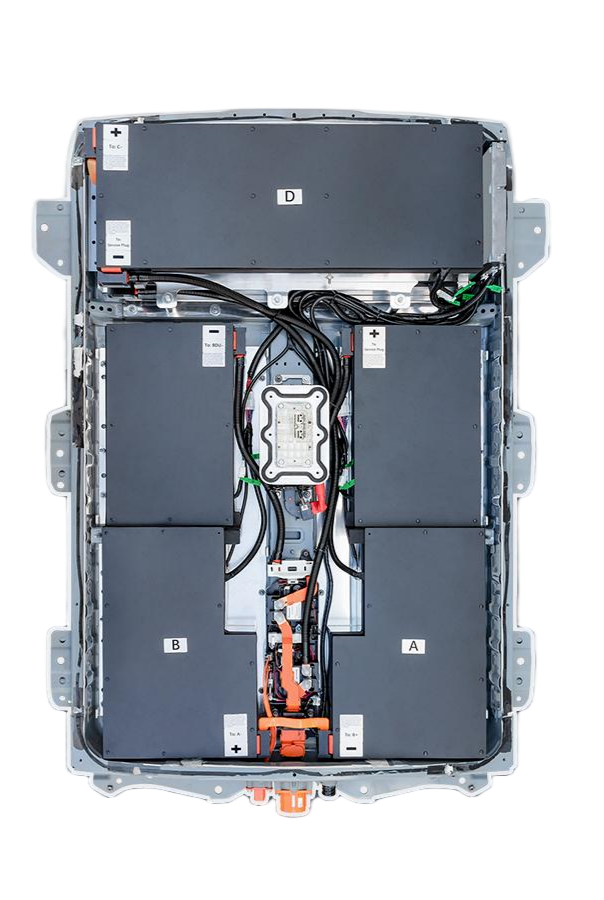
The Hidden Cost of Cheap: Why New Nissan Leaf 24kWh Battery is a False Economy
When your Nissan Leaf starts showing signs of aging, or you acquire a project car with a dead 24kWh pack, the immediate instinct is often to find the cheapest replacement possible. However, as a battery expert, I must tell you the hard truth: chasing the lowest price on a 24kWh Nissan Leaf battery is a guaranteed financial trap.
The reality is that the used 24kWh market is flooded with degraded units. You might save a few hundred dollars upfront, but you are buying a depreciating asset that will likely leave you stranded or needing another replacement within a year. In this guide, I will break down the math and show you why upgrading to a modern, high-capacity solution offers the only true path to long-term savings and peace of mind.
The Myth of the “Cheap” 24kWh Battery
Many owners look at the $1,500 to $3,000 price tag of a used 24kWh battery and think they are saving money. However, this is a classic case of “penny wise, pound foolish.”
The Problem with Used 24kWh Units:
- Severe Degradation: Most 24kWh packs come from 2011-2013 models. After a decade, these batteries often have less than 60% of their original capacity left.
- Short Lifespan: You aren’t just buying a battery; you are buying the last 10-20% of its life. Expect to need another replacement in 6-12 months.
- Hidden Costs: The labor to install a battery is the same whether it costs $2,000 or $10,000. Doing the job twice doubles your labor costs and downtime.
Expert Insight: Buying a used 24kWh battery is not a repair; it is a temporary patch. The real savings come from buying a solution that lasts a decade, not a year.
The Real Math: Long-Term Savings vs. Upfront Cost
To understand the true cost of ownership, we need to shift our focus from the initial purchase price to the cost per mile and the total cost of ownership.
Let’s compare the two paths using real-world data:
| Comparison Factor | Used 24kWh Battery (The “Cheap” Option) | New High-Capacity Upgrade (The “Savings” Option) |
|---|---|---|
| Upfront Cost | $1,500 – $3,000 | $6,000 – $8,000 |
| Expected Lifespan | 6 – 12 Months | 8 – 10+ Years |
| Usable Range | 40 – 60 miles (Degraded) | 150 – 200+ miles (Full Capacity) |
| Labor Cost | $500 (Paid Now) | $500 (Paid Once) |
| Replacement Frequency | Every Year | Never (During your ownership) |
| True 5-Year Cost | $5,000+ (3 replacements + labor) | $6,500 (1 installation) |
The Verdict: While the new battery costs more upfront, the used battery costs you significantly more over time. By choosing a new, high-quality pack, you actually save thousands in the long run by avoiding repeat labor and multiple purchases.
The Smart Upgrade: Maximizing Value and Range
At CNS Battery, we don’t sell 24kWh refurbishments because we believe in providing real value. Instead, we offer a smarter path: upgrading to a brand-new, high-capacity Lithium-ion pack.
Why This is the True “Savings” Strategy:
- Cutting Out the Middleman Cost: Instead of spending $2,000 on a used battery and $500 on labor now, only to spend another $2,500 next year, you consolidate that expense into a single, permanent solution.
- New Cell Technology: We utilize brand-new CATL cells—the same tier-1 quality used by major OEMs. This means you are not inheriting someone else’s battery wear.
- 50% Savings vs. Dealership: While a new battery from the Nissan dealership can cost $16,000+, our engineered solutions offer the same (or better) quality for roughly 50% less.
- Warranty Protection: Used batteries usually come with “as-is” policies. Our new packs come with a 2-year / 80,000 km warranty, protecting your investment.
Case Study:
A customer in Texas recently faced this decision. He had a Leaf ZE0 with a dead 24kWh pack. He initially looked at a $2,200 used battery but realized he would likely need to replace it again before hitting 10,000 miles. He chose our 62kWh upgrade for $7,800. His calculation:
- Old Path: $2,200 (battery) + $600 (labor) + $2,200 (next year’s battery) + $600 (next year’s labor) = $5,600 (and he’d still only have a short-range car).
- New Path: $7,800 (upgrade) + $600 (labor) = $8,400 (and he gained a 430km range and a car he can drive for 10 years).
He chose the upgrade and effectively saved money by not having to buy batteries repeatedly.
Frequently Asked Questions (FAQ)
1. Can I really save money by spending more on a new battery?
Yes, absolutely. The concept here is Total Cost of Ownership (TCO). A cheap battery requires you to pay for installation labor repeatedly. Since labor is a fixed cost (usually $500+), paying it once for a 10-year battery is far cheaper than paying it every year for a used battery. You save on the sum of labor costs and the aggregate cost of multiple batteries.
2. What is the actual lifespan of a new replacement battery compared to a used 24kWh?
A used 24kWh battery is typically at the very end of its life cycle. It may only last 6 to 12 months before dropping below usable capacity. In contrast, a brand-new battery built with fresh cells (like our CATL packs) is designed for 10+ years of service and thousands of charge cycles.
3. Are there any hidden costs I should be aware of?
The primary “hidden” cost with cheap batteries is downtime and risk. Cheap batteries often lack proper Battery Management Systems (BMS), leading to sudden failures. Additionally, if a cheap battery swells or damages your car’s electronics, the repair costs will dwarf the initial savings. Our packs include comprehensive BMS protection and come with a warranty to eliminate these risks.
4. How much does a proper Nissan Leaf battery replacement cost?
While prices vary based on capacity, a proper, reliable replacement starts around $6,000 – $8,000 for a brand-new 40kWh or 62kWh pack. This is roughly half the price of a dealership replacement but offers the same longevity and safety.
Ready to stop throwing money away on temporary fixes? Stop calculating the upfront price and start calculating the long-term savings.
Get a free, no-obligation quote for a reliable, long-lasting Nissan Leaf battery solution today. We will help you calculate the true value of upgrading your EV.