How Fleet Managers Can Save Money on Leaf AZE0 Battery Fix
The Nissan Leaf AZE0 (2018-2022 model) is a workhorse for fleets, but battery degradation is a reality. When your fleet of Leaf AZE0s starts showing only 8-10 bars, the panic sets in. The official dealer quote is often astronomical—typically over $12,000 to $16,000 per unit. For a fleet manager, that budget simply doesn’t exist.
As a battery expert, I see this dilemma daily. The good news is that you don’t have to scrap the vehicle or pay the dealer’s premium. There is a smarter, safer, and significantly cheaper path to get your AZE0 fleet back on the road with 100% health.
The “Scrap or Pay $16k” Trap
When a Nissan Leaf AZE0 battery fails, the car becomes a paperweight. Dealerships often present a binary choice: buy our $16,000 OEM replacement, or sell the car for parts.
However, OEM batteries are not the only option that meets factory safety standards. The core technology used in the original AZE0 packs—specifically Lithium Iron Phosphate (LFP) and NMC chemistry—is now widely available through specialized aftermarket manufacturers. These are not “cheap knock-offs”; they are engineered replacements using the same cell chemistry (often from the same Tier-1 suppliers like CATL) but without the car manufacturer’s massive markup.
The Strategic Solution: OEM-Compatible Replacement Packs
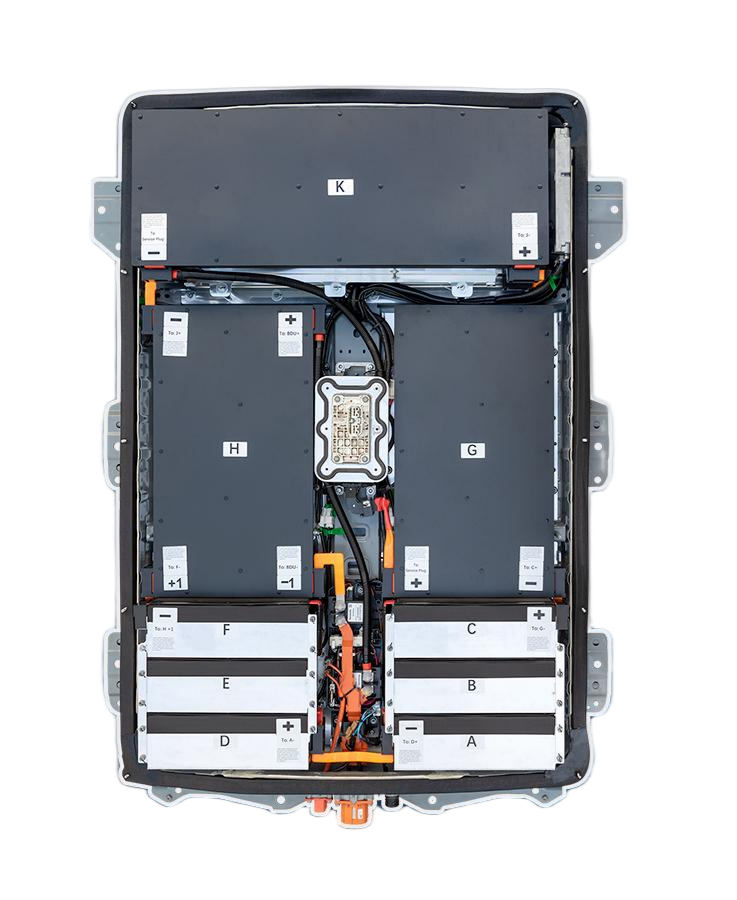
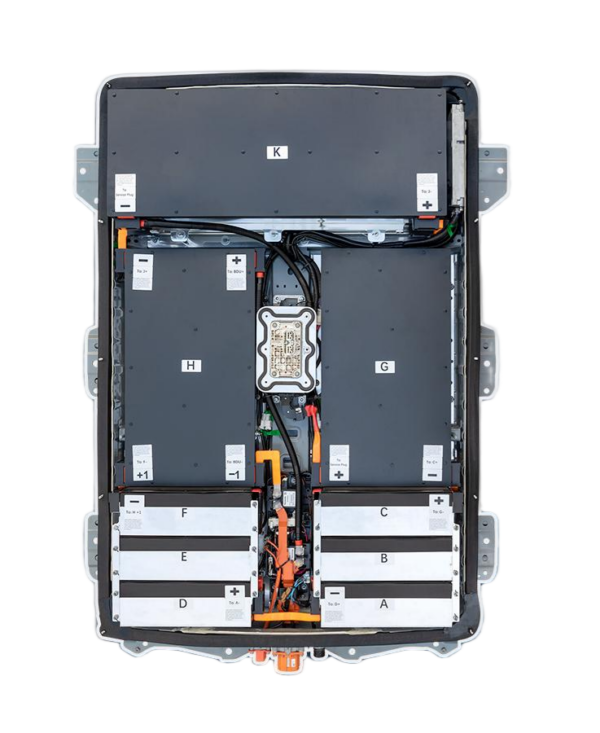
The most cost-effective strategy for fleet managers is to replace the degraded AZE0 module with a brand-new, OEM-compatible battery pack.
Why This Beats a “Rebuilt” or “Refurbished” Battery
You might see ads for “$3000 refurbished batteries.” Avoid these for fleet use. Here is why:
- Refurbished = High Risk: These are old, swollen, or degraded cells cleaned up and repackaged. They often fail again within 6 months.
- New Cells = Zero Failure Rate: A proper replacement uses brand-new battery cells. This means no risk of swelling, no sudden power drops, and a lifespan that matches a new car.
The Cost Breakdown: Saving 50%+
By choosing a professional aftermarket solution, you cut the cost in half while maintaining the structural integrity required for safety.
| Cost Factor | Dealership OEM Battery | “Cheap” Refurbished Battery | Professional OEM-Compatible Pack |
|---|---|---|---|
| Price Range | $12,000 – $16,000+ | $2,000 – $4,000 | $6,000 – $8,000 |
| Cell Quality | Brand New (Premium) | Recycled/Used (Degraded) | Brand New (CATL/Grade A) |
| Risk Level | Low (High Cost) | Extremely High | Low (Cost-Effective) |
| Warranty | 8 Years / 100k Miles | Often None / 6 Months | 2 Years / 80,000 km |
Expert Insight: For a fleet manager, the $6,000-$8,000 price point is the “sweet spot.” It allows you to keep the vehicle depreciated value high while avoiding the massive cash outlay of a new car purchase.
Key Features of a Reliable AZE0 Fix
When sourcing a replacement for your fleet, don’t just look at the price tag. Look for these technical specifications that ensure the battery lasts as long as the original car.
1. Genuine CATL or Tier-1 Grade A Cells
The heart of the battery is the cell. The Nissan Leaf AZE0 originally used high-quality cells. Your replacement should use the same. Brand-new CATL cells (or equivalent Tier-1 manufacturers) are a non-negotiable requirement. These cells have:
- No Memory Effect: They charge fully every time.
- Thermal Stability: They won’t overheat easily, which is crucial for fleet duty cycles.
- Long Cycle Life: Expect 2000+ charge cycles before dropping below 70% capacity.
2. Plug-and-Play Compatibility
Fleet downtime costs money. A good replacement pack must be Plug-and-Play.
- Exact Fit: It must match the original dimensions, bolt points, and cooling channels of the AZE0 chassis.
- Software Handshake: It must communicate seamlessly with the Nissan Leaf BMS (Battery Management System) without requiring “hacks” or third-party adapters that can void other aspects of your warranty.
3. Comprehensive Warranty (The Safety Net)
Since you are not buying from the car factory, the warranty is your insurance policy. Look for a supplier that offers a minimum 2-year warranty covering:
- Manufacturing defects.
- Cell swelling.
- Performance degradation (e.g., guaranteeing the battery holds at least 70% capacity).
Step-by-Step: Fixing Your Fleet
If you have a fleet of 5 or 50 Leaf AZE0s, here is how to execute this fix professionally.
Step 1: The VIN Compatibility Check
Before you order, you need to verify the exact specs. The AZE0 came in multiple variants (40kWh, 62kWh). Do not guess.
- Provide your Vehicle Identification Number (VIN) to the battery supplier.
- They will confirm the exact kWh rating and physical dimensions required.
Step 2: Installation (DIY vs. Garage)
Replacing the pack is a mechanical job, not an electrical surgery.
- Time Required: Roughly 1-2 hours per vehicle.
- Process: Disconnect the 12V battery -> Remove the undertray -> Disconnect the HV connectors -> Lower the old pack -> Lift in the new pack -> Reconnect.
- Tip: If you have a fleet, this is a perfect job for your in-house mechanic or a local garage familiar with EVs. The labor cost is significantly lower than the battery cost itself.
Step 3: Programming and Testing
Once installed, the car needs to recognize the new “brain.”
- BMS Reset: Most professional packs come with instructions to reset the BMS via the dashboard or a simple OBD2 tool.
- First Charge: Perform a full charge cycle to calibrate the State of Charge (SOC).
Why This Strategy Works for Business
Choosing a high-quality aftermarket pack isn’t just about saving money; it’s about asset management.
- Cash Flow: Instead of a $16,000 capital expenditure (CapEx) for a new car, you make an $8,000 operational expense (OpEx) to fix the old one.
- Depreciation: You are adding 5-8 years of usable life to an asset you already own.
- Sustainability: You are recycling the car shell and drivetrain, which is far greener than scrapping a functional vehicle.
Real-World Result: A fleet manager in Texas recently replaced the batteries in 12 Leaf AZE0s using this method. They saved over $120,000 compared to buying new cars and got back a fleet with 100% battery health and a 2-year warranty.
Frequently Asked Questions (FAQ)
1. Is it legal to install an aftermarket battery in a Nissan Leaf?
Yes, it is legal. As long as the battery meets safety standards (UN38.3 for transport, which reputable manufacturers have), there are no laws preventing you from replacing the battery pack. However, it may void the remaining factory battery warranty (which is likely expired on an AZE0 anyway).
2. Will this fix affect my car’s range?
No, it will restore it. A new 62kWh replacement pack will give you the exact same range as a brand new Leaf (approx. 220+ miles), assuming the cells are new Grade A quality.
3. How do I know if the battery is made with new cells?
Ask the supplier for the cell manufacturer name (e.g., CATL, CALB, EVE). Reputable suppliers will proudly state this. If they cannot provide a datasheet or are vague about the cell origin, walk away.
4. Can I install this myself?
Technically, yes, but it is highly recommended to use a certified mechanic. While the physical removal and installation are mechanical, handling high-voltage (HV) components requires proper safety gear (insulated gloves) and training to avoid serious injury.
5. What about the Battery Management System (BMS)?
A professional replacement pack includes a new, programmed BMS. This unit manages the voltage and temperature. You should not need to reuse the old BMS from the degraded pack.
Don’t let a dead battery kill your fleet’s productivity. You have a viable, safe, and professional alternative to the dealership’s expensive replacement. By choosing a new OEM-compatible pack, you are making a smart financial decision that extends your vehicle’s life.
Get a Free Custom Quote for Your Fleet Today
Stop overpaying for factory replacements. Submit your VIN and let our technical experts provide a precise compatibility check and a quote tailored to your budget.