
🌡️ The Ultimate Fix for Nissan Leaf Active Cooling Issues (2026 Guide)
Is your Nissan Leaf struggling with overheating or reduced range on hot days? You’re not alone. The thermal management system in older Leaf models (especially the ZE0 and ZE1) is a common pain point for owners. When the active cooling system fails, it doesn’t just make your cabin uncomfortable; it puts the entire battery pack at risk of premature degradation.
As a leading expert in EV battery solutions, I’ve seen how a malfunctioning cooling system can turn a reliable commuter car into a liability. The good news is that you don’t have to scrap your Leaf. At CNS BATTERY, we don’t just sell batteries; we provide comprehensive solutions for the entire Nissan/BMW model range, ensuring your vehicle runs cooler and lasts longer.
🔍 Why Is Active Cooling So Critical?
Before we dive into the fixes, let’s understand why this system is the lifeline of your Nissan Leaf.
The Nissan Leaf relies on an active cooling (and heating) system to maintain the battery cells within an optimal temperature range (typically between 20°C to 35°C). If this system fails, here is what happens:
- Accelerated Degradation: High temperatures are the number one enemy of lithium-ion batteries. Without cooling, your battery capacity can plummet rapidly.
- Power Limitation: To protect itself, the car’s BMS (Battery Management System) will restrict power output, leading to sluggish acceleration.
- Charging Issues: Fast charging may become impossible, or the car may stop charging mid-session to prevent thermal runaway.
🛠️ Step-by-Step: Diagnosing Your Cooling Problem
Step 1: Check the Coolant Level The most common culprit is low coolant. Over time, coolant can leak from the radiator, water pump, or hoses.
- Action: Pop the hood and inspect the coolant reservoir. If it’s below the “MIN” line, top it up with the recommended Nissan Long Life Coolant and monitor it for a week.
Step 2: Inspect the Water Pump The water pump circulates the coolant through the battery pack. If it fails, the liquid stops moving.
- Action: With the car powered on (Ready mode), listen near the front of the vehicle. You should hear a faint whirring sound from the pump. Silence indicates a dead pump.
Step 3: Examine the Radiator and Fan Dirt, bugs, or debris can clog the radiator, preventing heat dissipation.
- Action: Visually inspect the radiator fins. If they are blocked, use a garden hose or compressed air to clean them. Ensure the cooling fan spins when the engine is warm.
Step 4: Scan for Error Codes Sometimes, the issue is electrical or within the BMS logic.
- Action: Use an OBD2 scanner capable of reading EV-specific codes (like CONSULT III). Look for codes related to the “Thermal Control System” or “Water Pump Relay.”
🔄 The Long-Term Solution: Upgrading Your Battery Pack
If you’ve fixed the pump and radiator but are still facing range anxiety, the root issue might be the battery pack itself. The original battery modules in older Leafs often suffer from “hot spots” due to aging thermal pads or degraded cell performance.
This is where a CNS BATTERY replacement becomes the ultimate fix. We don’t just replicate the old design; we engineer for reliability and superior thermal performance.
✅ Why a CNS Battery Solves the Cooling Issue
Our Nissan Leaf batteries are built with the latest advancements in mind:
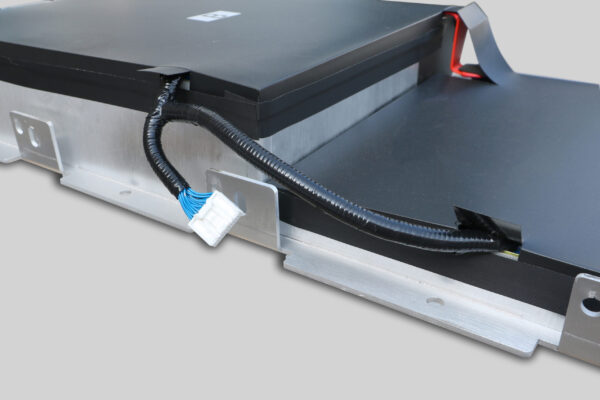
- Enhanced Thermal Interface: We utilize high-grade thermal conductive pads and advanced insulation blankets that are more efficient than the original 2011-2017 designs. This ensures heat is transferred away from the cells more effectively, reducing the load on the active cooling system.
- Brand New CATL Cells: Unlike refurbished batteries that retain old, heat-generating degraded cells, our packs use brand-new, top-tier cells. New cells have lower internal resistance, which means they generate significantly less heat during charging and discharging.
- Plug-and-Play Compatibility: Our packs are engineered to OEM standards. This means the temperature sensors and communication lines with your car’s existing cooling system work flawlessly out of the box—no modifications required.
Expert Insight: “Many customers come to us after spending hundreds fixing pumps and radiators, only to find the battery cells themselves were the source of the heat. Replacing the pack with a new, high-quality unit from CNS is often the most cost-effective solution in the long run.” — CNS Technical Team
💰 The Cost Comparison: Repair vs. Replace
Let’s break down the math. You have two paths:
| Option | Estimated Cost (USD) | Longevity | Cooling Efficiency | Risk of Future Failure |
|---|---|---|---|---|
| Repair Existing | $500 – $1,200 | 6-18 Months | Low (Aging hardware) | High |
| CNS New Battery | ~$8,000 | 10+ Years | High (New design) | Virtually Zero |
Note: Prices are approximate and based on 2026 market data for a 62kWh replacement.
While a repair might seem cheaper upfront, the recurring costs of maintaining a 10+ year old thermal system often outweigh the investment in a brand-new, warrantied solution.
📣 Ready to Restore Your Leaf’s Performance?
Don’t let overheating issues sideline your Nissan Leaf. Whether you need a simple coolant flush guide or are ready to upgrade to a brand-new, high-capacity battery pack, CNS BATTERY has the expertise and parts you need.
We specialize in providing Original Equipment Manufacturer (OEM) compatible solutions that save you over 50% in costs compared to dealership prices, without compromising on safety or compatibility.
Take the Next Step: If you’re experiencing active cooling errors or simply want to upgrade your range and reliability, get a Free Custom Quote today. Our technical experts will help you select the perfect battery solution for your Leaf model.
👉 Contact Our Technical Experts Now for a Custom Solution
❓ Frequently Asked Questions (FAQ)
Q1: Will a new CNS battery fix my “Thermal Control System” warning light? Yes, in most cases. If the warning light is caused by the battery cells overheating due to degradation, replacing them with brand-new CNS cells (which run cooler) will resolve the issue. However, if the car’s radiator or pump is physically broken, those external components will still need basic maintenance, but the load on them will be drastically reduced with a new pack.
Q2: Are CNS batteries compatible with the Nissan Leaf’s thermal management system? Absolutely. Our batteries are reverse-engineered to match the original factory specifications. The temperature sensors, resistance values, and communication protocols are 100% compatible with the Leaf’s existing cooling control unit.
Q3: How long does the installation take? Installing a CNS battery typically takes 1-2 hours. We provide comprehensive installation guides and video tutorials. If you encounter any issues with the cooling lines or connections during installation, our customer service team offers remote video guidance to assist you step-by-step.
Q4: What warranty do I get on the thermal components? CNS offers an industry-leading 2-Year / 80,000 KM warranty. This covers the battery pack, including the internal thermal interface materials and cells, against defects. If the battery overheats due to a manufacturing fault, we provide free replacement or repair.
Q5: Can I use my old coolant with the new battery? We recommend flushing the old coolant and replacing it with fresh Nissan Long Life Coolant when installing a new battery pack. This prevents contamination and ensures the new water pump and radiator function at peak efficiency.

