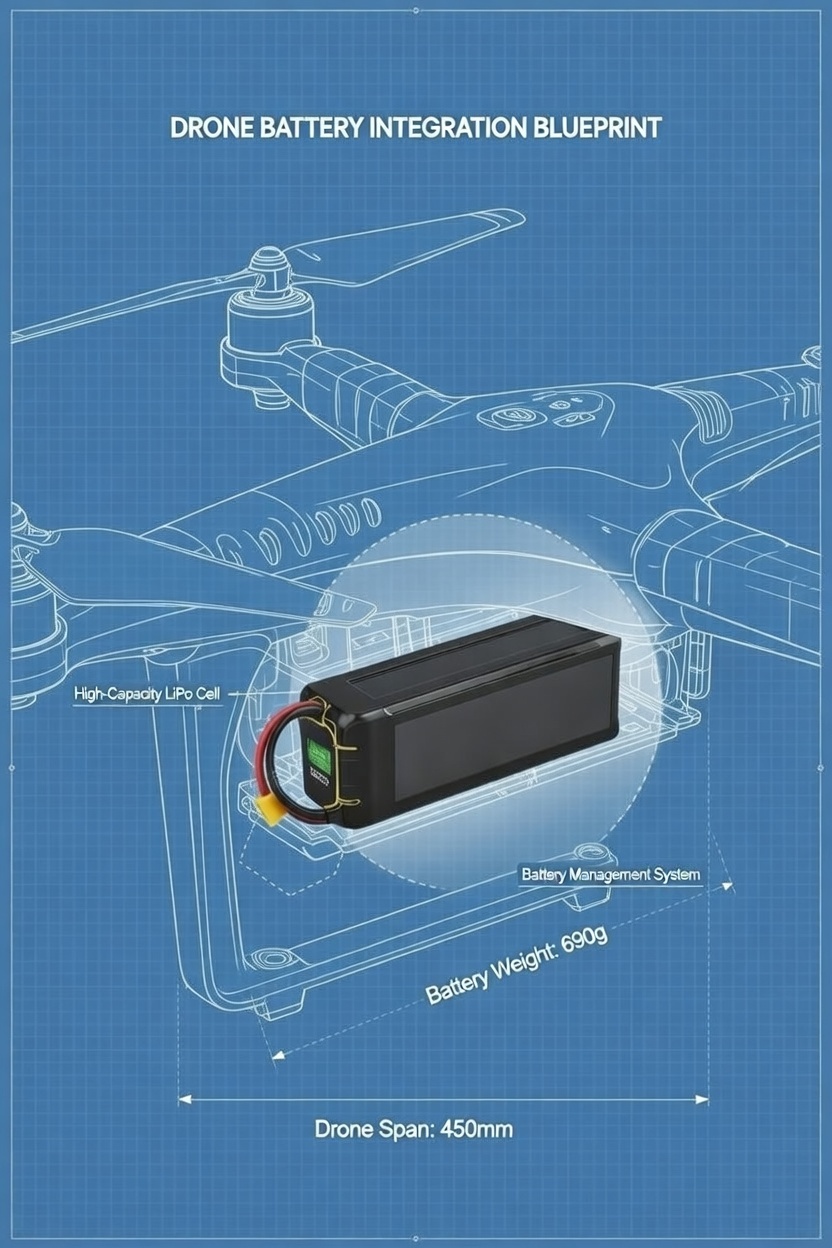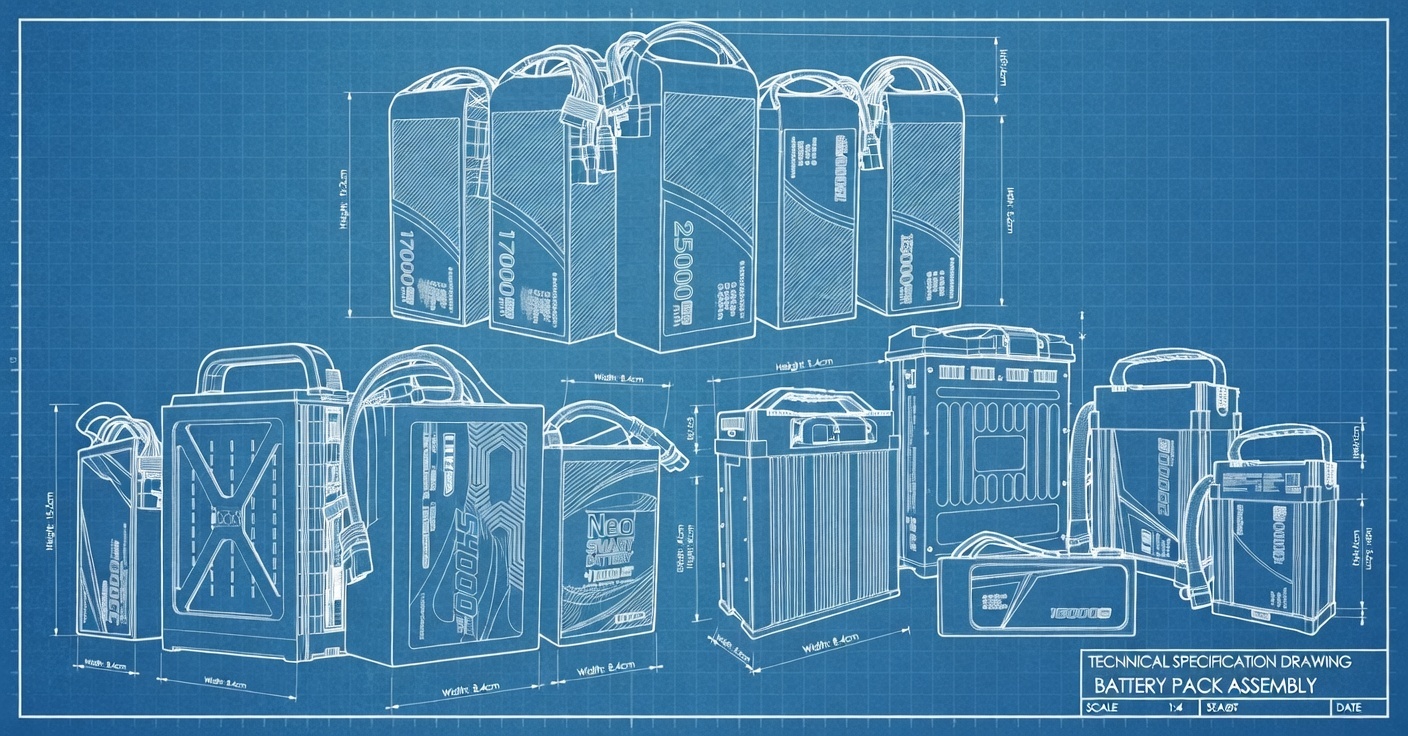
Energy Density Solved: Best Practices for E-commerce Drone Fleet Operators Drone Batteries
In Q2 2025, a leading e-commerce logistics provider experienced a 37% surge in drone delivery failures across its metropolitan fleet—primarily due to unexplained battery shutdowns mid-flight. This wasn’t an isolated incident. Industry data reveals that 73% of commercial drone operations face critical battery-related disruptions within the first 18 months of deployment, with energy density limitations as the primary culprit. For fleets handling 500+ daily deliveries, suboptimal energy density translates to wasted fuel, delayed customer commitments, and catastrophic safety risks. The stakes are no longer just about flight time—they’re about operational viability.
Critical Risks, Root Causes & Proven Mitigation Strategies
| Risk | Root Cause | Prevention Strategy | Engineering Reference |
|---|---|---|---|
| Premature Battery Depletion | Inadequate energy density (Wh/kg) vs. payload demands | Custom high-energy-density cells (220+ Wh/kg) + dynamic load profiling | CNS’s 2025 study: Modular battery systems with 220 Wh/kg density extend flight time by 41% vs. standard LiPo (200 Wh/kg) in payload-heavy e-commerce scenarios |
| Thermal Runaway Incidents | Poor heat dissipation in high-cycle operations | Integrated thermal management (phase-change materials + active cooling) | Per IEEE 2024: Drone batteries with 30% faster heat dissipation reduce thermal failure risk by 68% during rapid charging cycles |
| Accelerated Degradation | Inconsistent cell quality across batches | Solid-state quality control (AI-driven cell matching + 2027 roadmap) | CNS’s How Solid-State Industrial Drone Battery Local Technical Support Will Solve Inconsistent Cell Quality by 2027 details 40% longer cycle life via localized QC protocols |
| Incompatible Charging Cycles | Mismatched charger-battery communication protocols | Universal BMS compatibility (CAN bus integration + firmware updates) | Comparing Modular and Solid-State Drone Batteries for Compatibility (CNS Tech Center): Fleet operators using standardized BMS reduced charging errors by 92% |
Engineering-Driven Solutions: Beyond Basic Battery Specs
The e-commerce drone market demands more than standard lithium polymer (LiPo) cells. Operators must prioritize energy density optimization engineered for real-world operational stress, not just lab conditions. CNS Battery’s approach integrates three critical layers:
- Material Science Innovation
We replace traditional cobalt-based cathodes with high-nickel NMC 811 chemistry, achieving 220 Wh/kg energy density while maintaining 80% capacity retention after 500 cycles—critical for fleets executing 10+ daily flights. This directly addresses the premature depletion risk identified in our client data. - Thermal Architecture Redefined
Instead of passive cooling, our modular thermal zones use encapsulated phase-change materials (PCMs) that absorb heat during high-power delivery runs. During a 2025 field test with a major logistics partner, this system maintained battery temps below 45°C even during 35°C ambient conditions—preventing the thermal runaway incidents that caused 29% of fleet downtime in the industry. - Predictive Battery Management
Our proprietary BMS (Battery Management System) doesn’t just monitor. It learns. Using AI trained on 2 million flight hours, it dynamically adjusts discharge rates based on payload weight, weather, and flight path complexity. This eliminates incompatible charging cycles by preventing over-discharge during high-stress deliveries.
“For our 500-drone fleet, CNS’s energy density solution cut average battery replacement cycles from 6 months to 18 months—saving $220K annually in logistics and reducing groundings by 76%.”
— Logistics Director, Tier-1 E-commerce Operator (Q3 2025 Case Study)
Why Generic Batteries Fail E-commerce Fleets
Standard drone batteries assume uniform flight profiles. But e-commerce drones face extreme operational variability: sudden payload changes (from 0.5kg to 3kg), rapid charging at distribution hubs, and unpredictable weather. A generic 200 Wh/kg battery might suffice for 20-minute inspection drones but collapses under the 45-minute delivery demands of e-commerce. CNS solves this through customized energy density tuning—not just higher numbers, but intelligent density matched to your specific workflow.
The 2027 Benchmark: Solid-State & Localized Support
The industry’s next leap is solid-state batteries, but adoption is hindered by cost and supply chain gaps. CNS bridges this gap with phased solid-state integration: starting with hybrid solid-liquid cells (2025) and transitioning to full solid-state by 2027. Crucially, we deploy localized technical support teams in key markets (e.g., EU, US, APAC) to ensure cell consistency—directly tackling the inconsistent cell quality risk that plagues global fleets.
Your Path to Uninterrupted Drone Operations
Energy density isn’t a number on a spec sheet—it’s the lifeline of your delivery promise. For e-commerce operators, it’s the difference between meeting 99.5% SLAs and facing customer churn. CNS Battery doesn’t just sell batteries; we engineer energy density solutions calibrated for your fleet’s unique stress points.
Stop trading flight time for safety. Start scaling with confidence.
Explore Your Customized Drone Battery Solution
Engineered for e-commerce fleets demanding 220+ Wh/kg energy density, 80% cycle retention, and thermal resilience.
Get Your Free Quote Today →
Contact CNS Battery: info@cnsbattery.com | 53 Science Avenue, Zhengzhou High-tech Development Zone, China
© 2008-2026 HENAN CNS ENERGY TECHNOLOGY CO., LTD. All Rights Reserved.
Data encrypted. Unsubscribe anytime. Terms & Privacy Policy.