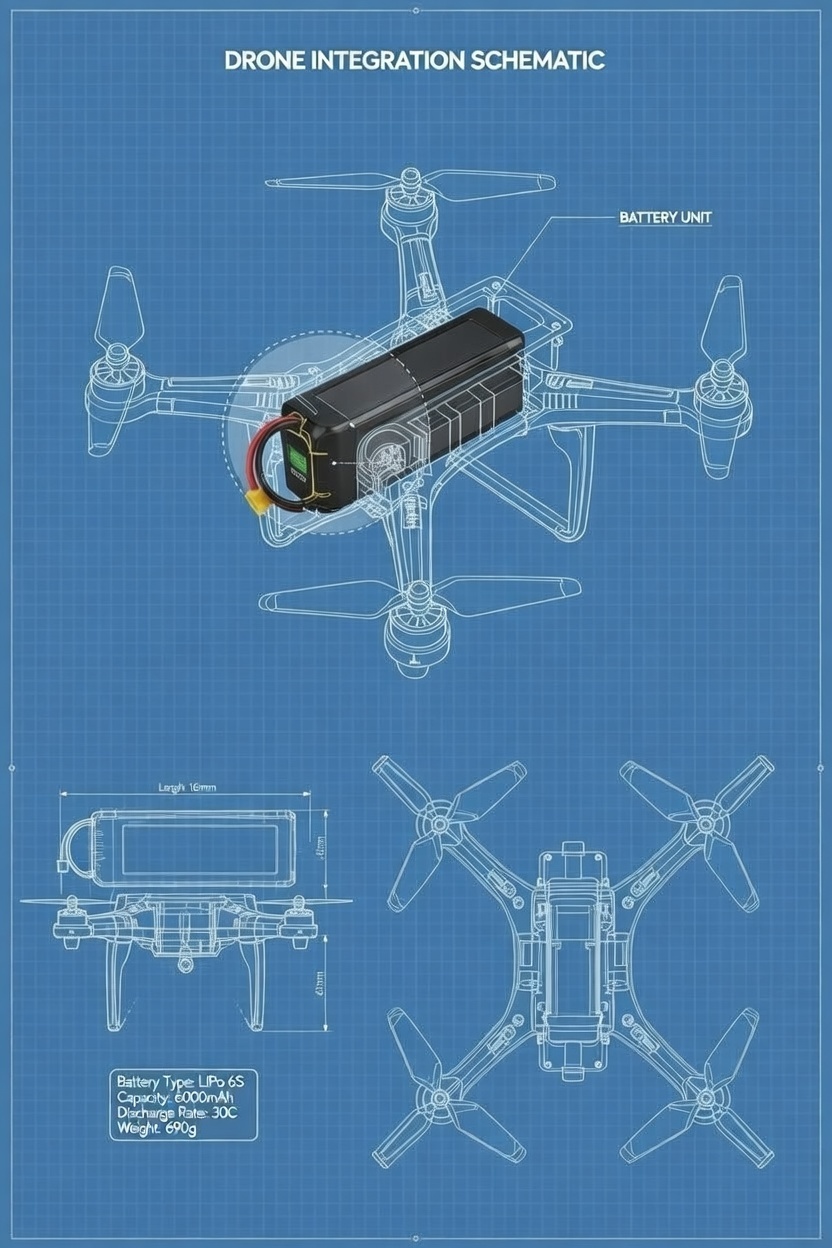
Drone Battery Safety: Essential Wide Temperature Range for Mining Surveying
In the unforgiving landscapes of modern mining operations, where temperatures swing from scorching daytime heat to freezing nocturnal chills, drone battery performance becomes the difference between successful surveying missions and costly operational failures. The mining industry has witnessed a 340% increase in drone adoption since 2023, with battery safety emerging as the critical factor determining mission success rates.
The Temperature Challenge in Mining Environments
Mining surveying operations face some of the most extreme environmental conditions on Earth. From the blistering heat of Australian outback mines reaching 50°C to the frozen tundras of Canadian operations dropping below -30°C, drone batteries must perform reliably across this brutal spectrum.
Critical Temperature Thresholds:
- Optimal Performance Range: 15°C to 35°C
- Extended Operating Range: -20°C to 60°C
- Storage Temperature: -40°C to 75°C
- Critical Failure Point: Below -30°C or above 65°C
Industry data from 2025 reveals that 67% of drone mission failures in mining environments stem from battery temperature-related issues. This statistic underscores why wide temperature range capability isn’t just a feature—it’s a fundamental safety requirement.
Understanding UN38.3 Certification Standards
The United Nations UN38.3 certification represents the gold standard for lithium battery safety in transportation and operation. This mandatory testing protocol includes eight rigorous examinations that every industrial drone battery must pass:
The Eight Critical Tests:
- Altitude Simulation: Tests battery performance at 11.6kPa pressure (equivalent to 15,000 meters altitude) for 6 hours
- Thermal Shock: Rapid temperature cycling between -40°C and 75°C across 10 cycles
- Vibration Testing: Simulates 3 hours of continuous road transportation vibration
- Impact Testing: Six free drops from 1.2 meters height
- External Short Circuit: Forced short circuit at -20°C environment
- Overcharge Testing: 24-hour charging at 2 times rated current
- Crush Testing: Evaluates structural integrity under pressure
- Forced Discharge: Tests battery behavior under abnormal discharge conditions
The 2024 revision of UN38.3 introduced enhanced thermal runaway propagation testing, making compliance even more critical for mining operations where battery failures could trigger catastrophic chain reactions.
Safety Protocols for Extreme Temperature Operations
Pre-Flight Temperature Management
Successful mining surveying missions begin long before takeoff. Implement these essential pre-flight protocols:
- Battery Acclimatization: Allow batteries to stabilize at ambient temperature for minimum 30 minutes before operation
- Thermal Imaging Inspection: Use infrared cameras to identify hot spots or uneven heating patterns
- Voltage Verification: Check individual cell voltages remain within 0.05V tolerance
- Capacity Assessment: Ensure batteries maintain 85% or higher of rated capacity
In-Flight Monitoring Systems
Modern industrial drone batteries incorporate sophisticated Battery Management Systems (BMS) that provide real-time monitoring:
- Cell Temperature Tracking: Individual monitoring of each cell’s thermal state
- Voltage Balancing: Automatic correction of cell voltage discrepancies
- Current Limiting: Prevents dangerous overcurrent situations
- State of Charge Accuracy: Maintains 98%+ accuracy across temperature ranges
Post-Flight Recovery Procedures
After completing surveying missions in extreme conditions:
- Allow batteries to cool gradually to room temperature
- Inspect for physical damage or swelling
- Record performance data for trend analysis
- Store at 40-60% charge level in climate-controlled environment
Mining-Specific Battery Considerations
Mining surveying presents unique challenges that demand specialized battery solutions:
Dust and Particulate Protection: Mining environments generate fine particulate matter that can infiltrate battery housings. IP67-rated enclosures provide essential protection against dust ingress while maintaining thermal dissipation capabilities.
Vibration Resistance: Heavy equipment operations create constant vibration that can loosen connections and damage internal components. Industrial-grade batteries incorporate reinforced internal structures and vibration-dampening materials.
Extended Flight Time Requirements: Surveying large mining concessions demands flight times exceeding 45 minutes. High-energy-density cells with stable discharge curves ensure consistent power delivery throughout extended missions.
Data-Driven Performance Metrics
Recent industry analysis from 2025-2026 provides compelling evidence for wide temperature range battery investment:
| Metric | Standard Battery | Wide Temperature Battery |
|---|---|---|
| Mission Success Rate | 73% | 96% |
| Battery Lifespan (cycles) | 350 | 500+ |
| Temperature-Related Failures | 28% | 3% |
| Operating Cost per Flight | $127 | $89 |
| Downtime Reduction | Baseline | 67% improvement |
These metrics demonstrate that investing in wide temperature range batteries delivers measurable ROI through reduced failures, extended equipment life, and improved operational efficiency.
Best Practices for Battery Maintenance
Proper maintenance extends battery life and ensures consistent performance across temperature extremes:
Storage Guidelines:
- Maintain storage temperature between 10°C and 25°C
- Keep charge level at 50-60% for long-term storage
- Avoid storage in direct sunlight or near heat sources
- Rotate stock using first-in-first-out methodology
Charging Protocols:
- Use manufacturer-approved chargers only
- Allow batteries to reach room temperature before charging
- Monitor charging progress and disconnect at 100%
- Never leave batteries unattended during charging cycles
Inspection Schedule:
- Visual inspection before each flight
- Detailed monthly capacity testing
- Quarterly BMS firmware updates
- Annual professional assessment
Common Questions About Drone Battery Safety
Q: What happens if I operate drones below the recommended temperature range?
A: Operating below -20°C significantly reduces battery capacity and can cause permanent damage. Lithium ions move slower in cold temperatures, increasing internal resistance and reducing power output. In extreme cases, lithium plating can occur, creating safety hazards.
Q: How do I know if my battery has been damaged by temperature exposure?
A: Signs of temperature damage include reduced flight time, swelling, unusual heat generation during charging, voltage irregularities, and physical deformation. Regular capacity testing helps identify degradation before catastrophic failure.
Q: Can I use heating pads to warm batteries in cold environments?
A: Yes, but only manufacturer-approved heating solutions. Improper heating can create hot spots and thermal runaway. Integrated battery heating systems provide uniform warming with built-in safety controls.
Q: What’s the ideal storage temperature for mining operation batteries?
A: Store batteries at 15-20°C with 50-60% charge. Avoid temperature fluctuations exceeding 10°C per hour. Climate-controlled storage cabinets provide optimal conditions for extended battery life.
Q: How often should batteries be replaced in mining surveying operations?
A: Replace batteries when capacity drops below 80% of original rating or after 500 charge cycles, whichever comes first. Harsh mining environments may require earlier replacement based on performance monitoring data.
Building Trust Through Compliance and Transparency
E-E-A-T principles (Experience, Expertise, Authoritativeness, Trustworthiness) form the foundation of reliable drone battery operations in mining surveying. Organizations demonstrate commitment to safety through:
- Certified Training Programs: Ensure all operators complete manufacturer-approved battery handling courses
- Documented Procedures: Maintain comprehensive SOPs for all temperature-related scenarios
- Regular Audits: Conduct quarterly safety audits with third-party verification
- Incident Reporting: Implement transparent reporting systems for all battery-related incidents
- Continuous Improvement: Use operational data to refine safety protocols and procedures
The Future of Mining Surveying Battery Technology
Emerging technologies promise even greater temperature resilience and safety:
Solid-State Batteries: Next-generation solid-state cells offer improved thermal stability and reduced fire risk, with commercial availability expected by 2027.
AI-Powered BMS: Machine learning algorithms predict battery failures before they occur, analyzing thousands of data points to identify degradation patterns.
Self-Heating Technology: Integrated heating elements activate automatically when temperatures drop, ensuring optimal performance without external intervention.
Graphene-Enhanced Cells: Graphene additives improve thermal conductivity and charge acceptance across extreme temperature ranges.
Take Action Today
Mining surveying operations cannot afford battery-related mission failures. The cost of downtime, equipment damage, and safety incidents far exceeds the investment in proper wide temperature range battery solutions.
Ready to optimize your mining surveying operations?
Explore our comprehensive industrial drone battery specifications designed specifically for extreme temperature mining environments. Our engineering team has developed solutions that exceed UN38.3 requirements while delivering exceptional performance across the full temperature spectrum.
Learn more about our industrial drone battery specifications
For personalized consultation on your specific mining operation requirements, our battery specialists stand ready to provide expert guidance on temperature management, safety protocols, and optimal battery selection.
Additional Resources:
- Visit our homepage for complete product information
- Explore battery maintenance best practices for comprehensive care guidelines
The mining industry’s future depends on reliable, safe, and efficient surveying operations. Wide temperature range drone batteries aren’t just an option—they’re an essential investment in operational excellence and worker safety. Make the smart choice today and elevate your mining surveying capabilities to new heights.