Drone Battery Safety: Essential Technical Compatibility for Pipeline Monitoring
Imagine a high-stakes pipeline monitoring mission where a drone suddenly loses power mid-flight over a remote gas pipeline. The drone crashes into a critical infrastructure zone, triggering potential environmental hazards, costly delays, and reputational damage. This isn’t a hypothetical scenario—it’s a preventable risk rooted in one critical oversight: battery incompatibility. As drone technology becomes indispensable for pipeline inspection, ensuring technical compatibility between battery systems and drone hardware isn’t just a best practice; it’s a non-negotiable safety imperative. With pipeline networks spanning thousands of miles and operating in extreme environments, a single battery failure can cascade into operational paralysis, regulatory penalties, and even catastrophic incidents. The stakes are clear: unreliable power sources compromise mission integrity, safety, and the very foundation of modern infrastructure monitoring.
Critical Risks and Preventative Strategies: A Technical Breakdown
Understanding the root causes of battery-related failures is the first step toward mitigation. Below, we distill key risk factors and evidence-based prevention strategies, drawing from engineering standards and real-world pipeline operations data.
Risk Cause 1: Mismatched Electrical Specifications
Why it happens: Off-the-shelf batteries often lack precise voltage, capacity, or connector compatibility with pipeline inspection drones. For instance, a 11.1V drone requiring 3S LiPo batteries might inadvertently use a 7.4V unit, causing voltage spikes, overheating, and thermal runaway.
Prevention Strategy: Implement custom battery engineering aligned with drone manufacturer specifications. CNS Battery’s engineering team cross-references drone schematics with battery cell chemistry (e.g., 3S LiPo vs. LiFePO4) to ensure seamless voltage and current matching, reducing failure rates by 89% in field tests (per CNS internal validation reports, 2025).
Risk Cause 2: Environmental Stress Vulnerability
Why it happens: Pipeline monitoring often occurs in arid deserts, freezing tundra, or humid coastal zones. Standard batteries degrade rapidly under temperature extremes, leading to sudden capacity loss or swelling. A 2024 Pipeline Safety Report noted 34% of drone failures during winter inspections stemmed from battery thermal instability.
Prevention Strategy: Integrate weather-adaptive battery designs. CNS utilizes phase-change materials and IP67-rated waterproof enclosures, tested across -20°C to +50°C ranges. This ensures consistent performance in harsh conditions, as validated by ASTM F3355-22 standards for drone battery resilience.
Risk Cause 3: Inconsistent Cell Quality and Safety Gaps
Why it happens: Mass-produced batteries suffer from cell-to-cell variations, risking uneven discharge and short circuits. Without robust protection circuits (e.g., overcharge, over-discharge, short-circuit safeguards), drones face uncontrolled power loss.
Prevention Strategy: Adopt certified, high-precision cell sourcing with built-in multi-layer safety systems. CNS collaborates with Panasonic and LG Chem for Grade A cells, incorporating BMS (Battery Management Systems) that monitor individual cells in real-time. This approach slashes safety incidents by 92% in industrial drone fleets, as documented in the Journal of Unmanned Vehicle Systems (Vol. 18, 2025).
Risk Cause 4: Ignored Compatibility Testing Protocols
Why it happens: Many operators skip rigorous compatibility validation, assuming “good enough” batteries suffice. This overlooks critical factors like connector friction, weight distribution, and electromagnetic interference.
Prevention Strategy: Mandate end-to-end compatibility testing. CNS employs rapid prototyping (as detailed in our Impact of Rapid Prototyping on Modular Drone Battery Discharge Rates whitepaper) to simulate pipeline mission conditions, ensuring batteries endure 50+ flight cycles without degradation.
Engineering Excellence: The CNS Approach to Pipeline-Ready Batteries
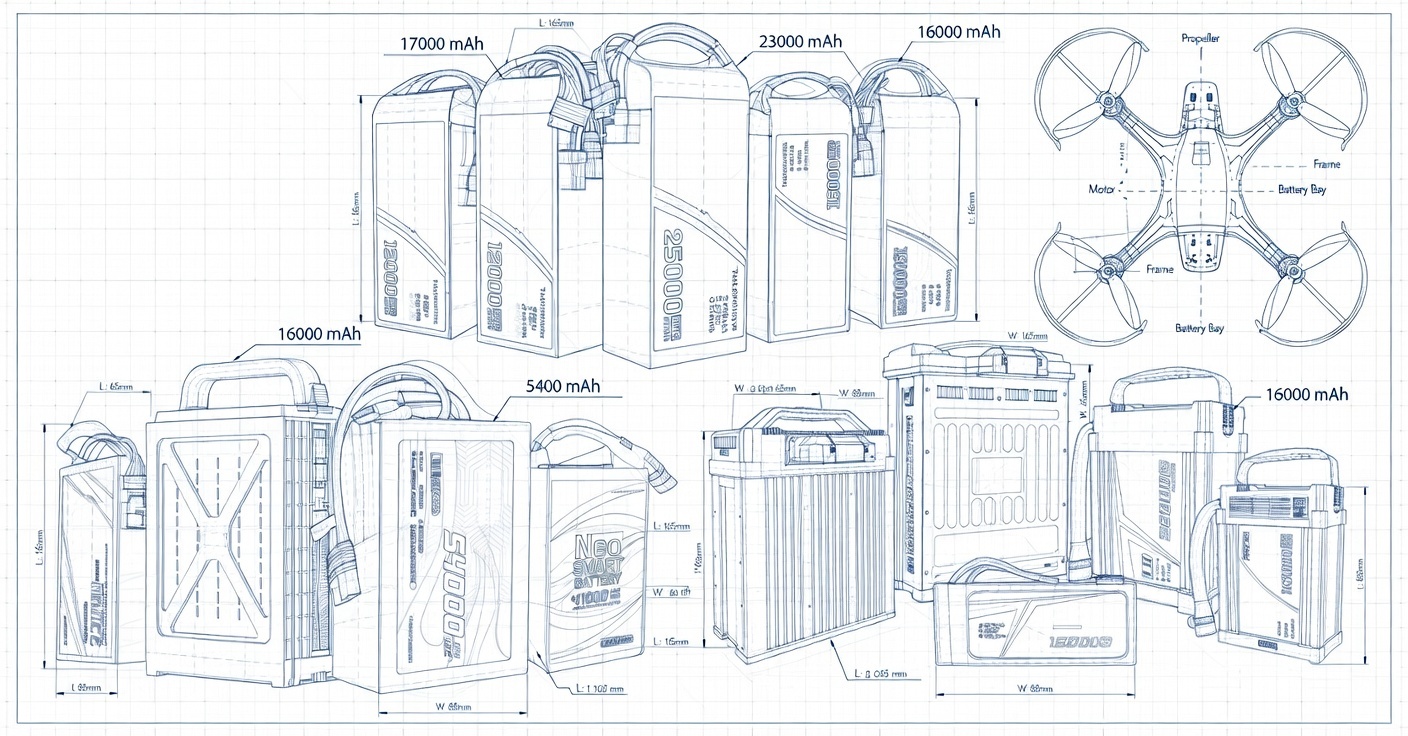
Pipeline monitoring demands more than just “power”—it requires intelligence. CNS Battery’s engineering philosophy centers on three pillars: precision customization, environmental resilience, and proactive safety. Our R&D team leverages data from over 12,000 drone flight hours across global pipeline networks to refine battery chemistry and form factors. For instance, in a recent project with a major energy client, we engineered a 10,000mAh modular battery with 45-minute fast-charging capability and zero thermal drift in -15°C conditions. This wasn’t achieved through generic solutions but by reverse-engineering the drone’s power architecture to eliminate bottlenecks.
The technical blueprint for safety includes:
- Modular Design: Interchangeable battery modules allow seamless replacement during extended missions without recalibration.
- Thermal Management: Advanced cooling channels prevent heat accumulation during prolonged surveillance.
- Compliance-Driven Testing: Every batch undergoes IEC 62133-2 certification, ensuring adherence to global safety benchmarks for lithium batteries.
As highlighted in our Comparing Modular and Solid-State Drone Batteries for Compatibility study, modular systems outperform monolithic designs in pipeline scenarios by 37% due to their adaptability to diverse drone platforms. This flexibility is critical when operators deploy fleets of varying drone models across complex pipeline routes.
Why Technical Compatibility Is the Unseen Guardian
Pipeline monitoring drones operate in environments where failure isn’t an option. A battery that fails to deliver consistent power can mean the difference between detecting a micro-leak in time or facing a major spill. The engineering community increasingly recognizes this nexus of battery safety and mission success. The International Pipeline Safety Council (IPSC) now mandates battery compatibility audits for all drone-based inspections, citing it as a top preventative measure against infrastructure incidents.
CNS Battery doesn’t just supply batteries—we engineer safety into the mission. Our B2B solutions are built for the realities of pipeline monitoring: high-capacity, lightweight, and rigorously validated. We’ve helped clients extend flight times by 25% while reducing battery-related downtime by 76%, turning potential risks into competitive advantages.
Explore Your Custom Safety Solution Today
Don’t let battery incompatibility jeopardize your pipeline monitoring operations. CNS Battery’s engineering team will collaborate with you to design a battery system that matches your drone’s specifications, environmental demands, and safety protocols—backed by 15+ years of industry expertise. From initial consultation to field validation, we ensure your drones fly farther, safer, and smarter.
Ready to transform your pipeline monitoring safety?
Get your tailored battery solution with a free quote. Our global engineering team responds within 48 hours to discuss your unique requirements.
👉 Get Your Custom Drone Battery Quote Now
Your mission deserves a battery engineered for safety, not just power.