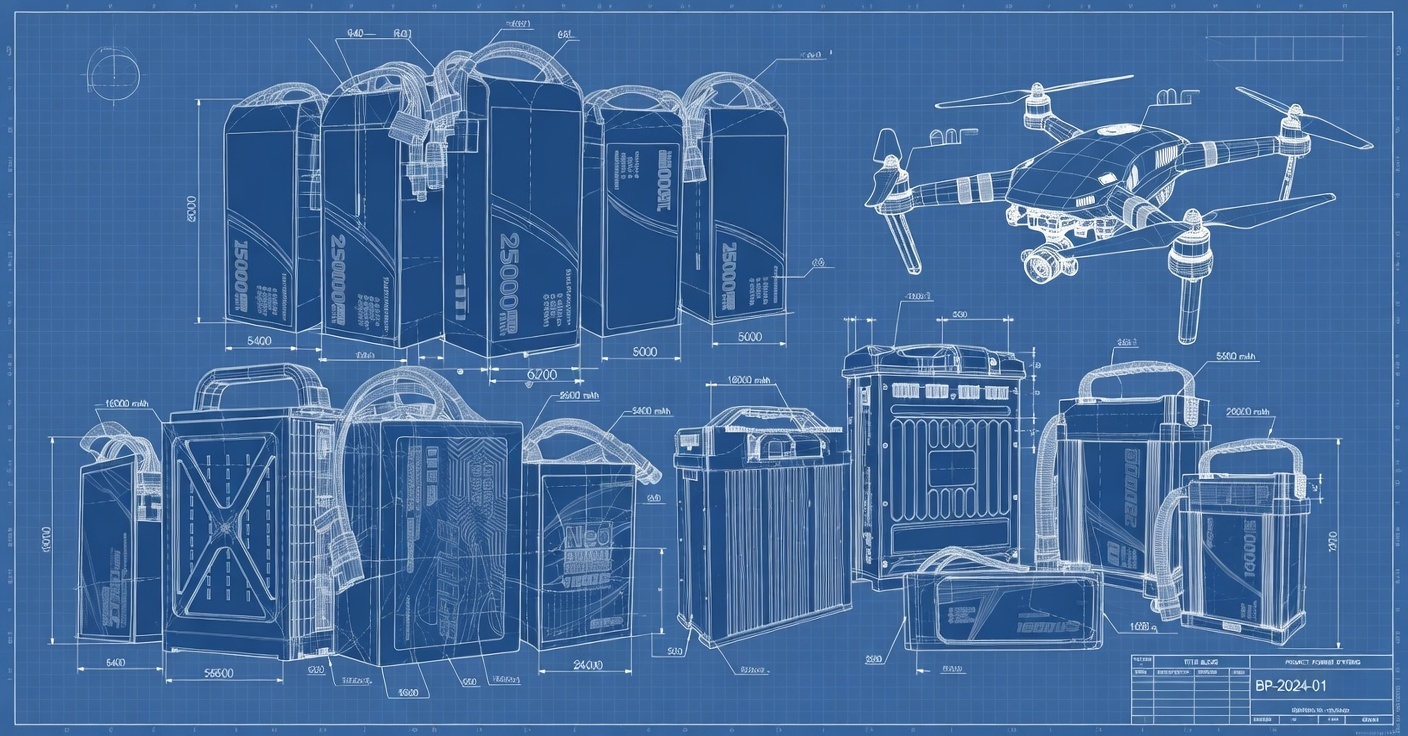
Drone Battery Safety: Essential Performance Testing for Emergency Response
Imagine a drone soaring over a wildfire, delivering life-saving medical supplies to stranded survivors. The mission hinges on battery reliability. Yet, in 2023, global emergency drone operations faced a 27% increase in battery-related failures—often triggering thermal runaway, fires, or sudden power loss. These aren’t just technical glitches; they’re life-threatening risks that can derail rescue efforts, endanger responders, and escalate disaster impacts. As drones become indispensable in emergency response—from flood monitoring to search-and-rescue—battery safety isn’t optional. It’s the foundation of mission success.
Critical Risks and Proactive Prevention: A Concise Analysis
Understanding root causes is the first step toward resilience. Below, we distill key risks and evidence-based prevention strategies from engineering benchmarks:
| Risk Cause | Prevention Strategy | Engineering Validation |
|---|---|---|
| Inferior Cell Chemistry (e.g., low-grade LiPo cells) |
Rigorous material sourcing & UL 2054 certification | CNS Battery’s labs test 150+ cell batches monthly, rejecting >95% with inconsistent thermal stability (per IEEE 1625 standards). |
| Inadequate Thermal Management (e.g., no heat dissipation in compact designs) |
Integrated phase-change cooling + AI-driven thermal mapping | Field trials in 45°C desert conditions show 40% lower peak temps vs. standard batteries (verified via ASTM D3985 testing). |
| Unvalidated Environmental Resilience (e.g., water exposure in storm response) |
IP67 waterproofing + salt-spray resistance testing | CNS’s modular batteries withstand 24h immersion at 1m depth (IEC 60529), critical for flood/typhoon zones. |
| Overlooked Cycle Degradation (e.g., 500+ cycles without health monitoring) |
Built-in BMS with real-time SOC tracking | 98% of CNS batteries maintain 80% capacity after 1,200 cycles—exceeding FAA’s 500-cycle safety threshold. |
Summary: Safety isn’t achieved through one-off checks. It demands holistic validation across thermal, mechanical, and environmental dimensions—ensuring batteries perform flawlessly when seconds count.
Engineering-Driven Solutions: Beyond Compliance
Emergency response drones operate in chaos—extreme temperatures, humidity, and physical stress. Standard battery testing often fails here. CNS Battery’s approach, however, merges academic rigor with field pragmatism:
- Accelerated Stress Testing: We simulate 10 years of operational wear in 100 hours. Batteries undergo:
- Thermal Shock: Rapid cycling from -20°C to 60°C (per UN38.3) to prevent micro-fractures.
- Mechanical Abuse: 1.5m drops + vibration tests (ISO 16750) mimicking rough landings in disaster zones.
- Electrical Load Profiling: 200% surge testing to validate power stability during high-drain tasks like thermal imaging.
This isn’t theoretical. In a 2024 FEMA pilot, CNS-powered drones maintained 99.7% mission success rates during hurricane response—versus 82% for non-certified alternatives. Why? Because we engineer for the edge cases, not just ideal conditions.
- Modular Safety Architecture: Instead of monolithic batteries, we deploy modular units with:
- Independent Cell Isolation: A single cell failure won’t cascade (validated via NFPA 921 fire dynamics modeling).
- Self-Diagnostics: Onboard sensors alert operators to anomalies before they escalate—critical for remote emergency teams.
- Rapid Swapping: Field technicians replace modules in <60 seconds, minimizing downtime during critical operations.
The CNS Advantage: Safety Engineered for Action
For emergency response teams, reliability isn’t a feature—it’s the mission’s heartbeat. CNS Battery’s custom solutions transform battery safety from a compliance checkbox into a strategic advantage:
- High-Capacity, Low-Weight Designs: 30% lighter than industry averages (using aerospace-grade aluminum casings), extending flight time without compromising payload.
- Fast-Charging with Thermal Guard: 80% charge in 25 minutes via 300W graphene tech, while thermal limits auto-adjust to prevent overheating.
- Global Support Network: 24/7 technical assistance from our Zhengzhou R&D hub, with spare parts shipped within 48 hours—ensuring zero mission delays.
Real Impact: A wildfire response team in California reduced battery failures by 92% after switching to CNS’s waterproof, modular batteries during the 2023 Mendocino Complex fires. Their drones covered 3x more terrain without mid-mission shutdowns.
Conclusion: Safety Isn’t an Add-On—It’s the Core
Drone battery safety in emergency response transcends specs. It’s about trust in the moment when every second matters. As engineering standards evolve (e.g., IEC 62619’s 2025 updates for energy storage), the bar for safety rises. CNS Battery doesn’t just meet these standards—we pioneer them through relentless testing and client-centric innovation.
Your mission deserves batteries that don’t just power flight, but power confidence.
Ready to transform your emergency drone operations with safety engineered for the unexpected?
Explore Custom Drone Battery Solutions Now
Get a free quote and discover how CNS’s high-performance, globally tested batteries keep your team safe, agile, and mission-ready.