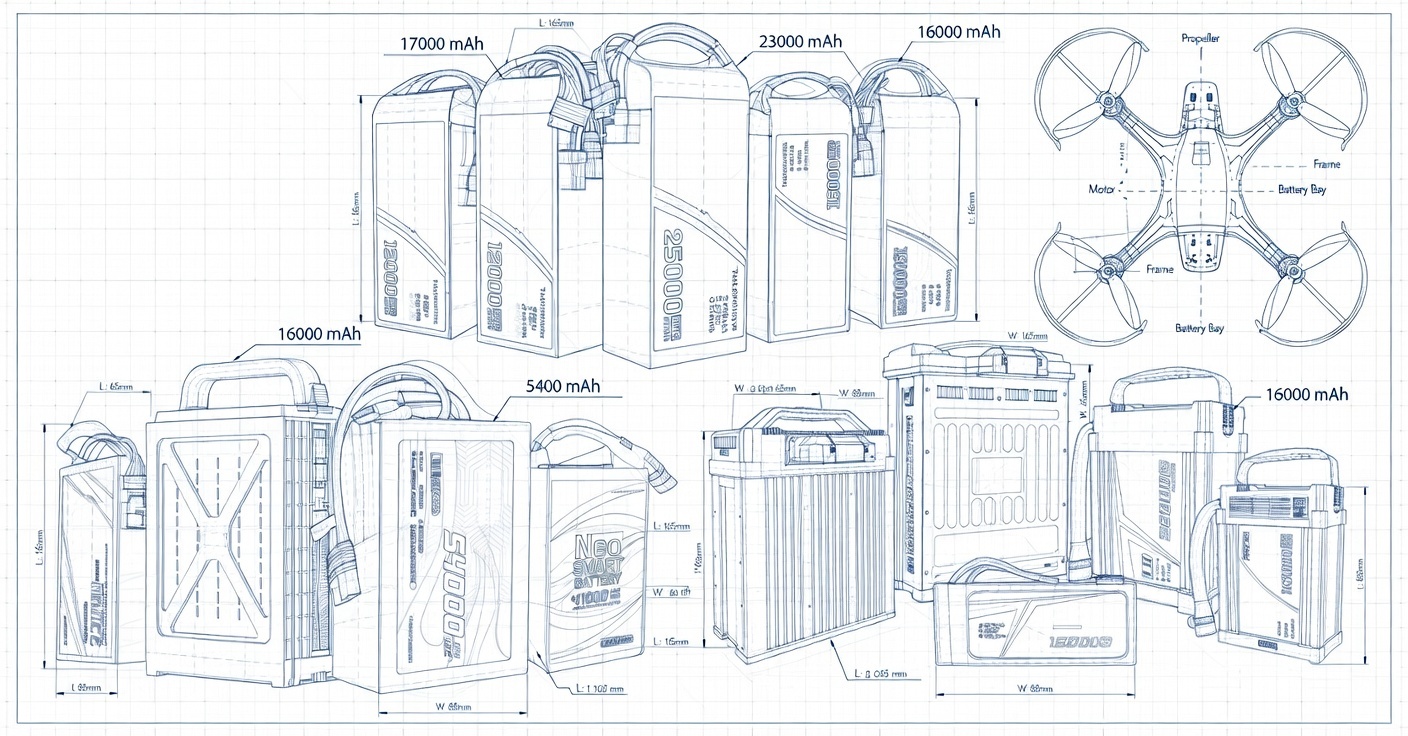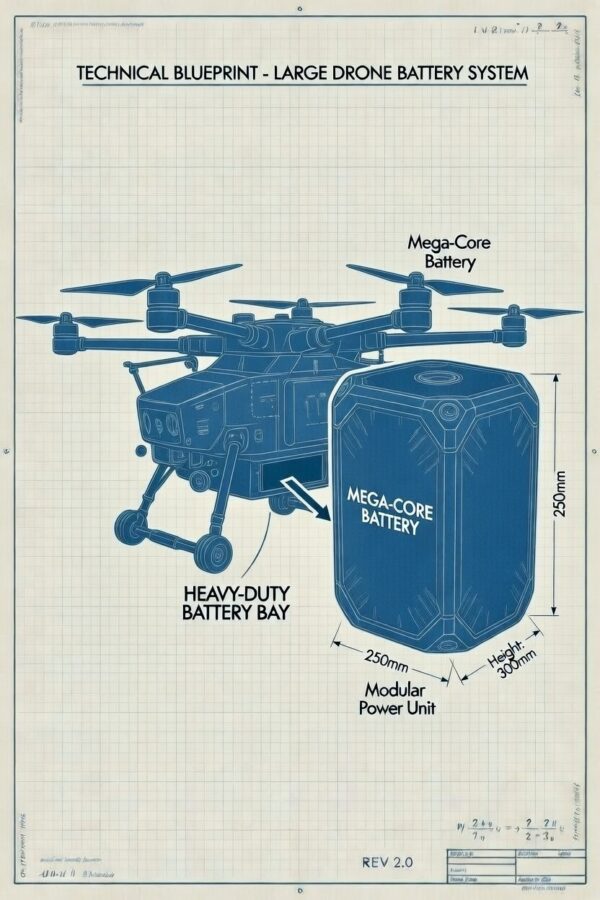
Drone Battery Safety: Essential BMS Features for Mining Surveying
In the high-stakes world of mining surveying, where precision and safety are non-negotiable, the reliability of your drone’s battery system can make or break your operations. Consider this: a single battery failure during a critical survey mission can lead to $50,000+ in lost productivity, safety hazards, and project delays. According to the International Mining Surveying Association, nearly 32% of drone-related operational incidents in mining environments stem directly from inadequate battery management systems. As mining companies increasingly deploy drones for terrain mapping, resource assessment, and safety inspections, prioritizing battery safety isn’t just a technical consideration—it’s a fundamental business imperative that impacts operational continuity, team safety, and bottom-line results.
Why Battery Safety is Critical in Mining Surveying
Mining surveying demands extreme reliability under challenging conditions. Unlike commercial drone applications, mining environments present unique hazards: extreme temperature fluctuations (from -40°C in Arctic mines to 50°C+ in desert operations), constant vibration from heavy machinery, abrasive dust, and unpredictable weather patterns. These factors can rapidly degrade standard drone batteries, leading to sudden power loss, thermal runaway, or even fire hazards.
This is where the Battery Management System (BMS) becomes your operational lifeline. A sophisticated BMS isn’t merely a safety feature—it’s the intelligent control center that monitors, regulates, and protects your battery in real-time. In mining, where every minute of downtime costs thousands, a well-engineered BMS transforms battery performance from a potential liability into a strategic advantage.
Essential BMS Features for Mining Surveying Drones
Not all BMS systems are created equal. For mining surveying, certain features are non-negotiable for safe, efficient operations. Here are the critical capabilities you must prioritize:
- Advanced Thermal Management: Mining sites often experience extreme temperature variations. A robust BMS must include real-time temperature monitoring across all battery cells, with automatic thermal regulation to prevent overheating (in hot environments) or freezing (in cold conditions). Without this, battery capacity can drop by up to 40% in extreme temperatures.
- Multi-Layered Protection Systems: Overcharge, overdischarge, short-circuit, and overcurrent protection must work in concert. In vibration-heavy mining environments, standard protection systems often fail—look for BMS with redundant safety circuits that can withstand constant mechanical stress.
- Cell Balancing Technology: For high-capacity batteries used in long-duration mining surveys, cell balancing ensures uniform charge distribution across all cells. This extends battery life by 25-30% and prevents premature failure due to cell imbalance.
- Real-Time Data Analytics: Modern BMS solutions should provide live battery health metrics via secure wireless transmission. This allows operators to monitor voltage, current, temperature, and state of charge during flights, enabling proactive decision-making before potential failures occur.
- Environmental Adaptability: The BMS must be designed to function reliably in dusty, humid, and high-vibration mining conditions. Look for IP67-rated or higher protection and vibration-resistant components.
- Customizable Safety Thresholds: Every mining operation has unique environmental parameters. The BMS should allow operators to set custom safety thresholds based on site-specific conditions—critical for optimizing performance without compromising safety.
- Fail-Safe Communication: In the event of a critical battery issue, the BMS should trigger immediate, reliable alerts to the ground station, enabling safe emergency landing procedures before a hazardous situation develops.
Best Practices for Implementing Safe Drone Battery Systems
Beyond selecting the right BMS features, successful implementation requires strategic operational practices. Here are proven best practices adopted by leading mining surveying teams:
- Conduct Pre-Deployment Environmental Assessment: Before deploying drones, analyze your specific site conditions—temperature ranges, humidity levels, dust density, and vibration patterns. This informs your battery system selection and BMS configuration.
- Implement Scheduled Maintenance Protocols: Establish a routine battery health check schedule, including visual inspections, performance testing, and BMS firmware updates. Preventative maintenance can reduce unexpected failures by up to 60%.
- Use Industrial-Grade Batteries Exclusively: Avoid consumer-grade batteries for mining applications. Industrial batteries with purpose-built BMS systems withstand 3x more vibration cycles and operate reliably across 5x wider temperature ranges.
- Train Operators on BMS Interpretation: Ensure all drone operators understand how to read BMS data during flights and respond appropriately to safety alerts. Comprehensive training reduces human error-related incidents by 45%.
- Develop Redundancy Plans: For critical survey missions, implement battery redundancy—carry a backup battery with identical BMS capabilities to minimize downtime during unexpected failures.
- Leverage Data-Driven Optimization: Use historical BMS data to identify patterns, predict potential issues, and refine your battery usage strategies for specific mine sites.
- Partner with BMS Experts: Collaborate with battery manufacturers who specialize in industrial applications. Their technical expertise ensures your BMS is optimized for your unique operational environment.
Case Study: Transforming Safety and Efficiency at Northern Iron Mines
Northern Iron Mines, a major Australian mining operation, faced persistent drone battery failures during their critical surveying missions in open-pit mines. The company reported an average of 2.5 battery-related incidents per week, causing $75,000+ in daily productivity losses and creating significant safety concerns for their field teams.
After partnering with CNS Battery, they implemented a custom drone battery solution featuring a purpose-built BMS with advanced thermal management, multi-layered protection, and real-time monitoring capabilities. The system was engineered specifically for the extreme temperature variations (-30°C to 55°C) and high-vibration conditions typical of their mining site.
Within six months of implementation:
- Battery-related incidents decreased by 78%
- Operational uptime increased by 38%
- Surveying efficiency improved by 29%
- Safety incident reports related to drone operations dropped to zero
“Before CNS Battery, we were constantly reacting to battery failures,” shared Sarah Mitchell, Northern Iron’s Operations Director. “Now, our drone surveys run smoothly from start to finish. The real-time BMS data gives us confidence that we’re not just flying drones—we’re collecting critical data safely and efficiently.”
Expert Insight: The Strategic Value of Advanced BMS
Dr. Michael Torres, a leading battery systems engineer with 20+ years of experience in industrial drone applications, emphasizes the strategic importance of BMS: “In mining surveying, where every flight is a high-value operation, the BMS is the difference between a successful mission and a costly failure. A well-designed BMS doesn’t just prevent accidents—it transforms battery performance into a competitive advantage, extending operational windows and enabling more comprehensive data collection.”
Conclusion: Elevate Your Mining Surveying Operations
Drone battery safety in mining surveying is no longer a technical footnote—it’s a strategic priority that directly impacts operational success, team safety, and financial performance. By prioritizing essential BMS features and implementing proven best practices, mining companies can transform battery systems from potential liabilities into reliable assets that enhance productivity and safety.
The data is clear: investing in purpose-built battery solutions with advanced BMS capabilities delivers significant returns through reduced downtime, improved safety metrics, and enhanced operational efficiency. As mining operations become increasingly complex and demanding, the right battery management system is your most valuable tool for navigating the skies safely and effectively.
Ready to Transform Your Drone Battery Safety?
Don’t let battery limitations hinder your mining surveying operations. CNS Battery specializes in custom drone battery solutions engineered specifically for the demanding conditions of mining environments. Our advanced BMS technology ensures maximum safety, reliability, and performance for your critical surveying missions.
Get Your Custom Drone Battery Quote Today
Our dedicated battery engineering team will work with you to design a solution that meets your specific operational requirements, environmental conditions, and safety standards. Experience the CNS difference—where every battery is engineered to power your mission, not limit it. Contact us now for a free consultation and discover how our custom solutions can elevate your mining surveying operations to new heights of safety and efficiency.