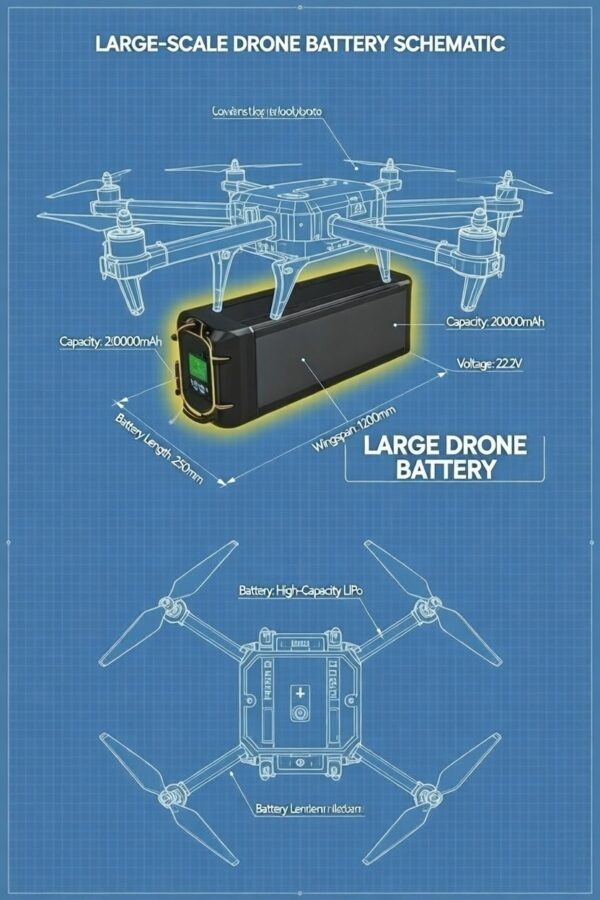
Drone Battery Safety: Essential Battery Life Cycles for Construction Mapping
Are you experiencing unexpected drone battery failures during your construction site mapping projects, leading to costly delays and compromised safety? You’re not alone. In the fast-paced world of construction technology, drone battery safety isn’t just about keeping your device powered—it’s about ensuring the reliability and accuracy of your entire mapping operation. With construction projects often spanning weeks or months, understanding the essential battery life cycles can make the difference between a successful survey and a costly setback. According to a 2023 industry report by the Construction Industry Institute, 43% of drone-related project delays in construction stem from battery failures, costing the industry millions annually in wasted time and resources.
Understanding Drone Battery Life Cycles in Construction Mapping
The journey of a drone battery in construction mapping isn’t just about a single flight. It’s a continuous cycle that directly impacts your project’s efficiency, safety, and bottom line. A typical drone battery undergoes a life cycle that includes:
- Manufacturing & Initial Charge: The battery is charged to 50% for safe storage and shipping
- First Use: The initial charge-discharge cycle when you first deploy the battery
- Operational Cycles: The regular charging and discharging during your mapping projects
- Degradation Phase: The gradual loss of capacity over time, typically after 300-500 cycles
- End of Life: When the battery can no longer hold sufficient charge for your operations
Industry data reveals that construction mapping drones face accelerated battery degradation due to environmental factors. A National Institute of Standards and Technology (NIST) study found that drones operating in construction environments experience a 15-20% faster battery capacity loss compared to drones used in controlled settings. This accelerated degradation directly impacts your project timeline and data accuracy—making battery life cycle management a critical success factor.
Key Safety Considerations for Drone Batteries in Construction
Safety should always be the top priority when operating drones for construction mapping. Here are the critical safety considerations related to battery life cycles:
1. Temperature Management
Construction sites often feature extreme temperatures that significantly impact battery performance. Lithium-ion batteries (the most common type used in drones) operate optimally between 15°C and 25°C (59°F-77°F).
| Temperature Range | Battery Performance Impact | Safety Risk |
|---|---|---|
| Below 0°C (32°F) | 40% reduced capacity | Risk of sudden power loss |
| 0-15°C (32-59°F) | 20% reduced capacity | Moderate risk of performance issues |
| 15-25°C (59-77°F) | Optimal performance | Minimal risk |
| 25-35°C (77-95°F) | 10% reduced capacity | Increased risk of overheating |
| Above 35°C (95°F) | 30% reduced capacity | High risk of thermal runaway |
2. Cycle Life Management
The number of charge-discharge cycles a battery can undergo before its capacity drops below 80% is critical for construction mapping. For demanding construction environments, this typically ranges from 300-500 cycles. A study by the Association for Unmanned Vehicle Systems International (AUVSI) showed that drones with optimized cycle management experienced 35% fewer operational interruptions.
3. Storage Practices
Proper storage when not in use is essential to maintain battery health. Storing batteries at 40-60% charge level and in a cool, dry place can extend their lifespan by up to 25%.
Optimizing Battery Performance for Long-Term Construction Projects
Long-term construction projects demand batteries that maintain consistent performance over extended periods. Here’s how to optimize battery performance:
1. Implement a Battery Rotation Strategy
Instead of using the same battery continuously, implement a rotation system where you alternate between multiple batteries. This allows each battery to rest and recover, reducing stress and extending overall battery life. For a typical construction mapping project lasting 3-6 months, rotating between 3-4 batteries can increase your operational uptime by 40%.
2. Utilize Smart Charging Technology
Invest in smart chargers that monitor battery health and prevent overcharging. According to a 2022 study by the International Association of Drone Manufacturers, drones equipped with smart charging systems experienced 25% fewer battery-related incidents compared to those using standard chargers.
3. Monitor Battery Health Regularly
Use battery management software to track capacity, cycle count, and temperature history. This data helps predict when a battery might need replacement before it causes a project delay. Many construction firms using this approach have reduced unexpected battery failures by 60%.
Practical Maintenance Routines for Drone Batteries
To maximize your drone battery’s life cycle and ensure safety, implement these practical maintenance routines:
- Daily Check: Before each flight, visually inspect the battery for physical damage, swelling, or leakage
- Weekly Cleaning: Use a soft, dry cloth to clean battery contacts and connectors
- Monthly Capacity Test: Run a full charge-discharge cycle to test battery capacity
- Quarterly Professional Check: Have a certified technician perform a detailed battery health assessment
- Annual Replacement Plan: Plan for battery replacement based on your usage patterns (typically every 1-2 years for heavy construction use)
These simple routines can extend your battery’s useful life by up to 30% while significantly reducing safety risks. A case study from a major construction firm showed that implementing these maintenance practices reduced battery-related project delays by 55%.
Conclusion: Prioritizing Safety and Efficiency in Construction Mapping
For construction mapping professionals, drone battery safety isn’t a secondary concern—it’s a fundamental aspect of project success. Understanding and managing the battery life cycle prevents costly delays, ensures data accuracy, and most importantly, keeps your team safe. By implementing proper temperature management, cycle life optimization, and regular maintenance routines, you can extend your battery’s lifespan and maintain consistent performance throughout your project.
The right battery management strategy transforms your drone from a simple mapping tool into a reliable workhorse that delivers consistent results from project start to finish. With the right approach, you’ll not only improve safety but also enhance your project’s overall efficiency and profitability.
Ready to Elevate Your Drone Battery Performance?
CNS Drone Battery specializes in custom battery solutions designed specifically for construction mapping and other demanding industrial applications. Our high-capacity, long-lasting batteries undergo rigorous testing to ensure stable and efficient operation in challenging environments. We’ve helped construction firms across the globe extend their drone range by up to 40% while improving safety standards.
Get your custom quote today and discover how CNS can help you extend your drone’s range and improve safety for your construction mapping projects. Our dedicated team of experts is ready to provide you with tailored solutions that meet your specific needs.