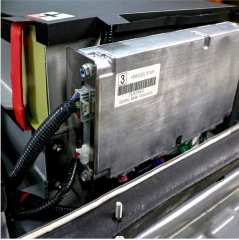
Here is the SEO-optimized article tailored for the Nissan Leaf ZE1 battery replacement niche, designed to rank well and convert readers into leads.
The Ultimate DIY Guide to Swapping Your Nissan Leaf ZE1 Battery Pack
Is your Nissan Leaf ZE1 struggling to hold a charge? If you own a 2018-2023 Nissan Leaf (specifically the ZE1 chassis code), you likely understand the frustration of EV range anxiety. The good news is that a complete battery overhaul is now a viable, cost-effective solution. Unlike earlier models, the ZE1 presents a unique challenge and opportunity for the DIY mechanic. This guide will walk you through the process of replacing your aging ZE1 battery with a brand-new, high-capacity lithium-ion pack, effectively giving your car a “second life” with factory-new performance.
Why Upgrade Your Leaf ZE1 Battery?
The Nissan Leaf ZE1 (released from 2018 onwards) marked a significant shift in the Leaf’s evolution. While it offered improved technology over the older ZE0 models, the battery chemistry and thermal management system still degrade over time. If your 40kWh or 62kWh ZE1 battery has lost significant capacity, replacing it with a refurbished unit might only be a temporary fix.
At CNS BATTERY, we specialize in providing Original Equipment Manufacturer (OEM) compatible battery solutions specifically engineered for Nissan and BMW models. For the ZE1, this means utilizing brand-new, top-tier CATL (Contemporary Amperex Technology Co. Limited) battery cells. By opting for a new core replacement, you are not just repairing your car; you are upgrading it to deliver zero-failure reliability, faster charging speeds, and the full driving range you remember.
Step 1: Pre-Swap Preparation
Before you even open the hood, preparation is key to a successful Nissan Leaf ZE1 battery swap.
Verify Compatibility
The ZE1 chassis has specific voltage and interface requirements. Ensure your vehicle identification number (VIN) matches the 2018-2023 production years. Unlike the modular ZE0, the ZE1 battery pack is a sealed unit, requiring a complete pack replacement rather than individual module swaps.
Gather Your Tools
You will need standard automotive tools, including:
- A full set of metric sockets and wrenches.
- An insulated torque wrench for high-voltage connectors.
- Insulated gloves (Class 00, 1000V rated) – Safety is non-negotiable when dealing with 360V+ systems.
- A digital multimeter to verify power disconnection.
Procure the Right Pack
Do not settle for recycled or degraded cells. Visit our Nissan EV Batteries page to select a pack specifically designed for the ZE1. Our packs are engineered to save you over 50% compared to dealer prices while offering superior durability.
Step 2: The Disassembly Process
Safety Warning: Always disconnect the 12V auxiliary battery first to cut power to the BMS (Battery Management System) before touching the main HV cables.
- Access the Undercarriage: Drive your Leaf onto a set of ramps or a lift. The ZE1 battery is located beneath the cabin floor.
- Remove the Under Cover: Unbolt the plastic undertray to expose the battery casing.
- Disconnect High Voltage: Locate the main service disconnect (usually a bright orange connector). Remove the locking tab and disconnect the positive and negative terminals. Always cap these immediately.
- Unbolt the Pack: The ZE1 battery is secured by 16-20 bolts to the chassis subframe. Carefully unbolt these while supporting the pack’s weight (approx. 300kg / 660lbs). We recommend using a transmission jack or a dedicated EV battery lift cart.
Expert Tip: Take photos at every disconnection step. The ZE1 has specific torque specifications for the HV terminals (usually 5-7 Nm). Over-tightening can crack the terminal posts.
Step 3: Installing the New CNS BATTERY Pack
This is where the transformation happens. Installing a brand-new CNS battery pack is significantly easier than refurbishing the old one because you are installing a “Plug-and-Play” solution.
- Positioning: Carefully lift the new CNS battery pack into place using your jack. Align the mounting holes with the chassis bolts.
- Torque to Spec: Reinstall the mounting bolts. Do not guess the torque; use a torque wrench set to the manufacturer’s specification (typically 80-100 Nm for mounting bolts).
- Reconnect High Voltage: Reconnect the main positive and negative cables. Ensure there are no pinches or frays in the cabling.
- Reinstall Under Cover: Put the plastic undertray back on to protect the new pack from road debris.
Step 4: System Initialization and Testing
Once the physical swap is complete, the electrical system needs to “wake up.”
- Reconnect 12V: Reattach the 12V battery terminals.
- Power On: Turn the ignition on (do not start the car yet). The dashboard should show a “Ready” signal.
- First Charge: Plug the car into a Level 2 charger (240V). A brand-new CNS lithium-ion pack requires a full calibration charge to sync the BMS with the vehicle’s computer. This process usually takes 3-4 hours.
The Result: After the first full charge, your Nissan Leaf ZE1 should display a full 12-bar capacity (for 40kWh variants) or the corresponding full capacity for 62kWh variants. You will notice the charging speed matches the original factory specifications, and the range anxiety disappears.
Why Choose a New Core Replacement Over Refurbishment?
Many owners consider patching up their old ZE1 pack with new modules. However, this approach has risks:
- Mismatched Chemistry: Mixing old harnesses with new cells can lead to thermal imbalance.
- Short Lifespan: The old casing and wiring harness degrade over time, leading to potential shorts.
By choosing a complete new pack from CNS BATTERY, you benefit from:
- Ultimate Safety: New casing, new wiring, new cells.
- Long Battery Life: 10 years of technological accumulation in R&D ensures superior energy density.
- Comprehensive Warranty: We back our confidence with an industry-leading 2-year or 80,000 km warranty, covering any manufacturing defects.
Frequently Asked Questions (FAQ)
Q1: Can I really do this Nissan Leaf ZE1 battery swap myself?
Yes, absolutely. The ZE1 battery replacement is designed as a “Plug-and-Play” procedure. If you have basic mechanical skills and the right lifting equipment (like a floor jack), you can complete the physical swap in about 1-2 hours. Our customer service team also provides video call installation guidance if you encounter any wiring connection issues during the process.
Q2: What is the difference between a CNS BATTERY pack and the original Nissan battery?
CNS BATTERY packs are OEM compatible. We use brand-new CATL battery cells, which are among the highest quality cells in the world (often used in original factory production). The main difference is the price—our packs cost roughly 50% less than a dealership replacement, without sacrificing safety or performance.
Q3: How much will my range improve after the swap?
If you are upgrading from a degraded 40kWh pack to a new 62kWh pack (if compatible with your specific ZE1 variant), you can expect a significant boost. A new 40kWh pack will restore your range to approximately 245 km (150 miles), while a 62kWh pack can achieve up to 385 km (239 miles) on a full charge, depending on driving conditions.
Q4: Do I need to reprogram the BMS after installation?
Generally, a full charge on a Level 2 charger will automatically reprogram and calibrate the BMS. However, if the car does not recognize the full capacity immediately, our technical support team can guide you through a simple diagnostic reset procedure.
Q5: How long does the warranty last?
We offer a minimum 2-year or 80,000 km warranty (whichever comes first) on all our automotive batteries. This covers defects in materials and workmanship, and we also provide prorated coverage for performance degradation, ensuring your battery maintains at least 70% capacity over the warranty period.
Ready to revive your Nissan Leaf ZE1?
Don’t let a failing battery end your EV journey. Get a free, personalized quote for a brand-new, high-performance battery pack today.