DIY Guide to New Nissan Leaf 30kWh Replacement
Are you struggling with Range Anxiety in Your Nissan Leaf?
If you own an older Nissan Leaf (such as the 2011-2013 models) or a specific market variant that originally came with a 24kWh or 30kWh battery pack, you know how limited the driving range can be, especially in colder weather. The constant need to hunt for charging stations can turn a simple grocery run into a logistical nightmare. While the official dealerships often offer replacement prices that exceed the value of the car itself, there is a smarter, more affordable solution.
This comprehensive guide is designed for Leaf owners and DIY enthusiasts who want to breathe new life into their vehicle. We will walk you through the process of replacing your aging 30kWh (or equivalent) battery with a brand-new, high-capacity lithium-ion pack, specifically focusing on maximizing your range and safety while saving over 50% of the OEM cost.
Why Replace Your 30kWh Leaf Battery?
The early generations of the Nissan Leaf were pioneers in the EV market, but their battery technology has aged significantly. If your car originally had a 24kWh or 30kWh capacity, the actual usable capacity now is likely much lower due to natural degradation.
The Reality of Old Batteries:
Most early Leaf batteries have degraded to a State of Health (SOH) of 60-70%. This means your “30kWh” battery might only function like a 18kWh battery today. This results in a driving range of merely 80-100km (50-60 miles), which is insufficient for modern driving needs.
The Solution:
Instead of trading in your reliable Leaf for a new EV (which can cost over $30,000), consider a direct replacement. Upgrading to a brand-new 40kWh, 50kWh, or even 62kWh lithium battery pack can double your range instantly. This isn’t a patch job with recycled cells; this is installing a factory-fresh powertrain.
Pre-Installation: Tools and Safety
Before you slide under the car, safety is paramount. Lithium batteries store immense energy, and improper handling can lead to short circuits or injury.
Safety Gear Checklist:
- Insulated Gloves: High-voltage rubber gloves (Class 00 or higher).
- Safety Glasses: To protect your eyes from sparks or debris.
- Non-Conductive Tools: Ensure your wrenches and sockets have insulated handles.
- Workspace: A clean, dry, and well-ventilated garage.
Essential Tools:
- Socket wrench set (metric)
- Torque wrench (for final tightening)
- Digital Multimeter (to check voltage)
- BMS Programming Tool (provided by the battery supplier)
Step-by-Step: Removing the Old Pack
The Nissan Leaf battery is located under the cabin floor. The process is generally the same across ZE0, AZE0, and ZE1 platforms.
- Disconnect the 12V Battery: Always start by disconnecting the negative terminal of the 12V auxiliary battery. This cuts power to the BMS (Battery Management System) and prevents accidental shorts.
- Remove Underbody Panels: Jack up the car (use axle stands for safety) and remove the plastic undertray and the aluminum heat shield protecting the battery.
- Disconnect Cables: Locate the high-voltage (HV) orange connectors and the low-voltage (LV) communication cables. Disconnect them carefully. Note: There is no need to drain coolant if you are just swapping the entire pack, as the thermal management system is usually external.
- Unbolt the Pack: There are typically 10-12 large bolts securing the battery to the chassis. Remove these systematically.
- Lower the Pack: With the help of a friend or a transmission jack, carefully lower the old battery pack. These packs are heavy (approx. 250-300kg), so lift with your legs, not your back.
Installing the New CNS BATTERY Pack
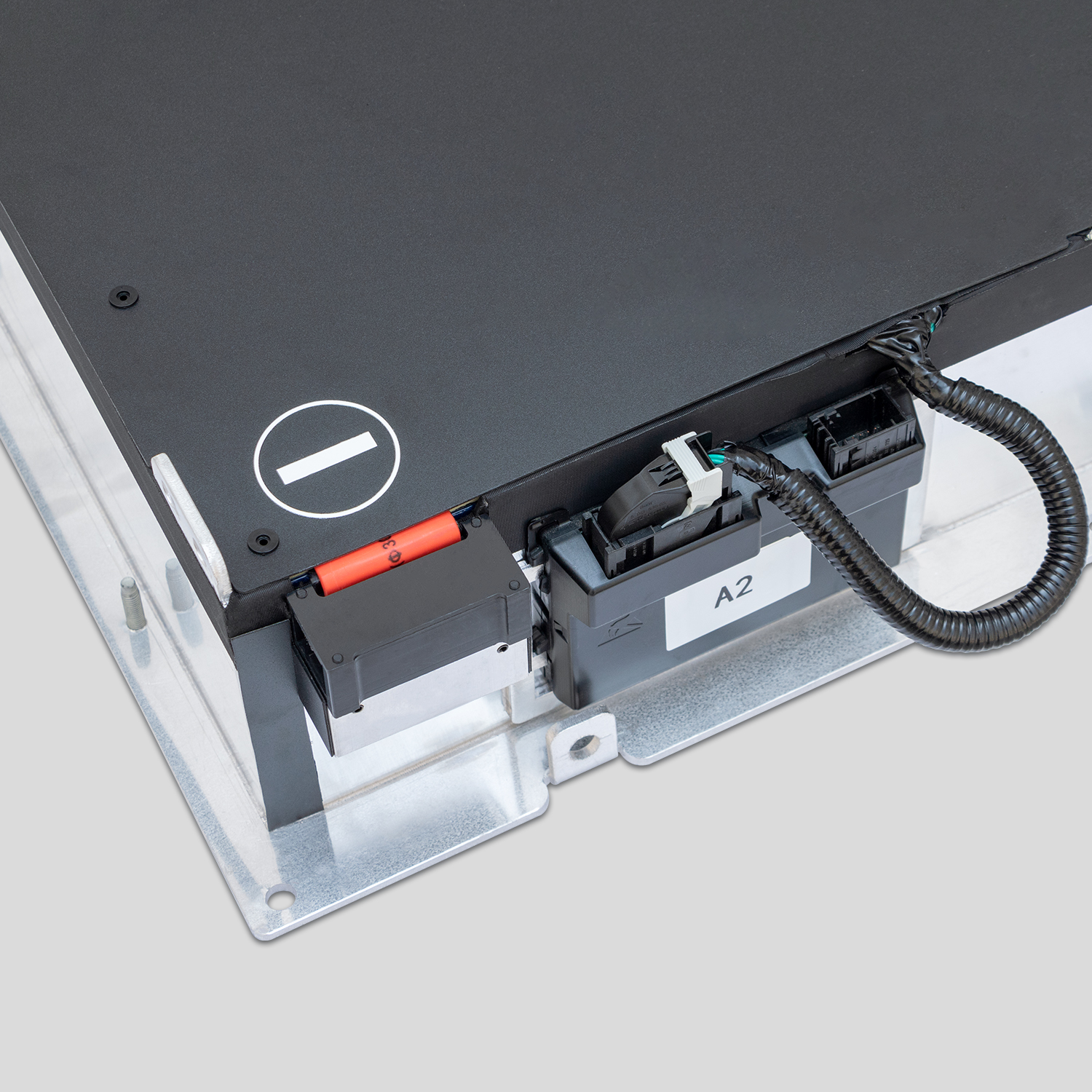
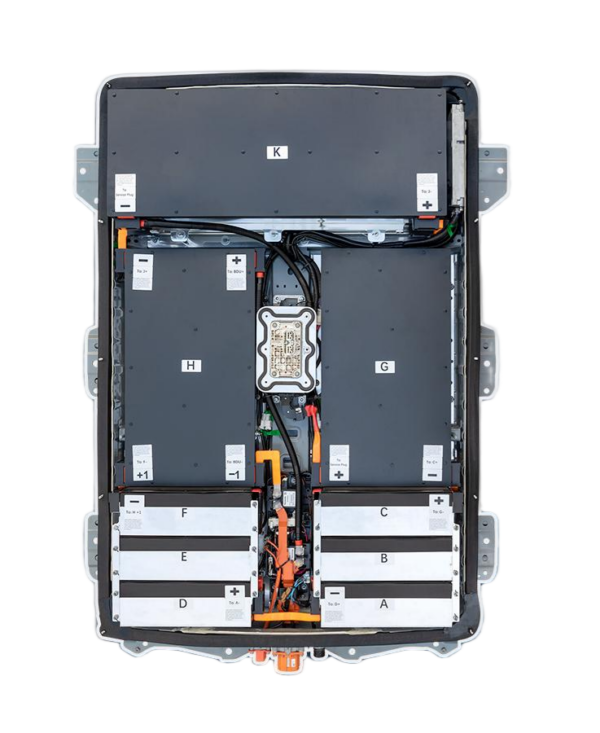
This is where the transformation happens. A new CNS BATTERY pack, built with brand-new CATL (Contemporary Amperex Technology) cells, offers the reliability of a factory new car without the factory price tag.
Why New CATL Cells Matter:
Unlike “refurbished” batteries made from old, mismatched cells, a CNS BATTERY uses Grade A, brand-new lithium cells. This ensures:
- Zero Cycle History: The battery starts its life at 100% capacity.
- Thermal Stability: New cells manage heat much better than 10-year-old technology.
- Longevity: Expect over 8 years or 160,000km of life.
Installation Steps:
- Fitment: Roll the new CNS battery into place. The chassis bolts are OEM standard, ensuring a perfect fit.
- Reconnect Cables: Attach the HV and LV cables. Ensure the connectors are fully seated and locked.
- Torque Settings: Tighten the bolts to the manufacturer’s specification (usually around 80-100 Nm, but check your specific manual).
- Reinstall Shields: Put the heat shield and undertray back on.
The Critical Step: BMS Programming
This is the step that often trips up DIYers. You cannot simply plug in a new battery and drive away. The Battery Management System (BMS) needs to be “married” to the car’s VIN.
The Process:
- Initial Power-Up: Reconnect the 12V battery.
- Diagnostic Tool: You will need a Nissan Consult scanner or a generic EV diagnostic tool.
- VIN Writing: The technician (or you, if you have the tool) must write your car’s VIN code into the new BMS module. This tells the car, “This is a genuine, authorized battery.”
- System Check: Once programmed, the car should recognize the full voltage and capacity.
Expert Tip: If you encounter a “Battery Warning” light after installation, it usually means the BMS needs a software reset or a firmware update to match your specific Leaf model year.
Post-Installation: First Charge and Calibration
After the installation, do not floor the accelerator immediately.
- First Charge: Drive gently and charge the car to 100%. This allows the BMS to balance the cells.
- Calibration Cycle: To ensure the dashboard gauge reads accurately, perform a calibration cycle:
- Drive the car until it reaches 0% (or as low as safely possible).
- Charge it back to 100% without interruption.
- This teaches the BMS the new total capacity.
The Results: What to Expect
After replacing your old 30kWh equivalent with a new 40kWh or 62kWh unit from CNS BATTERY, the difference is night and day.
- Range Boost: Jump from 100km to 270km+ (EPA) on a 40kWh pack, or 350km+ on a 62kWh pack.
- Performance: New cells provide higher C-rates, meaning faster acceleration and better regenerative braking.
- Peace of Mind: With a 24-month / 80,000km warranty, you are covered far beyond what most “recycled” battery sellers offer.
Why Choose a Professional-Grade Solution?
While the DIY process is straightforward, the quality of the cells inside the box is what truly matters. Many cheap batteries on the market use salvaged cells, leading to swelling, fire hazards, or rapid degradation.
CNS BATTERY specializes in OEM-compatible solutions. This means:
- Plug-and-Play: No cutting, splicing, or modifying wires.
- Original Standard R&D: Designed to the same engineering standards as Nissan.
- Global Support: Whether you are in the USA, Europe, or Australia, the technical support team can guide you through the VIN coding process.
Don’t let an old battery kill your EV dream. Replacing your Nissan Leaf’s heart with a brand-new, high-capacity lithium pack is the most cost-effective upgrade you can make. It turns a liability into a long-term asset.
Frequently Asked Questions (FAQ)
Q1: Is it safe to DIY a Nissan Leaf battery replacement?
Yes, it is safe if you follow proper high-voltage safety protocols. Always disconnect the 12V battery first, wear insulated gloves, and ensure the high-voltage connectors are insulated during the process. If you are uncomfortable with the BMS programming step, consult a local mechanic (most repairs take about 1-2 hours).
Q2: Will a new battery fit my older Leaf model (e.g., 2011-2013)?
Yes. CNS BATTERY packs are designed for specific chassis codes (ZE0, AZE0, ZE1). As long as the chassis bolts match (which they do for the same generation), a new 40kWh or 62kWh pack will fit mechanically. However, you may need to upgrade the software in your car’s dashboard or charger to recognize the higher voltage/kWh—this is a standard procedure for mechanics.
Q3: How much does a brand-new replacement cost compared to a dealership?
Dealerships often charge $12,000 – $16,000+ for a factory replacement. A brand-new, direct-from-manufacturer pack from CNS BATTERY costs significantly less—often saving you over 50%. This makes economic sense, as the car’s value often doesn’t justify the dealer price.
Q4: What is the warranty on a new aftermarket battery?
CNS BATTERY offers an industry-leading 2-year / 80,000km warranty. This covers manufacturing defects and ensures the battery maintains at least 70% capacity during this period. This is far superior to the “as-is” condition of used or refurbished batteries.
Ready to double your range? Get a Free Custom Quote for your Nissan Leaf today.