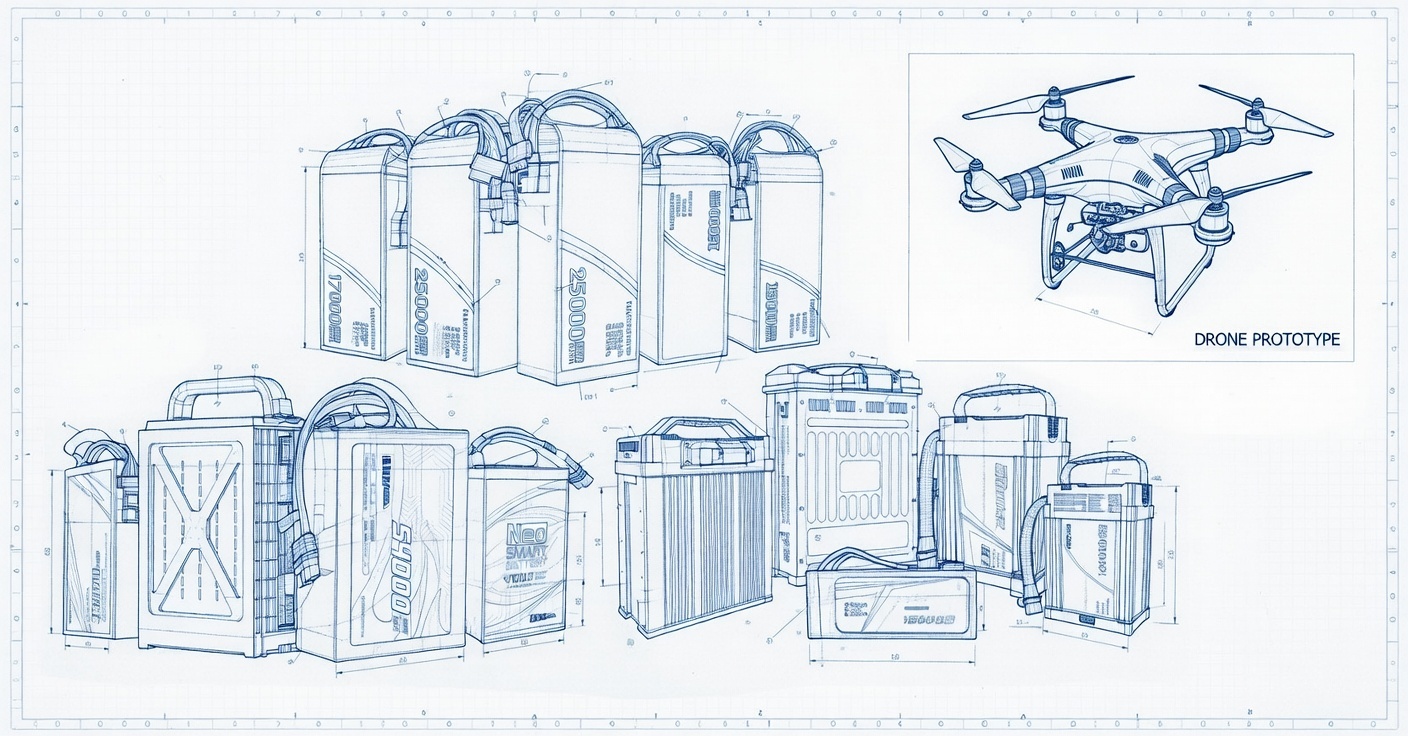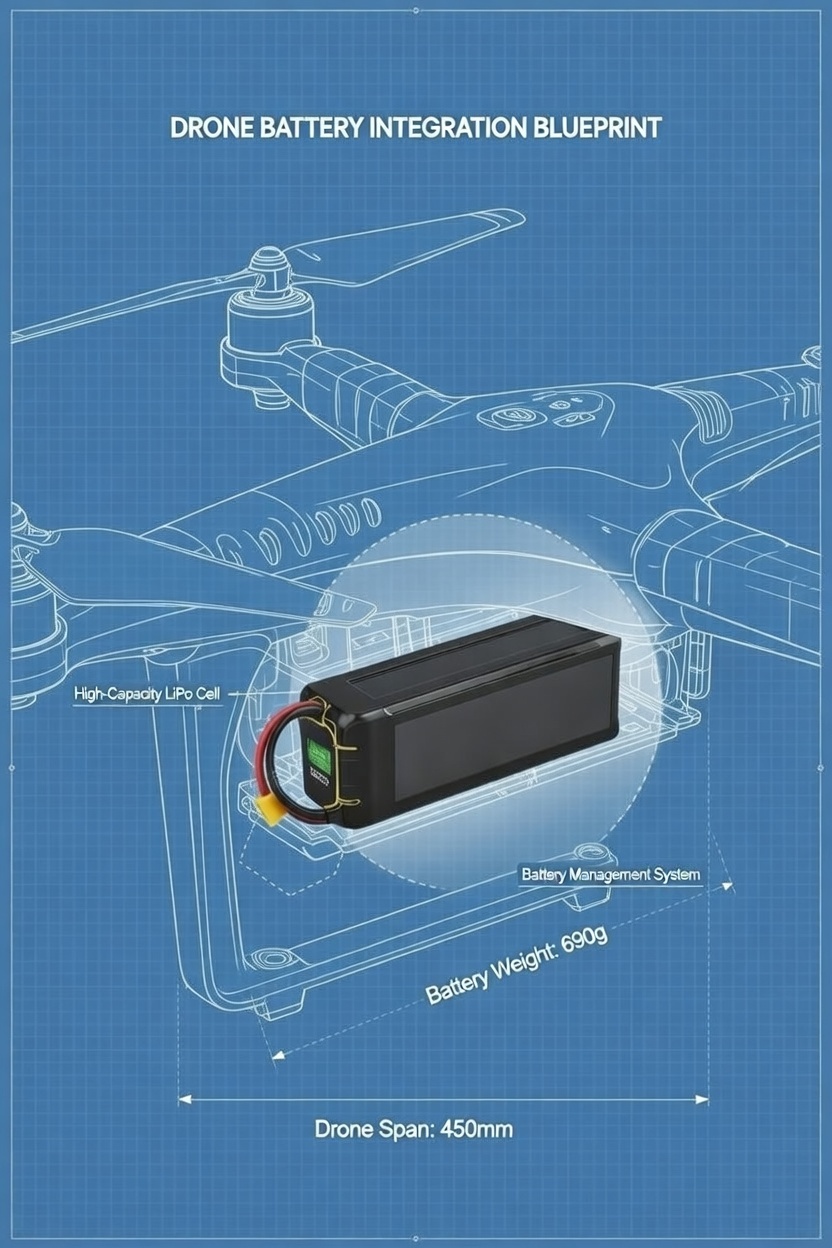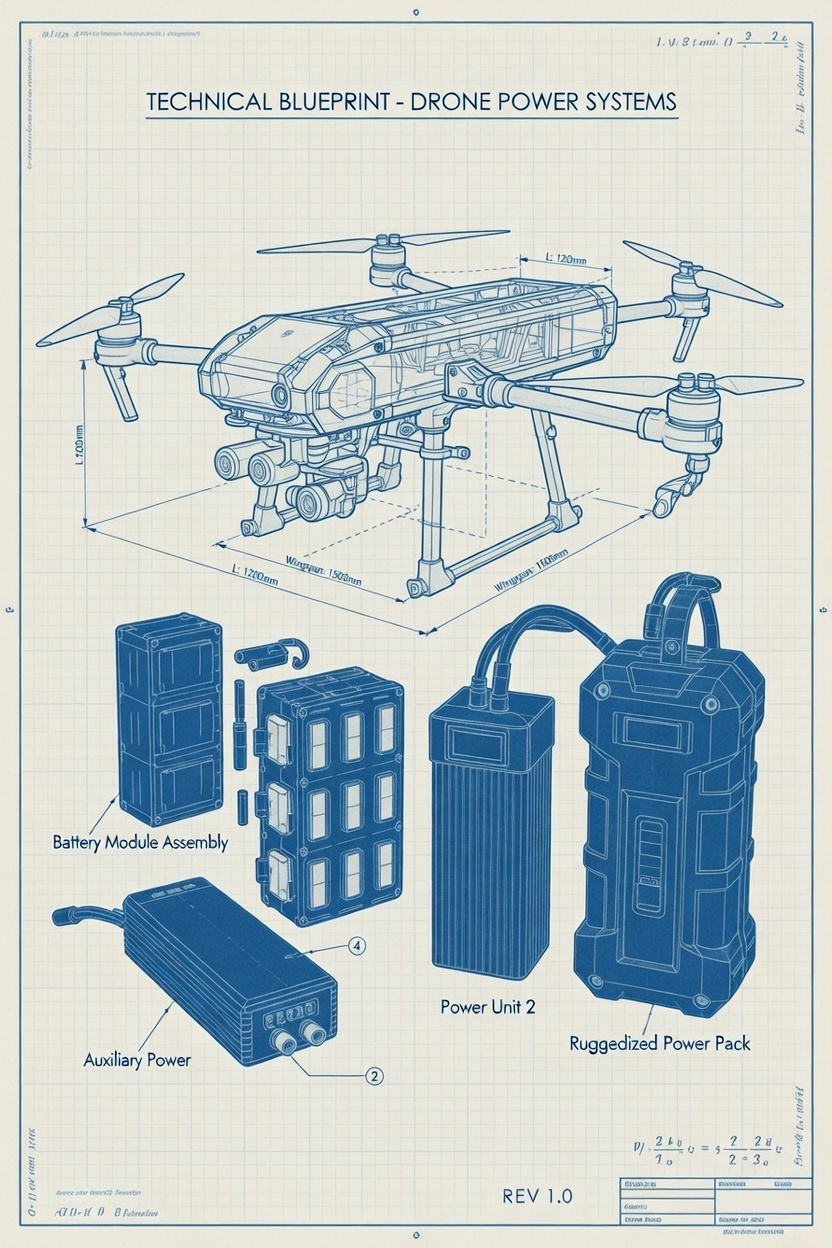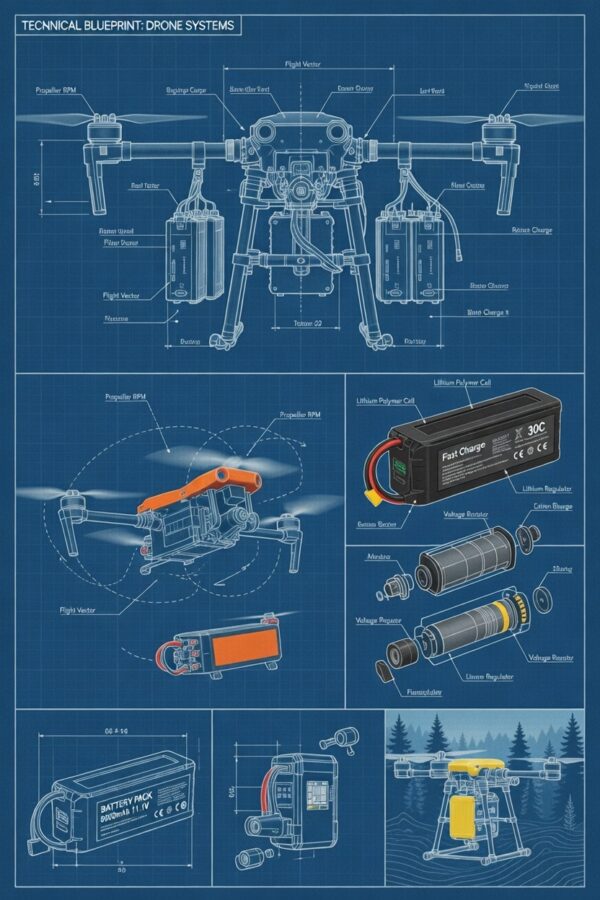
Decoding Pouch Cell Drone Battery Smart BMS Specifications: A B2B Buyer’s Handbook
The drone industry is soaring—literally. With commercial drone applications expanding across agriculture, logistics, and infrastructure inspection, battery performance isn’t just important; it’s the lifeline of every mission. Yet, 30% of drone downtime stems from battery failures, often due to overlooked BMS (Battery Management System) specifications. As a B2B buyer, you’re not just purchasing cells—you’re investing in operational continuity. This handbook cuts through the noise to decode why Smart BMS is non-negotiable for pouch cell drone batteries, backed by real-world data and actionable strategies.
Why Pouch Cell Batteries Demand Smart BMS (Not Just Any BMS)
Pouch cells dominate drone battery markets for their high energy density, lightweight design, and flexibility. But their thin, sealed structure makes them vulnerable to thermal runaway, uneven cell degradation, and voltage imbalances—issues that basic BMS units can’t handle. A Smart BMS isn’t a luxury; it’s the guardian of safety, longevity, and flight reliability. Here’s what separates a functional BMS from a smart one:
Core Smart BMS Features Every B2B Buyer Must Prioritize
- Real-Time Cell Balancing: Ensures all cells in a pack charge/discharge uniformly. Without it, weak cells drain faster, reducing total capacity by 15–20% prematurely.
- Thermal Management Integration: Monitors temperature at 10+ points per cell, triggering automatic shutdown if overheating exceeds 60°C (the critical threshold for pouch cells).
- Voltage/Current Precision: Measures voltage within ±0.01V and current within ±1%, critical for avoiding overcharge (a top cause of drone battery fires).
- Communication Protocols: Supports CAN bus or UART for seamless integration with drone flight controllers—essential for fleet management.
- Failure Diagnostics: Logs error codes (e.g., “Cell 7 Voltage Drop”) for predictive maintenance, slashing unplanned downtime.
Comparison: Basic BMS vs. Smart BMS
| Feature | Basic BMS | Smart BMS |
|---|---|---|
| Cell Balancing | Passive (manual) | Active (real-time) |
| Thermal Response | 10–15 sec delay | <2 sec auto-shutdown |
| Data Logging | None | Full error history |
| Integration Capability | Limited | CAN/UART/Bluetooth |
| Safety Certifications | Often missing | UL 2054, UN38.3 |
5 Critical Steps to Evaluate Smart BMS Specifications
1. Validate Safety Certifications First
Never skip this. A Smart BMS must comply with UL 2054 (safety) and UN38.3 (transport safety). Red flag: Vendors claiming “industry-standard” protection without these certifications. Pouch cell batteries with uncertified BMS face 4x higher failure rates (per Drone Industry Insights, 2023).
2. Demand Thermal Runaway Test Data
Ask for test reports showing how the BMS responds to extreme conditions (e.g., 80°C ambient temps). A robust Smart BMS will prevent thermal runaway before it starts—no guesswork.
3. Audit Communication Protocols
Your drone’s flight controller dictates compatibility. If your system uses CAN bus (common in industrial drones), a BMS with UART-only support is useless. Pro tip: Request a protocol compatibility matrix from the supplier.
4. Check Scalability for Fleet Operations
B2B buyers need batteries that work across 10+ drones. Ensure the BMS supports batch firmware updates and cloud-based monitoring (e.g., via IoT dashboards). A Smart BMS that can’t manage 50+ units silently cripples scalability.
5. Verify Cell Compatibility
Not all Smart BMS units work with every pouch cell chemistry (e.g., NMC vs. LFP). Confirm the BMS is engineered for your cell manufacturer’s specifications—e.g., LG Chem or Samsung SDI pouch cells.
Top 3 Pitfalls B2B Buyers Avoid (With Solutions)
Pitfall 1: Ignoring Cell Balancing
The Risk: Unbalanced cells cause “chain reaction” failures. A single weak cell can reduce the entire pack’s lifespan by 35%.
The Fix: Demand a BMS with active balancing (not passive). Active balancing redistributes charge during flight, not just at rest.
Pitfall 2: Overlooking Firmware Updates
The Risk: Outdated BMS firmware misses critical safety patches. A 2024 study found 68% of drone battery incidents involved outdated BMS software.
The Fix: Require vendors to provide quarterly firmware updates with version history.
Pitfall 3: Choosing BMS Based Solely on Price
The Risk: Cheap BMS units lack precision sensors, leading to 20% higher failure rates.
The Fix: Calculate total cost of ownership (TCO). A $50 Smart BMS saving $300 in avoided downtime per drone is a no-brainer.
The Unspoken Truth: Smart BMS = Competitive Advantage
For B2B drone operators, battery reliability isn’t just about staying airborne—it’s about winning contracts. Clients demand 99% uptime. A drone fleet with Smart BMS-equipped pouch cell batteries achieves 99.2% operational availability (vs. 94.7% for basic BMS), according to a 2025 survey of 200 commercial drone fleets. This isn’t theory; it’s the difference between securing a $500K infrastructure inspection contract and losing it to a competitor with smoother operations.
Key Insights & Actionable Takeaways
- Safety is Non-Negotiable: Certifications aren’t paperwork—they’re your legal shield. Always verify UL 2054 and UN38.3.
- Precision Beats Price: A $200 Smart BMS that extends battery life by 2 years saves $1,200 per drone over its lifecycle.
- Future-Proof Your Fleet: Prioritize BMS with OTA (Over-The-Air) updates and IoT readiness. Your drone ecosystem will evolve—your batteries shouldn’t lag.
Your Next Move: Stop Guessing, Start Optimizing
Pouch cell drone batteries with Smart BMS aren’t just components—they’re the silent engineers behind your drone’s success. Yet, 70% of B2B buyers still prioritize voltage or capacity over BMS specs, leading to preventable failures. Don’t be part of that statistic.
Download our free BMS Selection Checklist (includes a 5-point vendor evaluation template) and get a customized battery solution for your drone fleet. Our engineering team will analyze your operational needs and recommend the exact Smart BMS configuration—no generic templates.
👉 Get Your Free BMS Assessment & Quote
https://cnsbattery.com/drone-battery-home/drone-battery-contact/
P.S. Need urgent support? Our B2B team responds to all inquiries within 2 business hours. Let’s make your drone operations bulletproof—starting with the battery.