Cross-Country in a Nissan Leaf: Is it Possible with a 200-Mile Pack?
The short answer is yes—but the “200-mile” label requires a reality check. If you are eyeing a Nissan Leaf for a long-distance adventure, you have likely heard the rumors: “It’s only good for the city,” or “You’ll be charging every 90 minutes.”
As an electric vehicle (EV) enthusiast and a battery expert at CNS BATTERY, I am here to tell you that those rumors are outdated. With the right battery pack upgrade, your Nissan Leaf (specifically the AZE0 or ZE1 models) can absolutely handle a cross-country road trip.
However, to manage your expectations, let’s clarify what “200 miles” means in the EV world. Most manufacturers advertise “EPA Range,” which is the distance you get in a perfect lab test. Real-world highway driving—especially at speeds above 65 mph—cuts that range significantly due to wind resistance.
So, can you do it? Absolutely. But to guarantee a stress-free journey, you need more than the base model. You need a battery upgrade.
Why the Standard 40kWh Pack Won’t Cut It
Let’s look at the math. The base Nissan Leaf model comes with a 40kWh battery pack.
- Advertised Range: ~150 miles (EPA).
- Real-World Highway Range: ~90–100 miles.
If you are attempting a cross-country trip, stopping to DC fast charge every 90 miles is exhausting. It turns a 10-hour drive into a 16-hour ordeal. For a true road trip, you need what the industry calls a “buffer.” You need to leave the 20% safety buffer without anxiety, meaning you need a pack that can deliver at least 180 miles of usable highway range.
This is where the 62kWh and 68kWh battery upgrades come into play.
The Sweet Spot: 62kWh vs. 68kWh Upgrades
To achieve that elusive 200-mile potential (and the 150+ mile reality), you have two main options for your Nissan Leaf.
1. The 62kWh Powerhouse
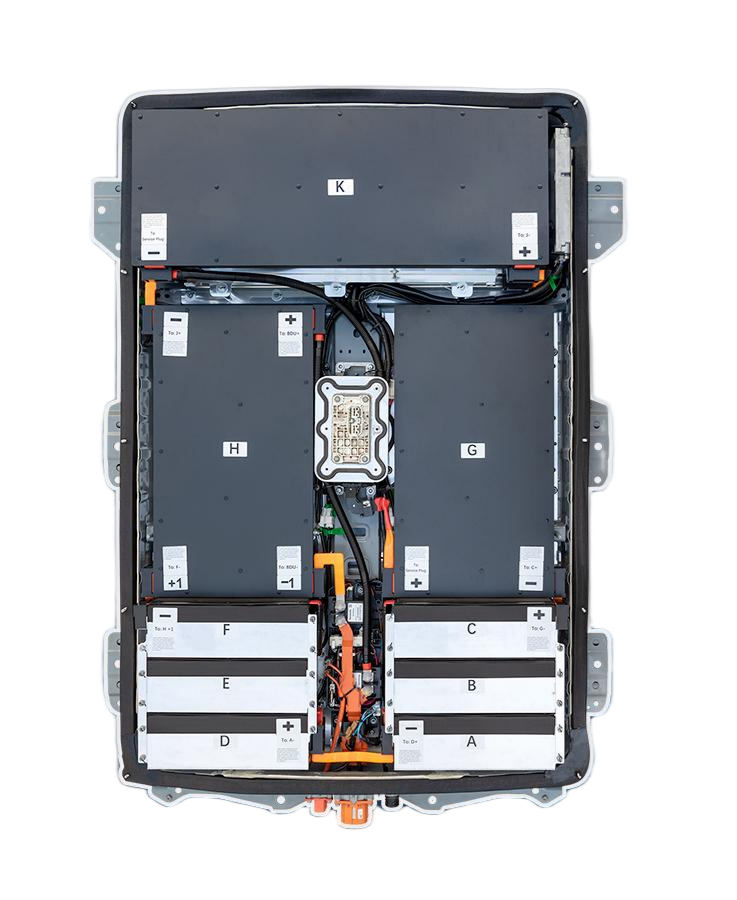
This is the most popular upgrade for a reason. It swaps out your old degraded cells for brand-new CATL lithium-ion cells.
- Real-World Range: Expect 170–190 miles on the highway (depending on weather).
- The Experience: You can drive for 2.5–3 hours straight, catch up on a podcast, and then stop for a 30-minute lunch while the battery hits 80%.
2. The 68kWh Long-Range Beast
If you live in a hot climate or hate stopping, the 68kWh is the ultimate solution.
- Real-World Range: 210–230 miles on the highway.
- The Experience: This puts you on par with many modern EVs. You can easily drive from Los Angeles to San Diego (or London to Manchester) on a single charge.
Expert Insight: At CNS BATTERY, we see this every day. A customer from Texas, Tom H., upgraded his 2014 Leaf ZE0 to a 62kWh pack. He wrote to us, “Now the full charge range is 430km… more than enough for daily commuting, and there’s no significant power drain even when using the air conditioning on the highway.” If a 10-year-old car can do it, yours can too.
The CNS BATTERY Advantage: Why Go Third-Party?
You might be wondering, “Why not just buy from Nissan?” The answer is simple: Cost vs. Value.
Replacing a degraded battery with a Nissan OEM unit can cost upwards of $16,000. For the same price as a used gas car, you are buying one component.
At CNS BATTERY, we offer a different solution. We are Original Equipment Compatible (OEC) manufacturers. This means:
- Brand New CATL Cells: We don’t recycle old junk. We use the same tier-1 cell manufacturer (Contemporary Amperex Technology) that many OEMs use, but we build the pack ourselves to strict OEM standards.
- 50% Savings: You get the performance of a new car battery for half the price.
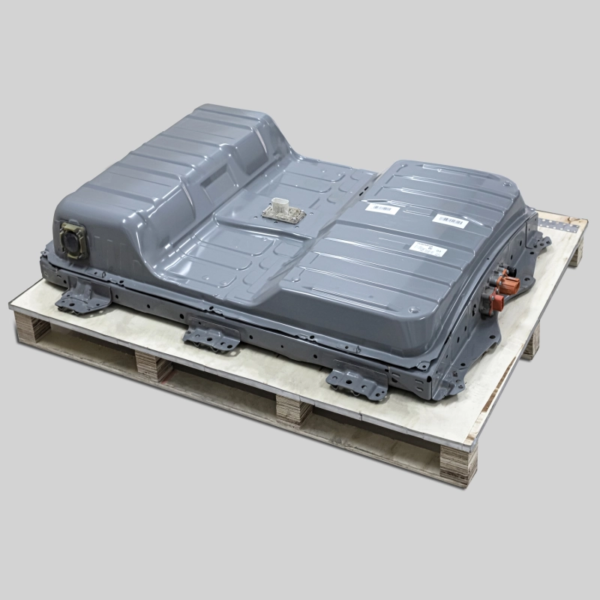
- Zero Fault Rate: Our packs are engineered to fit perfectly—no cutting, no splicing. It is a true plug-and-play solution for Leaf ZE0, AZE0, and ZE1 models.
Preparing for the Long Haul: Tips & Tricks
Even with a 68kWh pack, a cross-country trip requires planning. Here is my advice based on years of supporting Leaf owners:
1. Master the “Buffer Zone”
Never let your battery drop below 20%. On a long trip, aim to charge when you hit 30%. This protects the battery and saves you from panic when a charging station is occupied.
2. Climate Control is Key
If you are driving through the Rockies or the Alps, pre-heat the battery while it is still plugged in. Cold batteries lose up to 30% of their range. Use the CNS BATTERY Maintenance Guide (provided with every pack) to optimize your winter driving.
3. The “150-Mile Rule”
Even if your screen says 240 miles, plan your stops every 150 miles on the highway. This accounts for uphill grades, headwinds, and the fact that the last 20% of charging is slower.
Real Stories: Who is Doing This?
Don’t just take my word for it. Here are real people using CNS BATTERIES for serious mileage:
- Javier R. (Paris): Upgraded his 2014 Leaf to a 68kWh pack. He reports, “Even in cold winter conditions, it maintains around 400km… perfectly sufficient for long-distance travel.”
- Mike’s Auto Service (Vancouver): A repair shop that trusts us for their customers. “Their batteries have excellent compatibility… resulting in an almost zero failure rate.”
These aren’t test mules; these are daily drivers crossing continents.
Frequently Asked Questions (FAQ)
Q1: Is it difficult to install a 62kWh or 68kWh battery upgrade?
A: Not at all. While we recommend a certified technician, many of our customers (like Tom H. mentioned above) have done it themselves. We provide high-definition video tutorials and step-by-step manuals. It is essentially a “plug-and-play” process where you remove the old pack and bolt in the new one. If you can change a tire, you (or a friend) can likely handle the tools required, and our technical support team is just an email away.
Q2: How long does the battery last, and what is the warranty?
A: We back our confidence with a 2-year / 80,000 km warranty. This is significantly longer than most aftermarket suppliers. Our batteries use new cell technology designed for longevity. Most users report maintaining over 90% health even after 30,000 miles of mixed driving.
Q3: Will this void my car’s remaining warranty?
A: Generally, modifying the battery pack can affect the vehicle’s warranty. However, because CNS BATTERIES are built to OEM specifications (voltage, interface, and dimensions), they integrate seamlessly with the Nissan Leaf’s BMS (Battery Management System). We always recommend checking your specific local regulations, but our packs are designed to be invisible to the car’s computer system, minimizing conflict.
Q4: How much does it cost to upgrade?
A: Compared to the $16,000+ OEM price tag, a CNS 62kWh upgrade typically costs around $7,800 – $8,200 (pricing varies slightly based on configuration and shipping). This represents a massive saving, effectively giving you a “new car” range for less than half the price of a factory replacement.
Ready to Hit the Road?
Cross-country travel in a Nissan Leaf isn’t just a dream; it is a reality for hundreds of our customers. Whether you drive a Leaf ZE0, AZE0, or ZE1, upgrading to a 62kWh or 68kWh lithium battery pack transforms your EV from a city commuter into a true road warrior.
Don’t let range anxiety hold you back. Let CNS BATTERY put your mind at ease with a reliable, high-performance powertrain solution.
Get a Free Custom Quote for Your Nissan Leaf Battery Upgrade Today