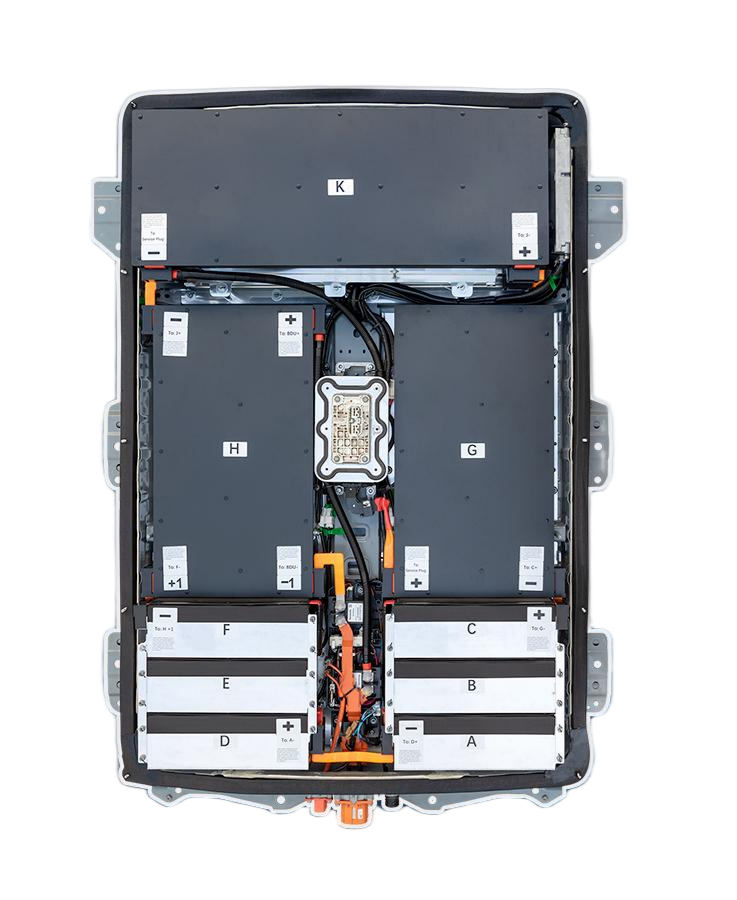
🚗 Comparing Leaf ZE0 Battery Upgrade Options: OEM vs Aftermarket
Is your Nissan Leaf ZE0 (2011-2015 model) struggling with range anxiety? If your daily commute has been reduced to a stressful math equation of “miles left vs. destination,” you’re likely facing the dreaded battery degradation that hits older Leafs. You have two main paths: paying a fortune for an Original Equipment Manufacturer (OEM) replacement or exploring the high-quality aftermarket.
As a leading manufacturer specializing in EV powertrains, we understand the hesitation. You want safety, longevity, and value. This guide breaks down the hard numbers and real-world performance of upgrading your Leaf ZE0 battery, helping you decide if an OEM or aftermarket solution is right for you.
⚡ The OEM Battery Reality Check: Premium Price, Standard Tech
Let’s start with the factory option. If you walk into a Nissan dealership or order a “genuine” replacement pack, you are paying for the brand name, the logistics network, and the peace of mind that comes with a massive corporate warranty structure.
However, for the Leaf ZE0, there is a significant technological gap. The original 24kWh or 30kWh packs used older LMO (Lithium Manganese Oxide) chemistry. While safe, this chemistry degrades faster and doesn’t handle heat as well as modern alternatives.
The Cost Barrier
The biggest hurdle is the price tag. Replacing a degraded Leaf ZE0 battery with a factory unit can easily cost $12,000 to $16,000. For a car that might be valued at $3,000 to $5,000 on the used market, this often doesn’t make financial sense.
The Specification Limitation
You are often locked into the original specifications. You cannot upgrade the capacity (e.g., going from 24kWh to 40kWh) with a standard OEM part. You are simply paying to get back to “as new” 2011 specifications, not improving upon them.
🛠️ The Aftermarket Advantage: Modern Tech at Half the Price
The aftermarket has evolved dramatically since the Leaf’s launch. Today, companies like CNS BATTERY offer solutions that aren’t just cheaper—they are technically superior.
1. Upgrading Chemistry and Capacity
This is the game-changer. Instead of replacing your degraded pack with the same old tech, you can upgrade to modern NMC (Nickel Manganese Cobalt) or LFP (Lithium Iron Phosphate) cells from top-tier manufacturers like CATL.
- Capacity Boost: You can upgrade your ZE0 from a 24kWh pack to a 40kWh, 50kWh, or even 62kWh pack.
- Range Transformation: This turns your car from a city runabout into a highway-capable vehicle. Instead of 75 miles, you could be looking at 180-200 miles of real-world range.
2. The Price Difference
The financial argument is compelling. A high-quality, brand-new 40kWh aftermarket pack from a reputable manufacturer typically costs between $6,000 and $8,500 (including shipping and support). That is roughly 50% less than the OEM price for a product that offers more range and better technology.
3. Warranty Confidence
Gone are the days when “aftermarket” meant “no warranty.” Leading manufacturers now offer warranties that rival or exceed OEM standards. For instance, CNS BATTERY provides a 2-year / 80,000 km warranty on its automotive batteries, covering defects and performance degradation.
📊 Head-to-Head Comparison: OEM vs. CNS BATTERY
To make the decision easier, let’s compare the two options side-by-side based on what truly matters to a Leaf owner.
| Feature | OEM Replacement | Aftermarket (CNS BATTERY) |
|---|---|---|
| Battery Chemistry | Older LMO (Original Spec) | Modern NMC / LFP (CATL Cells) |
| Available Capacity | 24kWh / 30kWh (Original Only) | 40kWh / 50kWh / 62kWh (Upgradeable) |
| Estimated Cost | $12,000 – $16,000 | $6,000 – $8,500 |
| Warranty | Standard Factory Warranty | 2 Years / 80,000 km |
| Technology | 2011 Standards | 2026 Standards (Improved BMS) |
Expert Insight: The key takeaway here isn’t just the savings. It’s the ability to future-proof your vehicle. By upgrading to a modern chemistry pack, you are not just fixing a broken car; you are giving it a second life with technology that didn’t exist when the car was built.
🛑 Common Concerns: Safety and Compatibility
We understand the hesitation. “Is it safe?” and “Will it fit?” are the most common questions.
Safety First
Reputable aftermarket manufacturers do not cut corners on safety. We use brand-new, A-grade cells from the world’s largest battery factories. These cells undergo rigorous testing for thermal stability and cycle life. The Battery Management System (BMS) is programmed to Nissan’s exact voltage and communication protocols, ensuring the car interacts with the battery exactly as it did with the factory unit.
Plug-and-Play Fitment
Modern engineering means precision. These packs are designed using OEM CAD data to ensure the physical dimensions, mounting points, and connector placements are identical to the original. This is not a “hack”; it is a precise engineering solution.
💡 Making the Right Choice for Your ZE0
If you are looking to keep your Leaf ZE0 on the road for another 100,000 miles, the aftermarket upgrade is the logical choice for most owners.
Choose OEM if:
- You require the absolute original factory paperwork for certification.
- Money is no object, and you want zero technical involvement.
Choose an Aftermarket Upgrade (Like CNS) if:
- You want to save 50% on the cost.
- You want more range than the car had when it was new.
- You want modern, safer battery chemistry.
❓ Frequently Asked Questions (FAQ)
Q1: Will an aftermarket battery void my remaining factory warranty?
While the Leaf ZE0 is well out of its original warranty period, for vehicles that aren’t, installing an aftermarket part can be a gray area. However, reputable manufacturers ensure their packs meet or exceed OEM specifications. In practice, because the electrical signature is identical, it is very difficult for a mechanic to distinguish a high-quality aftermarket pack from an OEM one during a standard check-up.
Q2: How long does the installation take?
Installing a complete battery pack on a Leaf ZE0 typically takes a professional mechanic 1 to 2 hours. It involves disconnecting the old unit and bolting in the new one. We provide detailed installation guides and video tutorials to support the process.
Q3: What is the lifespan of an aftermarket battery compared to OEM?
Because aftermarket leaders use modern CATL cells with NMC or LFP chemistry, the cycle life is often superior to the original LMO cells. While the OEM battery might have degraded significantly after 8 years, a new modern pack is engineered for longevity, often backed by a 2-year warranty but expected to last many years beyond that with proper care.
Q4: Do I need special tools to charge an aftermarket battery?
No. These batteries are designed to work seamlessly with the Nissan Leaf’s onboard charger and the standard EV charging infrastructure (Level 1 and Level 2). No modifications to your charging setup are required.
Ready to give your Nissan Leaf ZE0 a second life with a modern, high-capacity battery? Don’t let the high cost of OEM replacements limit your options.
Get a Free Custom Quote for Your Leaf ZE0
Our experts can help you select the perfect capacity upgrade to match your driving needs.