Here is the SEO-optimized article tailored to your requirements.
Comparing Custom and Lightweight Drone Batteries for Maintenance
In the rapidly evolving landscape of commercial and industrial drone operations, the adage “time is money” has never been more literal. For fleet managers and maintenance technicians, the difference between operational efficiency and costly downtime often hinges on a single component: the battery. While standard off-the-shelf batteries might seem like a quick fix, the long-term maintenance implications of choosing between Custom Drone Batteries and Lightweight/High-Density Solutions are profound. This article delves into the maintenance nuances of these two power solutions, providing a technical roadmap to optimize your drone fleet’s health and longevity.
The Maintenance Crossroads: Standardization vs. Optimization
When evaluating drone power systems, maintenance teams are often caught between the desire for universal compatibility and the need for maximum flight time. Standard batteries offer simplicity, but they rarely account for the specific thermal, mechanical, and electrical stresses of a particular drone model or payload.
Custom Drone Batteries, as defined by manufacturers like CNS Battery, are not merely about fitting a shape; they are about engineering a solution that aligns with the drone’s center of gravity, discharge profile, and thermal envelope. On the other hand, Lightweight Drone Batteries—often utilizing semi-solid state or high-nickel chemistry—are designed to push the boundaries of energy density. Understanding how these designs impact maintenance cycles is critical for reducing the Total Cost of Ownership (TCO).
1. Physical Integration and Mechanical Stress
One of the most overlooked aspects of battery maintenance is the physical interface between the battery and the drone airframe.
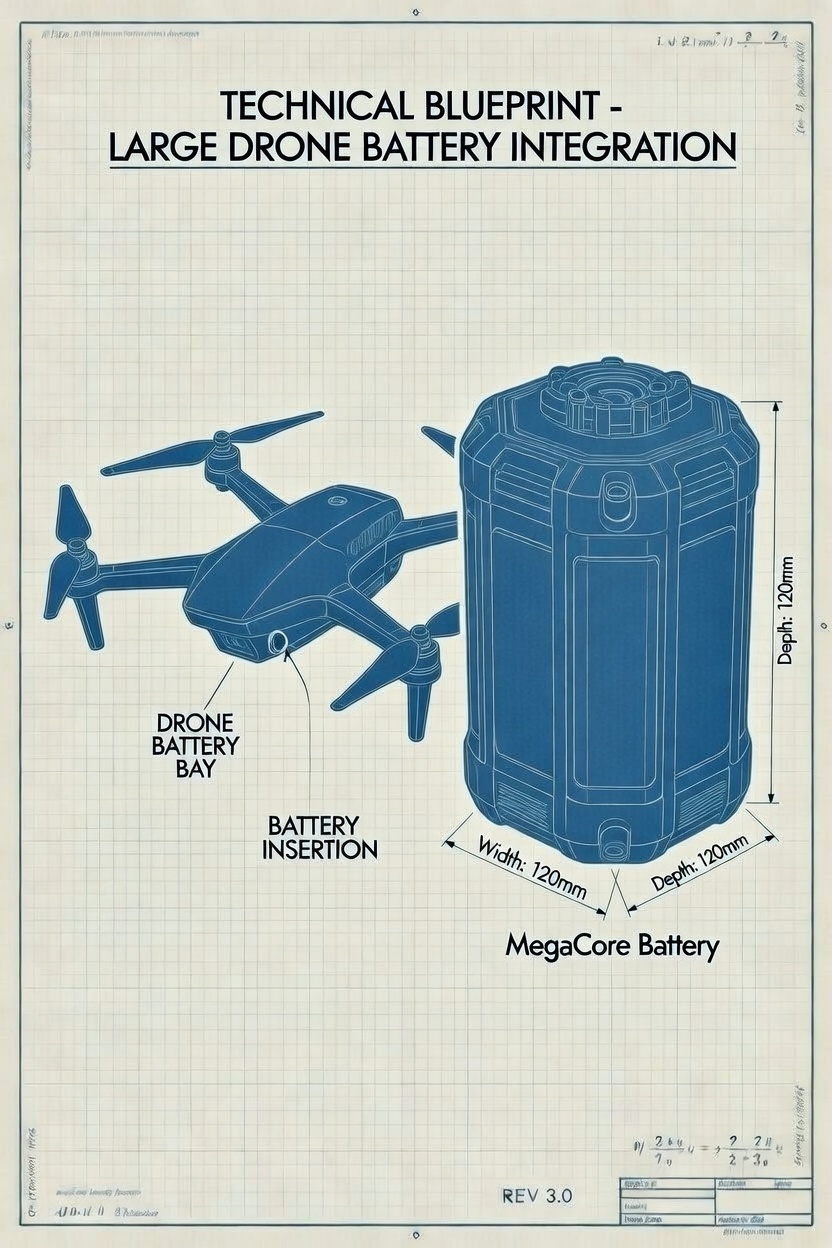
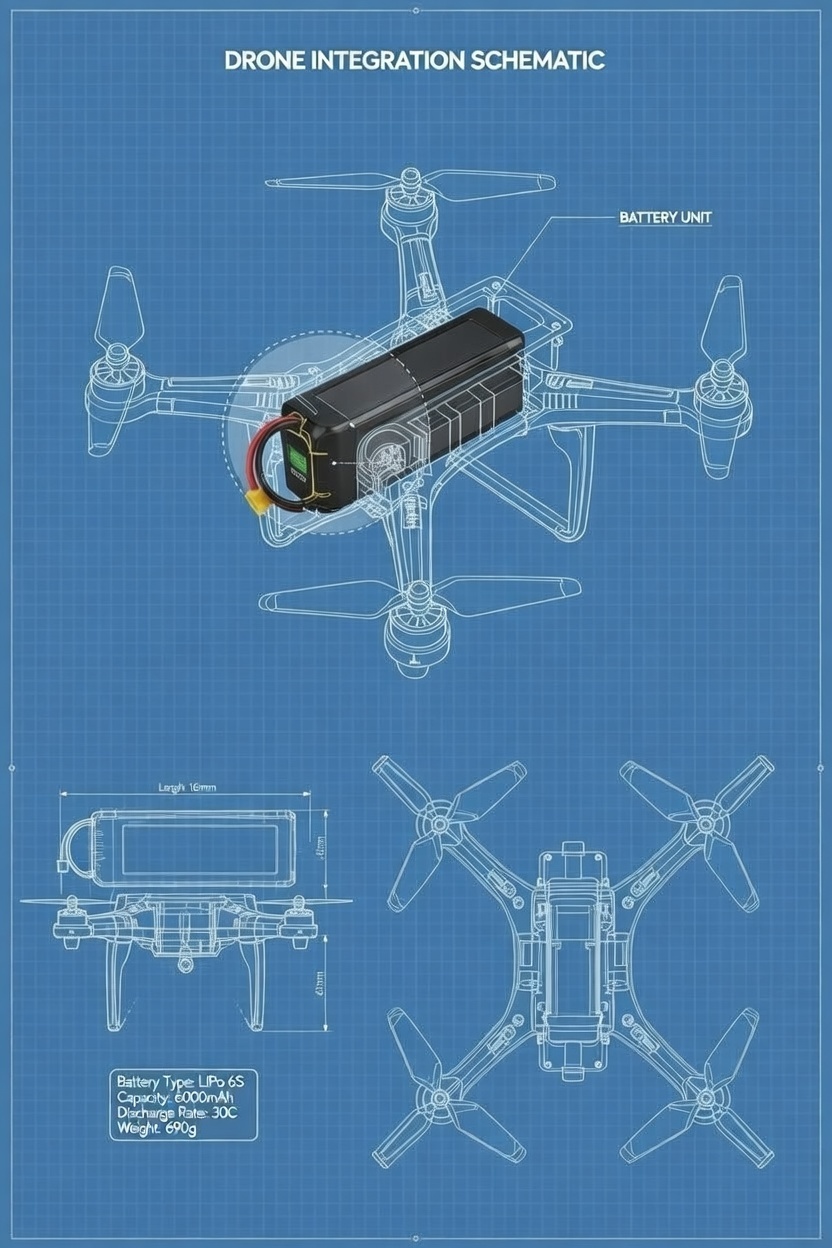
- Custom Solutions: A bespoke battery is designed to match the drone’s specific connector layout and mounting mechanism. This precision engineering eliminates the “rattle” or vibration that can occur with ill-fitting aftermarket batteries. Vibration is the enemy of electronics; it can loosen solder joints and connectors over time, leading to intermittent power loss and requiring frequent re-tightening or replacement of components during maintenance checks.
- Lightweight Solutions: Lightweight batteries often utilize advanced stacking technology to reduce bulk. However, if not properly customized for the drone’s compartment, these dense packs can create pressure points. During maintenance, technicians must inspect for casing deformation or stress cracks caused by a too-tight fit.
Maintenance Tip: Always verify the dimensional tolerances of a custom battery. A gap of even a few millimeters can allow for thermal expansion and contraction, which is far less damaging than a battery that is forced into a space.
2. Thermal Management and Longevity
Heat is the primary factor in lithium polymer battery degradation. The maintenance schedule of a drone fleet is heavily dictated by how well the batteries manage heat.
| Feature | Custom Battery Maintenance | Lightweight Battery Maintenance |
|---|---|---|
| Thermal Design | Can be engineered with specific heat dissipation channels matching the drone’s internal airflow. | Often relies on internal chemistry (e.g., NMC 811) to handle heat, requiring less external cooling but more chemical stability checks. |
| Cycle Life | Optimized for the drone’s specific discharge rate, potentially extending cycle life beyond 600 cycles with proper care. | High energy density can lead to higher internal temperatures if the drone’s cooling is inadequate, necessitating more frequent thermal paste replacement or fan cleaning. |
| Common Issues | Connector overheating due to mismatched resistance. | Swelling due to high internal pressure from dense packing if not vented correctly. |
Expert Insight: Custom batteries allow for the integration of specialized Battery Management Systems (BMS) that can be programmed to the drone’s specific thermal thresholds. This means the maintenance team can rely on software diagnostics to predict failures before they happen, rather than waiting for a catastrophic thermal event.
3. Connector Compatibility and Electrical Health
A significant portion of drone maintenance issues stems from the electrical connection point—the connector.
- The Custom Advantage: When a battery is custom-built for a specific drone model (such as those compatible with DJI, Autel, or Yuneec), the connector type (XT60, XT90, Anderson, etc.) is matched to the drone’s specifications. This ensures a secure fit with minimal resistance. High-resistance connections are a major source of maintenance headaches, as they cause voltage drops and localized heating, leading to connector melting or pitting.
- The Lightweight Challenge: Lightweight batteries sometimes utilize proprietary or high-current connectors to handle the discharge rates required for their density. If these do not perfectly align with the drone’s port, maintenance involves physically modifying the drone (which is not recommended) or dealing with arcing and spark damage.
Step-by-Step Maintenance Check:
- Visual Inspection: Look for “pitting” or blackening on the connector tips. This indicates arcing, often caused by a loose fit.
- Resistance Test: Use a multimeter to check the resistance between the battery terminals and the drone’s motor leads. A custom solution should show near-zero resistance.
- Cleaning: Use contact cleaner on both the battery pins and the drone socket. Corrosion is accelerated in high-vibration environments.
4. Smart Diagnostics and Predictive Maintenance
Modern drone maintenance is shifting from reactive to predictive. This is where the comparison becomes most distinct.
- Smart Custom Batteries: Advanced custom solutions, such as CNS’s “Neo” or “Pro” series, feature Bluetooth-enabled BMS. These allow maintenance teams to pull State of Health (SOH) data directly from the battery via an app. Instead of guessing when a battery needs replacement, the software provides exact cycle counts and internal resistance readings.
- Standard Lightweight Packs: While lightweight, many generic high-density packs lack sophisticated telemetry. This forces maintenance teams to rely on flight time degradation as the only indicator of battery health, which is often a late-stage symptom.
5. Chemical Stability and Storage Protocols
The chemistry of the battery dictates its storage and handling protocols, which are a core part of maintenance.
- Semi-Solid State (Lightweight): These batteries (offering densities up to 380Wh/kg) are generally more stable than traditional LiPo. For maintenance, this means a lower risk of swelling during long-term storage. However, they require specific charging algorithms. A standard charger used in maintenance bays might not be compatible, risking undercharging or overcharging.
- Custom LiPo/LiHV: Traditional custom batteries require strict adherence to storage voltages (typically 3.8V per cell). Maintenance logs must track storage times to ensure batteries are cycled periodically to prevent deep discharge failure.
Key Maintenance Strategies for Both Types
Regardless of whether you choose a custom form factor or a lightweight chemistry, the following strategies are essential:
- Implement a Rotation System: Never fly with batteries of vastly different cycle counts on the same mission. This prevents “weak” cells from dragging down the performance of the entire pack, which can cause motor stalling.
- Environmental Control: Store batteries in a cool, dry place. High humidity is a silent killer of battery connectors, causing corrosion that leads to increased resistance.
- Regular Firmware Updates: If your batteries have a smart BMS, ensure the firmware is up to date. Manufacturers often release updates that improve cell balancing algorithms, which extends the battery’s lifespan.
Conclusion: Choosing the Right Partner for Reliability
Choosing between a custom and a lightweight drone battery is not just a technical decision; it is a logistical one. Custom batteries reduce the mechanical and electrical variables that maintenance teams must troubleshoot, leading to fewer failures in the field. Lightweight batteries offer extended flight times but demand rigorous adherence to specific charging and storage protocols.
To maximize your fleet’s uptime and minimize maintenance costs, it is crucial to partner with a manufacturer that understands the intricacies of both design and durability. By selecting a solution that prioritizes compatibility and safety, you ensure that your drones are not just flying, but flying reliably.
Ready to optimize your drone fleet’s performance? Whether you need a fully customized solution or a high-density off-the-shelf model, our experts are here to help. Contact us today for a free technical assessment and discover how the right battery can transform your maintenance operations.