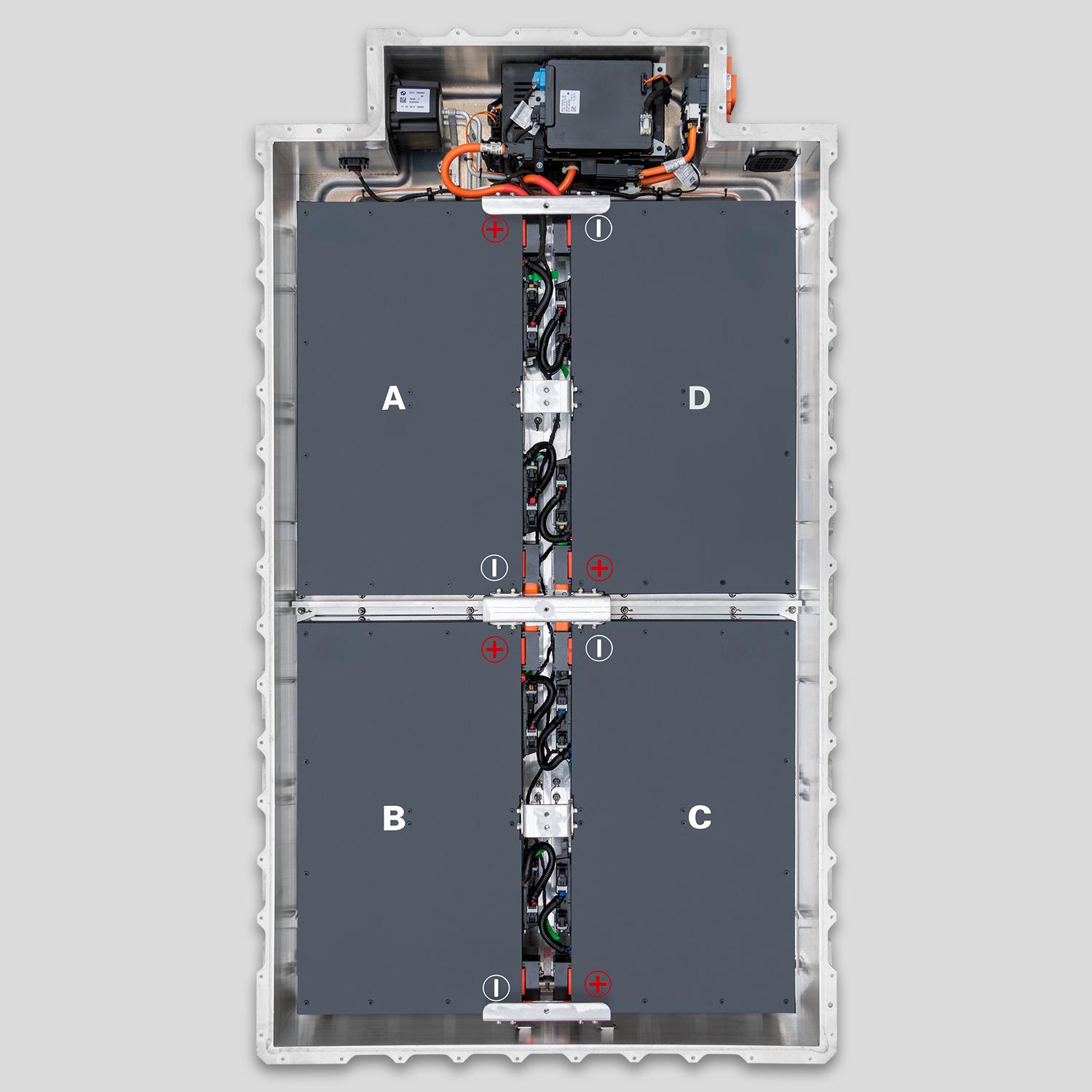
BMW i3 Battery Scan Tool: How to Use It to Diagnose Hidden Failures
You stare at your BMW i3’s dashboard. The “Guess-O-Meter” says you have 80 miles of range, but yesterday you barely made it 50. Is the car lying to you? Is your battery secretly dying, or is it just a sensor glitch? Without the right data, you are driving blind.
The key to unlocking the truth about your electric vehicle’s health lies in a BMW i3 battery scan tool. But simply plugging in a generic scanner isn’t enough. You need to know what to look for, how to interpret the cryptic codes, and when those numbers signal that it’s time for a serious intervention.
At CNS BATTERY, we believe an informed owner is an empowered owner. This guide walks you through using diagnostic tools to read your battery’s vital signs, understand the critical “State of Health” (SOH) metric, and decide if a simple reset will fix it or if you need a professional BMW i3 battery replacement.
Why Generic Scanners Aren’t Enough for the BMW i3
Many i3 owners start with a basic $20 OBDII reader from an auto parts store. While these can clear a “Check Engine” light, they often fail to access the deep, proprietary data stored in the High-Voltage Battery Management System (BMS).
To truly diagnose battery capacity loss, cell imbalance, or thermal issues, you need a tool capable of communicating with BMW’s specific EV protocols. Popular options among enthusiasts include:
- Carly for BMW: A user-friendly app with a dedicated adapter, great for reading SOH and basic cell data.
- BimmerLink: A more advanced app that provides real-time graphs of cell voltages and temperatures.
- ISTA/D (Rheingold): The dealer-level software used by professionals for deep diagnostics and coding.
Without these specialized tools, you might miss the early warning signs of a failing pack until the car leaves you stranded.
Step-by-Step: How to Perform a Deep Battery Scan
Ready to see what’s really happening inside your battery pack? Follow this process to gather accurate data.
1. Connect Your Tool
Plug your compatible OBDII adapter into the port located under the dashboard on the driver’s side. Ensure your car is in “Accessory” mode (press the start button without touching the brake) or fully powered on, but parked safely.
2. Access the High-Voltage Battery Menu
Navigate to the specific EV or High-Voltage section of your app. Look for terms like “HVB” (High Voltage Battery), “SME” (Supply Module Electronics), or “Battery Management.”
3. Read the Critical Metrics
Don’t just look for error codes. You need to analyze three specific data points:
- State of Health (SOH): This is the percentage of your original capacity remaining. A new battery is 100%. If your SOH is below 70%, you are experiencing significant degradation.
- Cell Voltage Deviation: This shows the difference between the highest and lowest voltage cells in the pack. A healthy pack has a deviation of less than 0.01V (10mV). If you see deviations over 0.05V (50mV), your pack is unbalanced, and some cells are failing.
- Maximum Charge Capacity (Ah): Compare this number to your factory rating (e.g., 60 Ah, 94 Ah, or 120 Ah). If your 94 Ah battery now shows a max capacity of 65 Ah, you have lost nearly 30% of your range.
4. Check for Hidden Fault Codes
Look for codes related to “Cell Monitoring,” “Thermal Management,” or “Isolation Faults.” These often appear before the dashboard warning lights turn on.
Interpreting the Results: When to Panic and When to Act
Once you have the data, what does it mean for your wallet and your commute?
- Scenario A: High SOH (>85%) but Wrong Range Display.
If your health is good but the range estimate is erratic, your BMS might just need recalibration. A full charge/discharge cycle or a software reset might solve this. - Scenario B: Low SOH (<70%) and High Cell Deviation.
This is the danger zone. No amount of software tweaking will fix chemically degraded cells. High deviation means weak cells are dragging down the entire pack, limiting your charge speed and total range. This is a hardware failure. - Scenario C: Isolation Faults.
If your scan reveals isolation resistance errors, stop driving immediately. This indicates a potential high-voltage leak, which is a serious safety hazard.
The CNS BATTERY Solution: From Diagnosis to Restoration
Discovering that your BMW i3 battery has failed via a scan tool can be disheartening. The dealership will likely quote you $15,000 to $20,000 USD for a replacement. But your scan results are actually the first step toward a smarter, more affordable solution.
At CNS BATTERY, we use the same professional diagnostic data to engineer the perfect replacement for your specific needs. We don’t just sell batteries; we solve the problems your scan tool identified.
Why Trust CNS BATTERY After Your Scan?
- Data-Driven Upgrades: Share your scan results with us, and we’ll recommend the exact capacity upgrade (e.g., jumping from 60 Ah to 120 Ah) that fits your driving habits.
- Superior Cell Matching: Unlike salvage yards that mix mismatched cells, our BMW i3 Series Battery packs are built with perfectly matched, low-deviation cells, ensuring the health metrics you scan tomorrow will be pristine.
- Cost Savings: Our solutions typically range from $8,000 to $12,000 USD, saving you thousands compared to OEM prices while often delivering more range than your car had when new.
- Warranty Confidence: We back our replacements with a robust warranty, so you never have to worry about seeing those scary error codes again.
Don’t Let Bad Data Ruin Your Drive
A BMW i3 battery scan tool gives you the power to see the truth, but it doesn’t fix the problem. If your scan reveals low SOH or high cell deviation, ignoring it will only lead to further degradation and eventual stranding.
Take control of your EV’s future today. Use your diagnostic data to make an informed decision, and let CNS BATTERY provide the hardware solution that restores your confidence and your range.
Have you scanned your battery and seen worrying numbers?
Don’t face a $20,000 dealership bill alone. Contact CNS BATTERY today with your diagnostic results. Our experts will analyze your data and provide a custom quote for a high-performance BMW i3 battery replacement that gets you back on the road with confidence.
👉 Get Your Expert Analysis & Quote
Frequently Asked Questions (FAQ)
1. What is the best scan tool for checking BMW i3 battery health?
For most owners, BimmerLink (paired with a Bluetooth OBDII adapter) or Carly for BMW offers the best balance of cost and depth. They can read State of Health (SOH), individual cell voltages, and temperature data. For professional-grade diagnostics, ISTA/D is the gold standard.
2. What is a “good” State of Health (SOH) reading?
A new battery is 100%. An SOH above 85% is considered excellent. Between 70% and 85% is normal wear for an older vehicle. Anything below 70% indicates significant degradation where a replacement or upgrade should be considered to restore usable range.
3. My scan shows high cell voltage deviation. Can I fix this myself?
Minor deviations can sometimes be balanced by leaving the car on a Level 2 charger for 24+ hours. However, if the deviation is large (over 0.05V) or persists after balancing, it indicates a physically damaged or aged cell module. This requires professional module replacement or a full pack swap from CNS BATTERY.
4. Will a scan tool tell me if my battery is safe to drive?
It can give strong indicators. If you see “Isolation Faults” or extreme temperature variances between cells, it is unsafe to drive. Moderate capacity loss (low SOH) is not a safety risk but will limit your range. Always consult a professional if you see critical error codes.
5. How much does a professional diagnostic scan cost?
Dealerships may charge $150 – $250 USD for a diagnostic session. Using your own tool like BimmerLink costs the price of the app and adapter (approx. $50 – $100 USD one-time). CNS BATTERY offers free consultation if you share your scan data with us to discuss replacement options.
6. If my scan shows a bad battery, how much is a replacement?
While dealerships charge upwards of $18,000 USD, CNS BATTERY offers high-quality BMW i3 Series Battery replacements and upgrades typically between $8,000 and $12,000 USD, depending on the capacity you choose. This is a permanent fix for the issues your scan tool identified.