
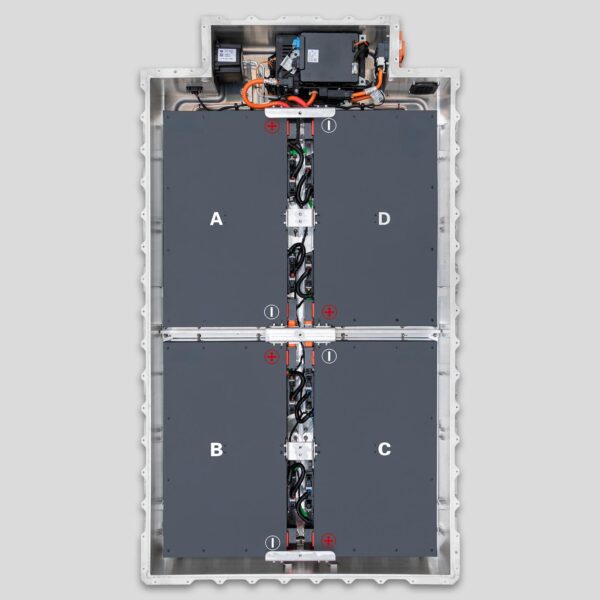
BMW i3 Battery Pack Inspection: Cost for Repair Shops 2026 – The $300 Diagnostic That Saves a $20,000 Mistake
A 2015 BMW i3 rolls into your bay. The customer is anxious, clutching a printout from an online forum. “The range dropped to 40 miles overnight,” they explain. “The dealer wants $22,000 for a new battery. But my neighbor said you can just inspect it and maybe fix one bad module for $500. Can you do a full inspection and tell me the truth? How much will that cost?”
As a professional EV shop owner in 2026, you know this moment defines your business. The customer is looking for hope, but they need hard data. A superficial “check-up” isn’t enough. They need a forensic BMW i3 Battery Pack Inspection that reveals the physical reality of their aging cells, internal resistance, and insulation integrity.
If you charge $100 for a quick scan tool readout, you miss the hidden dangers (coolant leaks, swelling, internal shorts) and set the customer up for a catastrophic failure later. If you charge $1,000 without a clear path to a solution, they walk away. The sweet spot is a comprehensive, high-value diagnostic service that acts as the bridge to a profitable, life-saving battery upgrade.
What does a truly professional i3 battery inspection entail in 2026?
Why are standard OBDII scans insufficient for detecting imminent thermal risks?
And how do you structure your pricing so the inspection fee becomes a down payment on a high-margin CNS BATTERY upgrade?
At CNS BATTERY, we believe that accurate diagnostics are the foundation of trust. We know that a proper inspection doesn’t just identify problems; it validates the need for a complete system replacement. This guide breaks down the real costs and components of a professional battery inspection, exposes the limitations of cheap diagnostics, and reveals how to turn every inspection into a successful upgrade sale.
The Hidden Costs: Breaking Down the Inspection Price Tag
When a customer asks, “How much for an inspection?”, they often expect a 15-minute code read. A professional inspection is a multi-hour forensic investigation requiring specialized equipment and expert labor.
1. Specialized Equipment Investment
You cannot inspect an i3 pack properly with a generic scanner.
- Bidirectional Scan Tools: BMW ISTA, Autel MaxiIM, or Launch X431 for live cell data ($3,000–$8,000 investment).
- AC Impedance Meters: To measure Internal Resistance (IR) of individual modules ($2,000+).
- Digital Megohmmeters: For critical insulation resistance testing ($500–$1,500).
- Thermal Imaging Cameras: To detect hot spots indicating internal shorts or poor connections ($1,000+).
- Depreciation & Calibration: These tools require maintenance and software subscriptions.
2. Labor Intensity (The Value Driver)
A thorough inspection is not quick. It involves:
- Safety Protocols: Depowering, PPE setup, and verification (45 mins).
- Live Data Analysis: Monitoring cell voltages under load and rest (1 hour).
- Physical Inspection: Checking for swelling, leaks, corrosion, and vent valve residue (45 mins).
- Electrical Testing: Performing IR mapping and insulation tests (1.5 hours).
- Reporting: Compiling a detailed report with graphs, photos, and recommendations (45 mins).
- Total Time: 4–5 hours. At a shop rate of $150/hour, labor alone is $600–$750.
3. The “False Hope” Risk
If you undercharge (e.g., $150), you rush the process. You might miss a subtle coolant leak or a slowly drifting cell. When that pack fails two weeks later, the customer blames your “incomplete inspection.” Your reputation takes a hit, and you lose the future upgrade sale.
The Professional Verdict: What a Real Inspection Includes
To justify your fee and build trust, your inspection must go beyond codes. It must be a Health & Safety Audit.
Phase 1: Digital Forensics (Live Data)
- Cell Deviation Analysis: Measure the voltage difference between the highest and lowest module. >0.15V indicates critical failure.
- State of Health (SOH) Verification: Compare reported SOH with actual capacity calculations.
- Error Code History: Analyze freeze-frame data to see when and under what conditions faults occurred.
Phase 2: Physical & Thermal Examination
- Swelling Check: Use straight-edges to check the aluminum casing for bowing (a sign of gas generation).
- Leak Detection: Smell for coolant, inspect vent valves for crusty residue, and use UV dye if a leak is suspected.
- Thermal Scan: Run the car under load and scan the pack for localized hot spots (>10°C variance).
Phase 3: Electrical Integrity Testing
- Internal Resistance (IR) Mapping: The gold standard. High IR (>10 mΩ) confirms chemical degradation even if voltage looks okay.
- Insulation Resistance (Megger Test): Critical for safety. <100 kΩ means the pack is electrically leaking and dangerous.
The Hard Truth: Why Inspections Often Lead to “Total Loss”
In 2026, the vast majority of 2014-2017 i3 inspections reveal systemic failure, not isolated issues.
- The Domino Effect: If one module has high IR, neighbors usually do too.
- The Leak Reality: Internal coolant leaks are irreversible. You cannot clean the inside of a sealed pack.
- The Swelling Danger: A swollen pack is structurally compromised and a fire risk.
The Conclusion: 90% of detailed inspections will conclude that the battery is unrepairable and must be replaced. This is not bad news; it is valuable clarity. It saves the customer from wasting money on futile repairs and prevents safety disasters.
The CNS BATTERY Solution: Turning Diagnostics into Profit
This is where your business model shines. The inspection fee shouldn’t be a standalone profit center; it should be the gateway to your most profitable service: the battery upgrade.
The “Fee Waiver” Strategy
- Offer: Charge $400–$600 for the comprehensive inspection.
- Incentive: If the customer proceeds with a CNS BATTERY Upgrade, waive the inspection fee entirely (apply it as a credit toward the install).
- Result: The customer feels they got a “free diagnostic,” and you secure a high-ticket sale.
Why Upgrading Is the Only Logical Recommendation
When your report shows high IR, deviation, or leaks, present the CNS BATTERY High-Capacity Upgrade as the only viable solution.
- Validated by Data: Your inspection proves the old pack is dead. The upgrade is the resurrection.
- Zero Risk: New Grade-A cells eliminate the thermal and electrical risks you just identified.
- Double the Range: Transform a 40-mile anxiety machine into a 170-mile daily driver.
- Cost Efficiency:
- Inspection Only: $500 (Customer leaves angry with a dead car).
- Dealer Replacement: $22,000 (Customer scraps the car).
- CNS BATTERY Upgrade: $8,000 – $14,000 USD. Customer gets a better-than-new car for half the dealer price.
- Warranty Peace of Mind: Backed by our 3–5 Year Warranty, validating your recommendation.
The Sales Script for Shops
“Mr. Customer, our comprehensive inspection revealed three critical issues: Module #12 has double the internal resistance of the others, there’s evidence of minor internal coolant leakage, and the casing is slightly swollen. This means the battery is physically degraded and unsafe to repair.
However, you don’t need to spend $22,000 at the dealer. Since the inspection confirmed the need for replacement, we can waive the $500 diagnostic fee if you choose our CNS BATTERY Upgrade. For $11,500, you get a brand-new 150 Ah battery with 170 miles of range and a 4-year warranty. It’s the only safe, permanent fix, and it saves you $10,000 compared to the dealer.”
Real Story: From “Skeptical Owner” to “Upgrade Advocate”
“Metro EV Solutions” charged a customer $450 for a full pack inspection on a 2015 i3. The report showed severe cell imbalance and low insulation resistance. The customer was initially hesitant about the cost of replacement.
“We walked them through the thermal images and IR graphs,” says the owner. “We showed them exactly why their range was dying and why it was a fire risk. Then we offered the CNS upgrade with the diagnostic fee waived. They signed immediately. They told us: ‘I paid $450 elsewhere last month for a ‘code clear’ that did nothing. This $450 inspection actually saved my car.’ That job turned into an $11,500 sale and a lifelong customer.”
Stop Guessing, Start Inspecting Professionally
BMW i3 Battery Pack Inspections in 2026 are not just about reading codes; they are about ensuring safety and validating the need for modernization. Don’t undercut your value with cheap, superficial checks.
Charge what your expertise is worth. Use the data to build trust. And let every inspection lead naturally to the only real solution: a CNS BATTERY upgrade.
Ready to professionalize your diagnostics?
Don’t leave money on the table. Contact CNS BATTERY today to become a certified partner. Get access to our inspection templates, wholesale pricing, and sales training. Turn every diagnostic bay visit into a high-margin upgrade opportunity.
👉 Get Your Inspection Kit & Partner Pricing
Frequently Asked Questions (FAQ) for Shops
1. How much should I charge for a BMW i3 battery inspection?
A comprehensive inspection including live data, IR testing, and physical checks should cost between $400 and $600. This reflects the 4-5 hours of skilled labor and specialized equipment usage. Avoid charging less, as it devalues the service and encourages rushing.
2. Can I waive the inspection fee if they buy a new battery?
Yes, and it’s highly recommended. Offering to credit the inspection fee toward a CNS BATTERY Upgrade is a powerful sales tool. It removes the customer’s hesitation about the diagnostic cost and incentivizes them to proceed with the repair immediately.
3. What tools are absolutely necessary for a pro inspection?
You need a bidirectional scan tool (for live cell data), an AC impedance meter (for Internal Resistance), a Megohmmeter (for insulation testing), and a thermal camera. Without these, you are guessing, not inspecting.
4. How long does a full inspection take?
Expect 4 to 5 hours for a thorough job. This includes safety depowering, data logging under load, physical examination, electrical testing, and report generation. Rushing this process risks missing critical safety issues like internal leaks.
5. What percentage of inspected i3 batteries need replacement?
In 2026, for models from 2014-2017, over 90% of detailed inspections reveal systemic degradation (high IR, leaks, swelling) that requires full replacement. Only very rare cases with minor calibration issues can be resolved without replacement.
6. Does CNS BATTERY provide support for inspections?
Yes. As a partner, you get access to our technical team to help interpret complex data (like IR maps) and sales scripts to help you explain the findings to customers effectively.
7. Is the inspection fee refundable if no work is done?
Typically, no. The fee covers the time, expertise, and equipment used to diagnose the vehicle. However, applying it as a credit toward a future upgrade is a standard and effective business practice that keeps the customer engaged.
