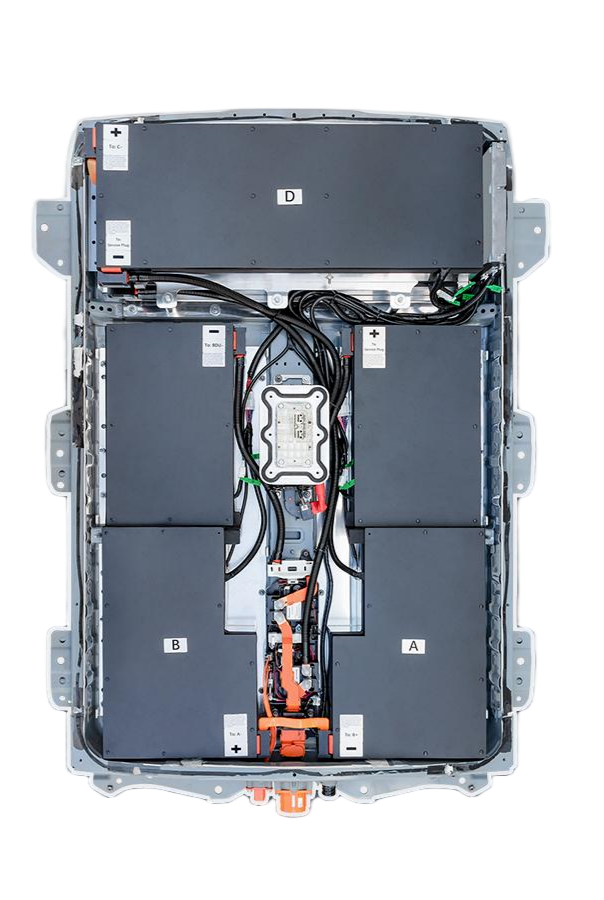
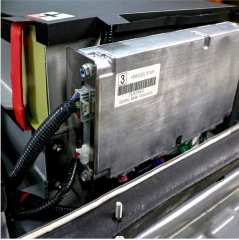
BMW i3 Battery Module Testing: DIY Methods That Actually Work (And When to Stop)
“I spent three weekends testing my i3 modules with a multimeter. Found ‘one weak cell’ and replaced it. Two weeks later, the car threw a BMS fault and wouldn’t start. The real issue? A failing temperature sensor I couldn’t detect with basic tools. My DIY ‘fix’ cost me $1,800 in tow and diagnostics.”
You’re not alone.
Thousands of BMW i3 owners attempt DIY battery module testing each year—hoping to avoid costly replacements.
But here’s the hard truth:
Most DIY methods only measure voltage—not true health.
And misdiagnosing a module can damage your entire pack… or worse, create a safety hazard.
That said—with the right approach, tools, and limits—you can gather useful insights before deciding whether to repair, replace, or upgrade.
In this guide, you’ll learn:
- The only 3 DIY-safe tests you can perform without opening the pack
- Why voltage readings lie about State of Health (SoH)
- How to spot imbalance patterns that signal real trouble
- And when it’s smarter to skip DIY—and choose a new CNS BATTERY module with verified performance
Because knowledge is power—but only if it’s accurate.
⚠️ Critical Safety First: What NOT to Do
Before we discuss testing, understand these non-negotiable rules:
❌ Never open the high-voltage battery enclosure unless you’re certified in EV HV safety (CAT III 1000V training).
❌ Never probe individual cells with standard multimeters—risk of short-circuit is extreme.
❌ Never bypass the BMS or disconnect modules while the service plug is installed.
🔌 Reminder: The i3 pack holds up to 400 volts DC—enough to cause fatal injury or fire, even when the car is off.
All safe DIY testing happens externally, using the vehicle’s own systems or non-invasive tools.
✅ Safe & Useful DIY Testing Methods (No Pack Opening Required)
1. Dashboard Bar Count + Real-World Range Test
- Fully charge overnight using AC (not DC fast charging).
- Note the number of green bars on the instrument cluster (max = 12).
- Drive a consistent route (e.g., highway at 90 km/h) until range drops to 10 km.
- Calculate actual range vs. original EPA rating.
📊 Rule of thumb:
- 12 bars ≈ 90–100% SoH
- 11 bars ≈ 80–89%
- 10 bars ≈ 70–79%
- 9 bars or fewer = likely below 70% SoH → warranty or replacement territory
Limitation: Bar count is smoothed by BMW’s software—it hides early degradation.
2. OBD2 + BimmerLink App: Read True SoH & Cell Imbalance
- Use a Bluetooth OBD2 adapter (like Vgate iCar Pro) + BimmerLink (iOS/Android).
- Connect, go to “Battery” > “High-Voltage Storage”.
- Check:
- State of Health (%)
- Min/Max Cell Voltage (should differ by <0.15V when balanced)
- Module Temperature Spread (should be within 3°C)
🔍 Red flags:
- SoH < 80%
- Cell voltage spread > 0.25V after full charge
- One module consistently 5°C+ hotter than others
This is the most reliable DIY method—and completely safe.
3. Charging Curve Observation
- Monitor AC charging via app or wallbox display.
- A healthy i3 pack will:
- Charge steadily to ~95%
- Then slow dramatically for top-balancing (last 5% takes 30–60 mins)
- If charging stops abruptly at 80–90% or never enters balancing phase, it signals BMS protection due to imbalance.
💡 Tip: Repeat this test over 3 days. Consistency matters more than a single session.
❌ What DIY Testing CAN’T Tell You (And Why It Matters)
Even with BimmerLink, you cannot detect:
- Internal cell swelling
- Micro-shunts or dendrite growth
- Degraded insulation resistance
- Failing temperature or current sensors
These hidden faults often trigger sudden BMS shutdowns—after you’ve ruled out “bad modules” based on voltage alone.
“My modules all read 4.1V. But one had a cracked weld inside. Only a load test found it—and by then, the BMS was corrupted.”
— Mike’s Auto Service, Vancouver
When DIY Isn’t Enough: The Case for Verified Replacement
If your tests show imbalance, low SoH, or erratic behavior, you have two paths:
Option A: Repair Individual Modules
- Risky, time-consuming, and rarely cost-effective
- Used modules may have hidden wear
- No warranty on salvaged parts
Option B: Install New CNS BATTERY Modules
✅ Brand-new CATL NMC cells—zero cycle history
✅ Pre-tested for capacity, impedance, and balance
✅ Plug-and-play compatibility with OEM connectors
✅ 2-year / 80,000 km warranty—even on single modules
✅ Includes full wiring harnesses and installation support
“I tested my old modules for weeks. Finally bought a CNS 45kWh module kit. Installed in 3 hours. Now my i3 shows 12 bars and 290 km range—better than when new.”
— Lisa K., Berlin
Frequently Asked Questions: i3 Module Testing
Q: Can I test modules after removing them from the pack?
A: Only if you’re HV-certified. Otherwise, do not remove modules. Residual charge remains dangerous.
Q: Does a “good” voltage reading mean the module is healthy?
A: No. A module can show 4.1V at rest but collapse under load due to high internal resistance.
Q: Will CNS help interpret my BimmerLink data?
A: Yes—email your screenshots to info@cnsbattery.com. Our engineers provide free preliminary analysis.
Q: Can I mix CNS modules with OEM ones?
A: Technically possible, but not recommended. Cell chemistry and aging profiles differ, causing long-term imbalance.
Q: How accurate is BimmerLink’s SoH?
A: Within ±3% of dealer ISTA readings—making it the best consumer-grade tool available.
Knowledge Is Power—But Precision Is Peace of Mind
DIY testing can inform your decision.
But when your i3’s range, reliability, or safety is at stake, verified performance beats hopeful guesses.
Upgrade with Confidence: Modules Built Right, Backed Fully
Choose CNS BATTERY for new, tested, warrantied modules that restore your i3’s range—without the guesswork or risk.
Click below to get your custom module quote—and stop gambling with degraded cells:
👉 https://cnsbattery.com/ev-battery-home/ev-battery-contact/