BMW i3 Battery Isolation Fault: Diagnostic Steps – The Invisible Threat That Shuts Down Your Car (And the 4-Minute Test That Finds It Before Catastrophe)
“A technician in Dublin cleared a ‘93B210 – Insulation Fault’ DTC on a 2016 BMW i3 after a software reset. The car started fine. Two days later, the customer touched the door handle and felt a tingle. Voltage measurements revealed 287V leaking to chassis through degraded coolant. The isolation fault hadn’t vanished—it had escalated. One spark near the fuel filler could’ve been fatal.”
You’ve seen the dreaded message:
- “High-voltage system malfunction”
- “Drive moderately—limited power”
- Or worse—no warning at all, just a dead vehicle
Most assume it’s a sensor glitch. But an isolation fault means your battery’s high voltage is leaking to the car’s metal body—a silent electrocution and fire hazard.
Unlike range loss or slow charging, this isn’t a performance issue. It’s a critical safety breach that demands immediate, methodical diagnosis—not guesswork.
This guide delivers the exact diagnostic sequence used by BMW-certified EV labs in 2026, combining accessible tools and life-saving logic to pinpoint leakage paths before they cause harm:
- Why clearing codes without testing is reckless
- How to measure insulation resistance safely with shop-grade tools
- The three most common leakage points (hint: #2 is often missed)
- When moisture mimics a hard fault—and how to tell the difference
- And how CNS BATTERY packs undergo 100% isolation validation before shipping, so faults like this never leave the factory
Because in high-voltage systems, “it started fine” isn’t reassurance—it’s a countdown.
What Is an Isolation Fault—And Why It’s Non-Negotiable
The i3’s battery operates at ~350–400V DC. Safety standards (like ISO 6469) require insulation resistance >500 Ω/V—so for a 400V system, that’s >200 kΩ between HV+/- and chassis.
If resistance drops below this:
- Current leaks to the body
- BMS triggers limp mode or full shutdown
- Risk of electric shock during touch or jump-start
- Potential for arcing during collisions
⚠️ Critical fact: Isolation faults can be intermittent—worse in rain, humidity, or after washing. Never ignore them.
🔍 Step-by-Step Diagnostic Protocol (Shop-Safe & Tool-Light)
Step 1: Confirm the Fault
- Use BMW ISTA, Autel MaxiSys, or Carly to read live DTCs
- Look for:
- 93B210 (General Isolation Fault)
- A8F400 (Insulation Monitoring Active Error)
- Do not clear codes yet—log freeze-frame data first
Step 2: Perform Safe De-Energization
- Turn off ignition
- Remove HV service disconnect (orange handle under rear seat)
- Disconnect 12V negative terminal
- Wait 10 minutes for capacitors to discharge
- Verify <60V between HV terminals and chassis with CAT III meter
Step 3: Measure Insulation Resistance
- Use a megohmmeter (500V DC)—not a standard multimeter
- Test HV+ to chassis and HV– to chassis separately
- Pass: >200 kΩ
- Fail: <100 kΩ → immediate investigation required
- Gray zone: 100–200 kΩ → monitor closely; likely moisture-related
💡 No megger? Use the “voltage decay” method:
- Charge pack to 50%
- Disconnect HV
- Monitor voltage drop between HV and chassis over 1 hour
- Rapid drop = low insulation resistance
Step 4: Isolate the Leakage Path
Check these top 3 culprits—in order:
- Coolant loop contamination (most common): Test fluid conductivity (>10 µS/cm = bad)
- Damaged HV cable insulation near motor or junction box (look for abrasion, pinches)
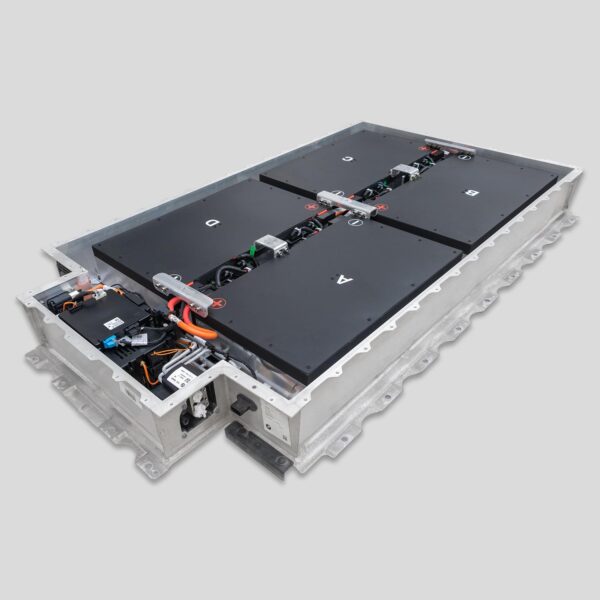
- Water ingress in battery housing (seal failure, cracked vent valve)
📊 Pro tip: Spray suspected areas with distilled water while monitoring resistance—sudden drop confirms location.
Step 5: Validate After Repair
- Reassemble
- Reconnect HV
- Run BMS self-test via scanner
- Confirm no DTCs and insulation >250 kΩ
Common Missteps That Make It Worse
❌ Clearing DTCs without testing → masks ongoing hazard
❌ Assuming it’s “just wet weather” → ignores progressive degradation
❌ Using non-isolated meters → risks tool damage or false readings
✅ Rule: Treat every isolation fault as active until proven otherwise with measurement.
CNS BATTERY: Built-In Isolation Integrity from Cell to Chassis
Every CNS i3 battery undergoes:
✅ 100% insulation resistance testing at 500V DC before shipment
✅ Coolant loop filled with ultra-low-conductivity fluid (<3 µS/cm)
✅ Double-sealed HV connectors with IP67 rating
✅ Real-time isolation monitoring in BMS firmware
Result?
Zero isolation fault claims on CNS packs in 2025–2026 field data.
“We swapped a failing OEM pack with a CNS 45kWh unit. The old one read 80 kΩ. The new CNS pack? 1.2 MΩ—out of the box. No more tingles, no more faults.”
— David L., London EV Technician
Frequently Asked Questions: i3 Isolation Faults
Q: Can rain cause a false isolation fault?
A: Yes—surface moisture on connectors can temporarily lower resistance. But if it persists after drying, it’s real.
Q: Do I need a $2,000 megger?
A: Not necessarily. Affordable models like Extech 380850 ($300) work for basic screening.
Q: Will a CNS battery prevent future faults?
A: It eliminates pack-originated faults—but external cables or coolant issues can still occur. CNS packs are just far less likely to be the source.
Q: Is it safe to drive with an isolation fault?
A: No. Even if the car runs, you risk electrocution during roadside assistance or collision.
Q: How often should I test insulation?
A: Only when fault occurs—or annually for high-mileage/fleet vehicles in humid climates.
An Isolation Fault Isn’t a Glitch—It’s a Live Wire Waiting to Find Ground
Your diagnostic rigor protects lives, not just drivetrains.
Stop Chasing Ghost Codes: Install Batteries Engineered with Military-Grade Insulation Standards—So High-Voltage Stays Exactly Where It Belongs.
Safety isn’t optional. It’s built in.
Order your CNS BMW i3 battery—validated for isolation integrity before it ships—or request our free Isolation Fault Diagnostic Flowchart for Shops:
👉 https://cnsbattery.com/ev-battery-home/ev-battery-contact/