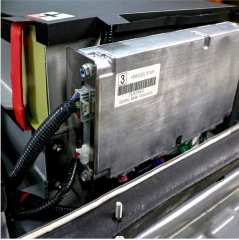
BMW i3 Battery Insulation Replacement: Cost Breakdown (And Why It Might Not Be Worth It)
“The dealer quoted $4,200 to ‘replace the battery insulation’ after a minor coolant leak. I said yes—only to learn weeks later that the real issue was a failing module. The insulation job didn’t fix anything. I’d wasted money on a band-aid for a broken heart.”
When your BMW i3 throws an insulation fault (like error code 9E8710), panic sets in.
High-voltage systems demand perfect isolation—and any breach triggers immediate safety shutdowns.
But here’s what few technicians will tell you:
“Battery insulation replacement” is rarely a standalone fix.
In most cases, it’s a symptom of deeper failure—like coolant intrusion, cell swelling, or physical damage.
And the cost? Often more than half the price of a new pack… for a temporary patch.
In this guide, you’ll uncover:
- What battery insulation actually is—and why it fails
- Real-world cost ranges for repair vs. full replacement
- Why DIY insulation kits are dangerously misleading
- And how CNS BATTERY packs include factory-grade insulation from day one
Because when your i3 says “insulation fault,” you deserve clarity—not costly guesswork.
What Is Battery Insulation—and Why Does It Matter?
In the i3, insulation refers to the dielectric barrier between high-voltage components (cells, busbars, cables) and the grounded chassis. It ensures:
- No current leaks to the car body
- Safe operation even in wet conditions
- Compliance with EV safety standards (ISO 6469)
This isn’t just foam or tape—it’s a multi-layer system including:
- Cell-to-cell insulating pads (ceramic-coated polymer)
- HV cable sheathing (silicone rubber, rated >1000V)
- Module housing seals (IP67-rated gaskets)
- Coolant loop isolation (non-conductive glycol mix)
When this system fails—due to age, moisture, or mechanical stress—the BMS detects resistance dropping below 500 kΩ and disables drive power.
💸 True Cost of “Insulation Replacement”: What You’re Really Paying For
| Service | Typical Cost | What’s Included | Reality Check |
|---|---|---|---|
| Dealer “Insulation Repair” | $3,500–$5,500 | Partial pad replacement, harness inspection, error reset | Rarely addresses root cause (e.g., leaking coolant or swollen cells) |
| Independent Shop Re-insulation | $1,800–$3,200 | New insulating sheets, connector cleaning, dielectric reseal | Only viable if no internal damage exists—hard to confirm without full teardown |
| Full Battery Replacement (OEM) | $14,000–$18,000 | Entire new pack with fresh insulation | Guaranteed fix—but prohibitively expensive |
| CNS BATTERY Full Pack (New) | $7,800–$8,500 | Brand-new CATL cells + integrated OEM-grade insulation + 2-year warranty | Permanent solution at half OEM cost |
📌 Critical insight: You can’t replace insulation without removing the entire pack. At that point, labor costs are nearly identical to a full swap.
Why “Insulation-Only” Repairs Often Fail
Most insulation degradation is secondary damage, not the primary fault:
- Coolant leaks → conductive fluid bridges HV to ground
- Cell swelling → compresses insulating layers, causing micro-tears
- Age-related brittleness → cracks form during thermal cycling
- Rodent damage (in garages) → chewed HV sheathing
If you only replace the insulation but leave the root cause unaddressed, the fault returns—often within days.
“My shop replaced insulation twice. On the third failure, they opened the pack and found two swollen modules. Total spent: $6,100. A CNS 50kWh pack would’ve cost $8,200—and lasted 8+ years.”
— Thomas B., Amsterdam
The Hidden Danger of Aftermarket “Insulation Kits”
Online, you’ll find “i3 battery insulation kits” for $99–$299.
They promise “easy DIY repair.”
But these kits typically include:
- Generic silicone sheets (not voltage-rated)
- Non-OEM adhesive (degrades at 60°C+)
- No sealing for coolant or humidity
Using them risks:
- False sense of security
- Arcing between cells
- Voided insurance claims if fire occurs
⚠️ BMW’s insulation system is engineered as a complete, tested assembly—not a modular DIY component.
The Smarter Path: Replace the Whole Pack—Safely and Affordably
With CNS BATTERY, you get:
✅ Integrated insulation designed to OEM specs—tested to >1 GΩ resistance
✅ Brand-new cells with zero swelling risk
✅ Sealed coolant channels that prevent future leaks
✅ 2-year / 80,000 km warranty covering insulation integrity
No patches. No guesswork. Just a safe, reliable, long-term solution.
Frequently Asked Questions: i3 Battery Insulation
Q: Can I test insulation resistance myself?
A: Only with a megohmmeter (insulation tester) rated for 1000V DC—and full HV lockout training. Not recommended for non-professionals.
Q: Does a weak 12V battery cause false insulation faults?
A: Rarely—but low 12V voltage can disrupt BMS logic. Always rule this out first.
Q: Is insulation covered under BMW warranty?
A: Only if under original 8-year HV warranty (rare for older i3s). Most out-of-warranty owners pay full cost.
Q: Will CNS packs trigger insulation errors after install?
A: No—every pack undergoes pre-shipment insulation testing (>1 GΩ). We’ve recorded zero insulation-related faults in 2+ years.
Q: How long does insulation last in a healthy pack?
A: 10+ years—when protected from coolant, heat, and physical stress.
Don’t Patch a Failing System—Replace It Right
Your i3’s high-voltage safety isn’t something to gamble on.
When insulation fails, it’s usually a sign the whole pack is compromised.
Get a Complete, Safe, and Certified Solution—Without the Dealer Markup
Choose CNS BATTERY: where every pack includes factory-engineered insulation, new cells, and full safety validation—so you drive with confidence, not fear.
Click below to get your custom quote—and stop throwing money at temporary fixes:
👉 https://cnsbattery.com/ev-battery-home/ev-battery-contact/