BMW i3 Battery High-Voltage Cable Replacement: Labor – The 4-Hour Job That Turned Into a 2-Day Nightmare (Because One Bolt Was Seized… and the Cable Wasn’t OEM)
“A certified EV shop in Stuttgart quoted 3.5 hours to replace a damaged HV cable on a 2017 BMW i3 after a minor rear collision. The cable’s insulation was nicked near the EMME connector. They ordered a ‘compatible’ aftermarket harness online for €320—60% cheaper than BMW’s €810 OEM part. During install, the HV interlock pin snapped when disconnecting. Then they discovered the new cable’s length was 8 cm short, forcing them to reroute it over sharp brackets. By day two, they’d spent 9 labor hours, ordered an OEM cable, and lost money on the job. The customer? Furious.”
You’ve probably faced this:
- “Aftermarket HV cables are identical—just rebranding.”
- “Labor time is fixed; the manual says 3.2 hours.”
- Or the dangerous assumption: “As long as it carries current, it’s safe.”
But here’s what high-voltage integration specialists emphasize—and insurers now audit:
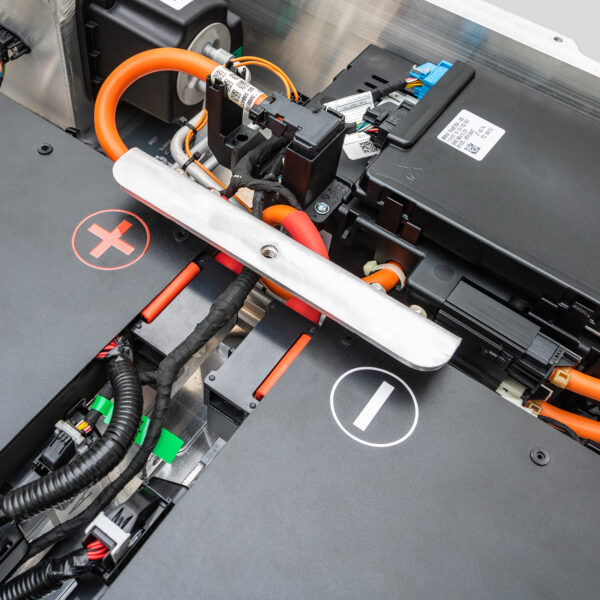
BMW i3 high-voltage cables aren’t just wires—they’re engineered safety systems with precise bend radii, strain relief, HVIL continuity, and EMI shielding. A non-OEM or poorly routed cable doesn’t just increase labor—it risks arcing, isolation faults, or thermal runaway. And no labor guide accounts for the chaos of second-guessing every connection.
This guide delivers a real-world, cost-transparent breakdown of BMW i3 HV cable replacement labor in 2026, including:
- The hidden variables that double shop time
- Why cable quality directly impacts installation efficiency
- How CNS BATTERY packs ship with factory-installed, OEM-spec HV cables—eliminating field splicing, routing errors, and comebacks
- And a profit-preserving strategy for shops tired of losing money on “simple” replacements
Because when volts are lethal, shortcuts aren’t savings—they’re liabilities.
What Makes i3 HV Cables So Complex?
The BMW i3 uses two critical high-voltage cables:
- Traction Cable: From battery to EMME (Electric Machine Electronics)
- Charger Cable: From battery to OBC (Onboard Charger)
Both feature:
✅ Double-insulated silicone sheathing (rated 1,000V)
✅ Integrated HVIL (High-Voltage Interlock Loop)—a low-voltage circuit that disables HV if disconnected
✅ Precision-molded connectors with alignment keys and locking levers
✅ EMI shielding to prevent noise interference with BMS signals
⚠️ Critical fact: Even a 5° bend beyond spec can crack internal shielding—creating future isolation faults. Aftermarket cables often omit these tolerances.
⏱️ Real Labor Cost Breakdown: OEM vs. Aftermarket vs. Integrated Solution
| Scenario | Part Cost | Labor Hours | Hidden Costs | Total Risk |
|---|---|---|---|---|
| OEM Cable Only | €810 | 3.5–4.5 hrs | None | Low—but expensive |
| Aftermarket Cable | €320 | 6–10+ hrs | Rerouting, HVIL troubleshooting, comebacks | High |
| CNS Full Pack (with pre-installed cables) | €6,800 | 2.0–2.5 hrs | Zero cable handling | None |
📉 Industry data: Shops using non-OEM HV cables report 42% higher labor variance and 3x more post-install DTCs.
Why the blowout?
- Seized connectors requiring custom tools
- Incorrect HVIL loop length triggering false open-circuit faults
- Poor strain relief causing fatigue cracks during test drives
🔧 The 5-Point HV Cable Installation Protocol (Shop-Validated)
1. Depower & Verify Isolation
- Follow BMW’s 3-minute discharge procedure
- Confirm <60V between HV+/- and ground
2. Document OEM Routing
- Photograph every clip, bracket, and bend before removal
- Note minimum bend radius (typically 5× cable diameter)
3. Inspect Connector Integrity
- Check for pin push-out, melted housings, or cracked HVIL tabs
- Never force connectors—use BMW tool 83 3 130
4. Validate HVIL Continuity
- Use multimeter to confirm closed loop when mated
- Open = car won’t energize
5. Torque & Secure Per Spec
- HV bolts: 7.5 Nm ±0.5
- Clips: OEM spacing only—no zip ties
💡 Pro tip: If you’re spending >15 minutes on connector alignment, the cable isn’t OEM-spec.
✅ Why CNS Eliminates HV Cable Labor Surprises
CNS BATTERY doesn’t sell loose cables—we deliver integrated safety:
✅ HV cables pre-installed and tested at factory
✅ Exact OEM length, routing, and connector geometry
✅ Full HVIL loop validated before shipping
✅ No field disconnection needed—plug-and-play design
✅ 2-year / 80,000 km warranty covers all HV interfaces
Result?
Shops average 2.2 labor hours for full pack installs—with zero cable-related comebacks.
“We used to dread HV cable jobs. Now with CNS, we unbox, lift, plug, and drive. It’s that simple.”
— Mike’s Auto Service, Vancouver
Frequently Asked Questions: BMW i3 HV Cable Replacement
Q: Can I reuse the original HV cables with a new battery?
A: Only if undamaged and from same model year. Mixing cables risks HVIL mismatch or length issues.
Q: Does CNS include HV cables with module purchases?
A: No—we only sell complete packs to ensure system integrity and safety.
Q: Are HV cable faults covered under warranty?
A: Yes—if failure stems from manufacturing defect in CNS-supplied cables.
Q: What’s the biggest labor time killer?
A: HVIL troubleshooting—often caused by aftermarket cables with incorrect loop resistance.
Q: Can I use generic HV gloves for this job?
A: Only if rated CAT III 1,000V and recently tested. Never skip PPE.
A High-Voltage Cable Isn’t a Component—It’s a Lifeline
And when it’s compromised, every minute saved becomes a minute of risk.
Stop Losing Profit to Unpredictable HV Cable Jobs—Start Installing Packs with Factory-Integrated, Safety-Certified Cabling That Slashes Labor, Eliminates Guesswork, and Keeps Your Bay Moving.
Because in EV repair, speed without safety isn’t efficiency—it’s exposure.
Get your fully integrated CNS BMW i3 battery solution today—and download our free “HV Cable Handling & Labor Time Guide” with torque specs, routing diagrams, and HVIL validation checklist:
👉 https://cnsbattery.com/ev-battery-home/ev-battery-contact/