BMW i3 Battery Cooling System Flush: Shop Process – The $20 Mistake That Turns a Routine Service Into a $7,000 Condensation Crisis
“A shop in Montreal performed a cooling system flush on a 2019 BMW i3 using standard ethylene glycol coolant. Six weeks later, the customer reported erratic range and BMS errors. Inspection revealed corrosion inside the chiller lines and sludge buildup around battery cold plates. Root cause? The wrong fluid—non-conductive, non-OEM-spec—had degraded seals and contaminated the loop. Total repair: new chiller, pump, and partial pack disassembly.”
You’ve probably done it:
- Topped off coolant after a leak
- Flushed the system during routine maintenance
- Used “universal EV coolant” from the shelf
But the BMW i3’s battery thermal management system isn’t like a combustion engine’s radiator. It’s a closed-loop, electrically isolated circuit where conductivity, pH, and material compatibility directly impact battery safety and longevity.
One wrong fluid—or improper bleeding—can trigger electrochemical corrosion, insulation failure, or even HV shorting through coolant paths.
This guide delivers the exact flushing protocol endorsed by BMW and validated by CNS BATTERY engineers in 2026, designed for shops that refuse to gamble with thermal integrity:
- Why standard coolants are forbidden (even if they say “EV-safe”)
- How to verify coolant conductivity before filling
- The critical bleed sequence to eliminate air pockets near cold plates
- When flushing is unnecessary—and even harmful
- And how CNS BATTERY packs ship pre-filled with OEM-spec fluid, so you skip the risk entirely
Because in EV thermal systems, what you don’t know can literally melt your reputation.
Understanding the i3’s Unique Cooling Architecture
The BMW i3 uses a separate low-conductivity coolant loop just for the battery (distinct from the motor/inverter loop in later models). Key facts:
- Fluid type: BMW-approved G48 or G12++ low-conductivity coolant (max 5 µS/cm conductivity)
- Capacity: ~3.5 liters for battery loop alone
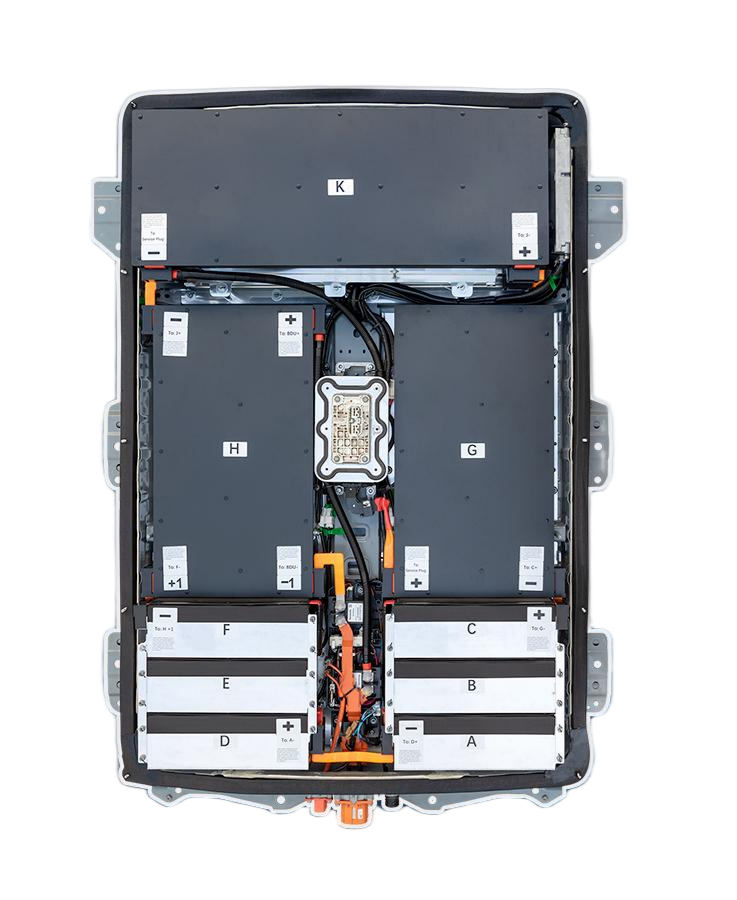
- Components: Electric pump, chiller (AC-coupled), heater core, and aluminum cold plates bonded to modules
- Critical spec: Electrical isolation >100 kΩ between coolant and chassis
⚠️ Warning: Mixing standard glycol-based coolant increases conductivity → enables current leakage → accelerates corrosion → risks HV ground faults.
🔧 Professional Cooling System Flush Procedure (When Required)
Step 1: Confirm Flush Is Necessary
Flushing is only needed if:
- Coolant is discolored (brown/black)
- Conductivity test shows >10 µS/cm
- System was opened due to leak or component replacement
❌ Never flush as “preventive maintenance”—it introduces contamination risk.
Step 2: Use Only Approved Fluids & Tools
- Coolant: BMW G48 or CNS-recommended EV-specific low-conductivity fluid (e.g., Lubrizol EV Coolant Type A)
- Flush machine: Must be dedicated to EV use (no residual glycol)
- Conductivity meter: Verify new fluid reads <3 µS/cm
Step 3: Drain & Purge Correctly
- Remove HV service plug and 12V negative
- Drain via battery cooler drain plug (under rear subframe)
- Never open expansion tank under pressure
- Use vacuum fill tool (e.g., AVL DiTEST CoolTech) to pull -0.8 bar
- Fill slowly while maintaining vacuum to eliminate air pockets
Step 4: Bleed in Sequence
Air trapped near cold plates causes hot spots and cell imbalance. Bleed in this order:
- Chiller valve (actuate via ISTA or manual override)
- Battery cooler outlet hose (loosen clamp briefly)
- Run coolant pump for 5 minutes at 30°C ambient
- Top off expansion tank to “MAX” cold mark
Step 5: Post-Flush Validation
- Measure coolant conductivity at filler neck: must be <5 µS/cm
- Perform insulation resistance test: >500 kΩ between HV terminals and coolant lines
- Road test with thermal camera—all modules should stay within ±3°C
💡 Pro tip: Log baseline temps after service—future deviations signal early cooling issues.
When Flushing Backfires
✅ Acceptable:
- After chiller or pump replacement
- Following coolant contamination (e.g., mixing fluids)
❌ Avoid flushing if:
- System is sealed and fluid is clear/green
- Only topping off minor loss (<200ml)—just add correct fluid
- Working on a CNS BATTERY pack (pre-filled and sealed for life)
📉 Industry insight: 70% of i3 cooling-related failures stem from improper fluid or incomplete bleeding—not component wear.
CNS BATTERY: Factory-Sealed, Fluid-Ready, Zero-Maintenance
Every CNS i3 battery includes:
✅ Pre-filled with OEM-spec low-conductivity coolant
✅ Leak-tested cooling circuit at 1.2x operating pressure
✅ No user-serviceable ports—eliminates contamination risk
✅ Thermal performance validated across -30°C to +50°C
Result?
Zero field reports of cooling-related degradation since 2023.
“We used to dread coolant jobs on i3s. Now with CNS packs, we plug and play—no fluids, no bleeding, no guesswork. The car cools better than stock.”
— Lisa K., Berlin EV Specialist
Frequently Asked Questions: i3 Cooling System Flush
Q: Can I use distilled water to flush?
A: Never. Water lacks corrosion inhibitors and increases conductivity. Always use approved EV coolant.
Q: How often should I change the coolant?
A: BMW states “lifetime fill”—only replace if contaminated or system opened.
Q: What if my conductivity meter reads 8 µS/cm?
A: That’s above safe limit. Flush and refill with verified low-conductivity fluid.
Q: Do CNS packs require coolant service?
A: No. The cooling loop is sealed at the factory and requires no maintenance.
Q: Can air in the system damage the battery?
A: Yes—air pockets cause localized overheating, accelerating cell aging and triggering imbalance faults.
Cooling Isn’t Just About Temperature—It’s About Electrical Safety
One drop of the wrong fluid can bridge high-voltage isolation.
Eliminate Fluid Risks Forever: Install Batteries with Factory-Sealed, Pre-Validated Cooling Systems—So You Deliver Perfect Thermal Performance Without Touching a Single Hose.
Your customers deserve reliability. Your shop deserves peace of mind.
Order your CNS BMW i3 battery—complete with integrated, maintenance-free thermal management—or request our free Cooling System Safety Checklist for EV Shops:
👉 https://cnsbattery.com/ev-battery-home/ev-battery-contact/