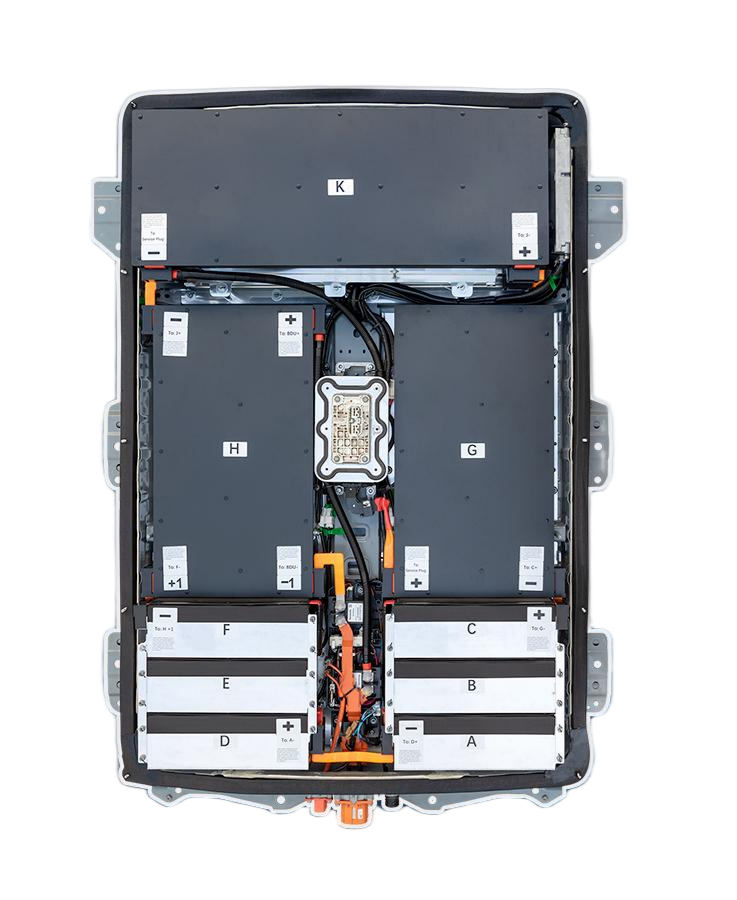
BMW i3 Battery Cooling System Flush: A Safe DIY Guide (And When to Upgrade Instead)
Is your BMW i3 overheating during fast charging? Does the battery temperature spike on hot days, triggering “Reduced Power” warnings? You might be due for a cooling system flush—a critical but often overlooked maintenance task that keeps your high-voltage battery running efficiently and safely.
While BMW doesn’t publish a strict interval for coolant replacement, experts agree: after 80,000 km or 5+ years, glycol-based coolant degrades, loses anti-corrosion properties, and can even form sludge—jeopardizing your i3’s thermal management.
But before you grab a wrench, understand this: flushing the cooling loop is only worthwhile if your battery is still healthy. If your pack is already degraded (≤8 capacity bars, <200 km real-world range), you’re polishing a dying system. In that case, a new high-performance battery with a clean, factory-fresh cooling interface may be the smarter long-term fix.
Below, we walk you through a safe DIY flush—and explain when it’s time to think bigger.
⚠️ Critical Safety First: High-Voltage Precautions
The BMW i3’s battery cooling circuit runs through the high-voltage traction pack. Never begin work without first isolating the system:
- Turn off the vehicle and remove the key fob from proximity.
- Disconnect the 12V auxiliary battery (located in the frunk).
- Wait at least 15 minutes to allow high-voltage capacitors to discharge.
- Wear insulated gloves and avoid contact with orange high-voltage cables.
If you’re uncomfortable with these steps, stop and consult a qualified EV technician. Safety always comes first.
Tools & Fluids You’ll Need
- BMW-approved coolant: Pentosin NF or equivalent blue G48 ethylene glycol (NOT universal green or red coolant!)
- Coolant vacuum fill tool (e.g., OEMTOOLS 27100 or similar)
- Drain pan (2–3 liters capacity)
- Funnel with tubing
- Torx T30 and T40 bits
- New coolant reservoir cap (recommended)
💡 Pro Tip: Never mix coolant types. G48 is specifically formulated for aluminum components and electrical isolation in EV systems.
Step-by-Step: Flushing the BMW i3 Battery Cooling Loop
Step 1: Drain the Old Coolant
- Locate the battery coolant drain plug under the rear subframe (near the right-side suspension).
- Place a drain pan underneath and remove the plug using a T40 Torx bit.
- Allow fluid to fully drain (~2.5 liters total).
Step 2: Flush with Distilled Water (Optional but Recommended)
- Reinstall the drain plug.
- Fill the expansion tank halfway with distilled water.
- Run the climate control on max heat for 10 minutes (activates coolant pump via HVAC demand).
- Drain again. Repeat if fluid appears discolored.
Step 3: Refill with Fresh Coolant
- Mix 50/50 G48 coolant and distilled water (or use pre-mixed).
- Use a vacuum filler to pull air out of the system while filling—this prevents air pockets that cause overheating.
- Fill to the “MAX” line on the reservoir.
- Reconnect the 12V battery and start the car. Let it idle for 15 minutes with AC and heat running to circulate fluid and purge air.
Step 4: Check for Leaks & Top Off
- Inspect hose connections, the reservoir, and the drain plug.
- After cooling down, top off to the “COLD” mark.
✅ Success sign: No bubbling in the reservoir, stable temps during driving, and no “Coolant Level Low” warnings.
When Flushing Isn’t Enough: The Upgrade Alternative
If your i3 is over 6 years old or has more than 100,000 km, coolant flush alone won’t restore lost range or prevent future failures. Degraded cells, corroded busbars, and aging BMS modules are the real culprits behind performance loss.
That’s where CNS BATTERY’s new BMW i3 packs offer a transformative solution:
- Brand-new CATL lithium cells with zero degradation
- Factory-clean cooling channels—no sludge, no corrosion
- Plug-and-play integration with your existing coolant lines
- Higher capacities (45/50/62kWh) for up to 290+ km real-world range
- 2-year / 80,000 km warranty—including thermal performance
🌍 Real Result: “After flushing my 2016 i3 twice in one year—with no improvement—I upgraded to a CNS 45kWh pack. The new battery came with pristine coolant ports, and I’ve had zero thermal issues since.” — David L., London
Don’t Waste Time on a Failing System
A coolant flush is smart preventative maintenance—but only if your battery is still fundamentally sound. If you’re constantly battling overheating, reduced power mode, or rapid range loss, you’re treating symptoms, not the disease.
Upgrade once. Drive confidently for years.
👉 Find Out If Your i3 Qualifies for a High-Capacity CNS Battery
We’ll verify compatibility by VIN, recommend the ideal kWh option, and include full installation support.
Get Your Free Custom Assessment Now →
FAQ: BMW i3 Battery Cooling System
Q: How often should I flush the battery coolant?
A: Every 5 years or 80,000 km—whichever comes first. Earlier if you live in extreme climates or frequently DC-fast charge.
Q: Can I use regular automotive coolant?
A: No. Only G48-spec blue coolant is approved. Other types can damage seals, corrode aluminum, or reduce electrical resistance.
Q: Does CNS include coolant in their battery kits?
A: No—we ship dry packs. But our units are designed to connect directly to your existing coolant lines using OEM-style quick-disconnect fittings.
Q: Will a new CNS battery require a different coolant type?
A: No. It uses the same G48 coolant as your original system—ensuring seamless integration.
Q: Can I flush the coolant myself if I just installed a CNS battery?
A: Yes! Our packs are built to OEM thermal specs, so standard maintenance procedures apply.
Your BMW i3’s battery deserves clean, efficient cooling—whether you’re maintaining the original pack or upgrading to a modern replacement. Make the smart choice for long-term reliability.