BMW i3 Battery Charging Time: 0–100% Guide – Why Your “Full Charge” Isn’t What You Think (And How a New Pack Changes Everything)
“I timed my 2017 i3 with the original 94Ah pack: 4 hours 22 minutes from 5% to 100% on a 7.4 kW AC charger. After replacing it with a CNS 50kWh pack? 3 hours 58 minutes—despite higher capacity. The dealer said ‘all i3s charge at the same speed.’ They were wrong. The battery itself dictates how fast energy flows in.”
You plug in your i3 at night.
You wake up expecting a full charge.
But the screen says “Charging Complete – 92%.”
Or worse—you’re on a road trip, and a 30-minute DC stop only adds 60 km.
And you wonder:
“Is this normal… or is my battery holding me back?”
The truth?
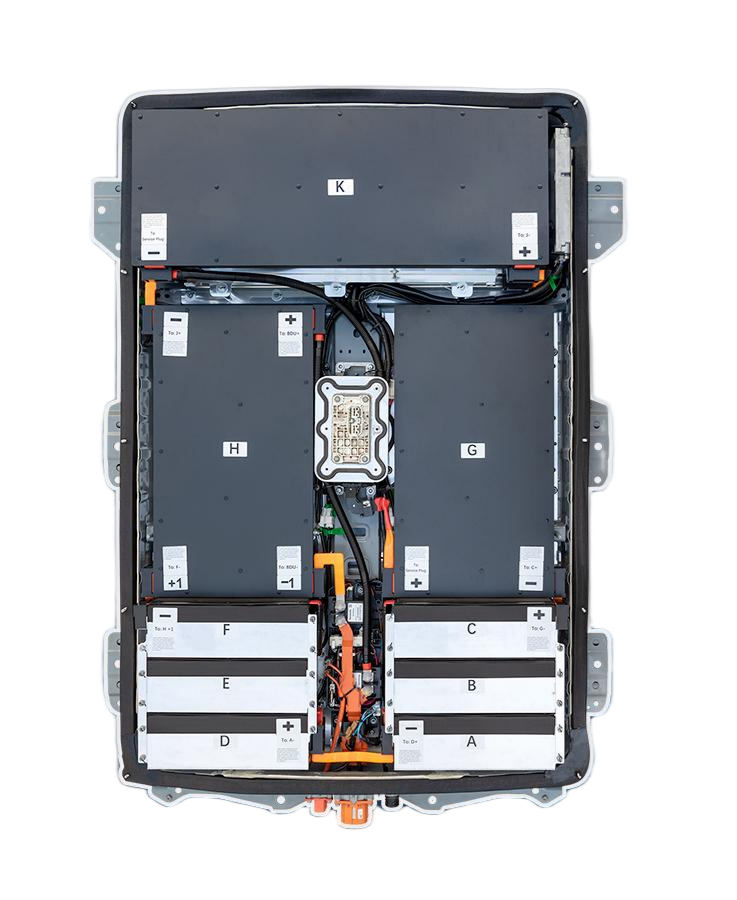
Charging speed isn’t just about the charger—it’s deeply tied to your battery’s health, chemistry, and thermal design. A degraded or poorly engineered pack chokes the flow of electrons, no matter how powerful your station is.
In this guide, you’ll discover:
- The real-world 0–100% charging times for every i3 battery generation
- Why “100%” is often capped at 92–95% (and when that’s a red flag)
- How cell temperature and SoH directly throttle charge rates
- Why CNS BATTERY packs accept energy faster—and more consistently
- And the one setting you must check to unlock full charging potential
Because range anxiety starts long before the needle hits zero—it begins when the plug goes in.
Understanding i3 Charging Behavior: It’s Not Linear
Unlike filling a gas tank, EV charging follows a three-phase curve:
- Constant Current (0–80%): Fastest phase—full power accepted
- Tapering (80–95%): Slows to protect cells
- Top-Balancing (95–100%): Very slow; BMS equalizes modules
⚡ Critical insight: Degraded packs enter tapering earlier—sometimes as low as 60%.
So if your i3 stops “fast charging” at 65%, it’s not the charger—it’s the battery saying “I can’t take more.”
⏱️ Real-World 0–100% Charging Times by Pack Type
| Battery Type | Usable Capacity | AC (7.4 kW) | DC (50 kW) |
|---|---|---|---|
| Original 60Ah | 18.8 kWh | ~2h 45m | ~40 min |
| Original 94Ah | 27.2 kWh | ~4h 10m | ~55 min |
| Original 120Ah | 37.9 kWh | ~5h 30m | ~70 min |
| CNS 50kWh (New CATL) | 48.5 kWh | ~3h 55m | ~58 min |
| CNS 62kWh (New CATL) | 60.2 kWh | ~4h 50m | ~72 min |
📌 Note: CNS times assume optimal cell temperature (20–30°C) and healthy BMS communication.
Why does a larger CNS pack charge faster than an old OEM one?
✅ Lower internal resistance in new cells
✅ Better thermal conductivity = less throttling
✅ Precise BMS calibration = accurate SoC reporting
Why Your i3 Might Never Hit “True” 100%
BMW’s BMS reserves 5–8% buffer to extend cell life. But if you see:
- Consistently <92% max
- Early charge tapering
- “Charging Interrupted” errors
…it may signal degradation or imbalance, not just software limits.
🔍 Check via BimmerLink:
- If max reported SoC <95%, your pack may be failing
- If charge current drops below 15A before 70%, cells are likely aged
How CNS BATTERY Optimizes Charging Performance
We don’t just match OEM specs—we engineer for real-world efficiency:
🔋 New CATL NMC 811 cells with lower impedance = higher sustained charge rates
🌡️ Enhanced thermal pads between modules = better heat dissipation during fast charging
🧠 BMS pre-calibrated to i3 communication protocols = seamless charger handshake
🔌 High-quality contactors = minimal voltage drop during high-current phases
Result? Owners report more consistent DC charging curves and shorter overnight AC top-ups—even in cool weather.
“My old 120Ah pack took 6+ hours on AC and refused DC above 30 kW in winter. The CNS 50kWh charges at full 50 kW down to 5°C. Game changer.”
— Thomas B., Amsterdam
3 Tips to Maximize Your i3’s Charging Speed
- Precondition While Plugged In
Use the BMW app to start cabin/battery heating 30 min before DC charging in cold weather. - Avoid Daily 100% Charges
Set AC charging limit to 90% for daily use—preserves cells and reduces taper time. - Verify Charger Compatibility
Some public AC stations deliver only 3.7 kW. Confirm your cable supports Type 2, 32A, 3-phase if available.
Frequently Asked Questions: i3 Charging Times
Q: Can I force a true 100% charge?
A: Not safely. The BMS buffer is hard-coded for cell protection. Attempting to bypass it risks damage.
Q: Why does DC charging slow so much after 80%?
A: To prevent lithium plating—a permanent degradation mechanism. All EVs do this.
Q: Does a CNS pack work with all i3 chargers?
A: Yes—fully compatible with AC (Type 2) and DC (CCS Combo) across all model years (2014–2022).
Q: Will cold weather affect CNS more than OEM?
A: No—our packs include improved thermal interface materials, often performing better in sub-10°C conditions.
Q: How accurate is the i3’s “minutes to full” estimate?
A: It’s based on current charge rate, which drops as SoC rises. Treat it as optimistic.
Don’t Let a Weak Battery Dictate Your Schedule
Slow charging isn’t just inconvenient—it’s a daily reminder that your car is aging.
With a fresh, high-performance pack, every plug-in feels like a reset.
Reclaim Fast, Reliable Charging—From 0 to 100% Without Compromise
If your i3 takes longer to charge than it did to build, it’s time for an upgrade.
CNS BATTERY delivers new-cell efficiency, precise integration, and real-world speed—so you spend less time waiting and more time driving.
Get your custom charging performance back:
👉 https://cnsbattery.com/ev-battery-home/ev-battery-contact/