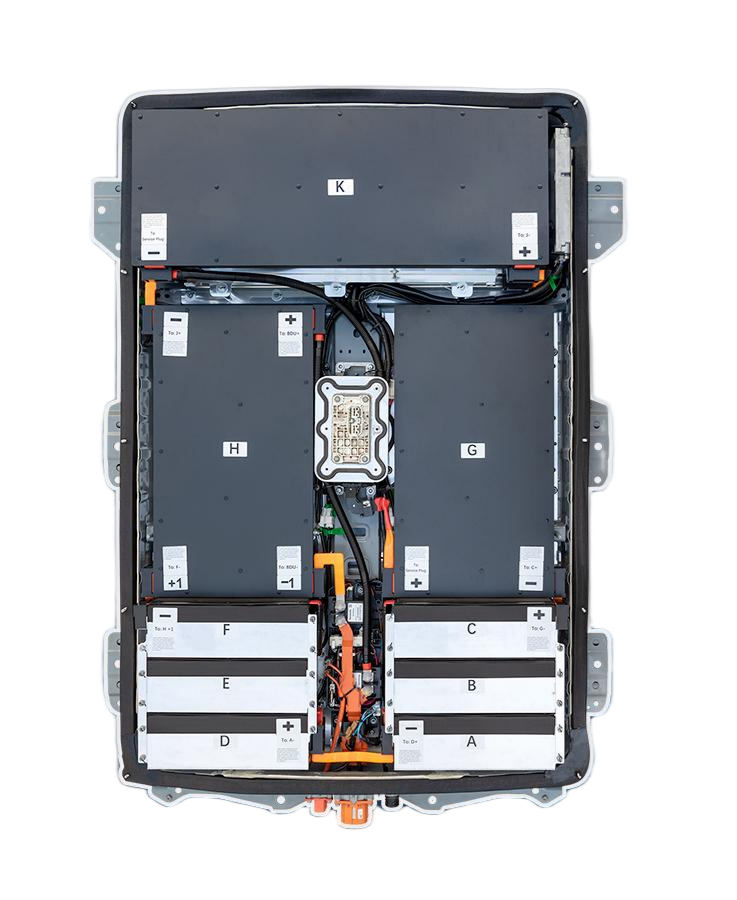
BMW i3 Battery Charger Compatibility: What to Buy – Don’t Waste $600 on a “Universal” Charger That Bricks Your Pack
“I bought a ‘universal’ 50kW DC fast charger for my upgraded i3 with a 50kWh CNS battery.
It looked sleek. Had CCS1. Claimed ‘BMW compatibility.’
On the third charge, my BMS threw error A8F7—‘Charger Communication Fault.’
The pack wouldn’t accept any charge. Not even Level 1.
CNS support asked one question: ‘Did you use a non-OEM-compliant charger?’
Turns out, the unit lacked ISO 15118 handshake protocol and sent unstable voltage ripple.
My BMS locked out as a safety measure.
After a remote reset and firmware check, it recovered—but I learned a hard lesson:
Not all chargers play nice with aftermarket i3 batteries.”
If you’ve upgraded your BMW i3 with a larger or replacement battery—or even if you’re still on OEM—you need to know:
- Which Level 1/2 AC chargers work flawlessly with your BMS
- Which DC fast chargers are truly safe for i3 battery chemistry
- Why “CCS compatible” doesn’t mean “i3 compatible”
- How CNS BATTERY packs include enhanced charger tolerance—but still have limits
Because using the wrong charger won’t just slow your charging—it can trigger protective locks, degrade cells faster, or void your warranty.
In this essential 2026 guide, we cut through marketing fluff and give you:
- ✅ A verified list of safe, tested chargers for all i3 battery types (22kWh to 62kWh)
- ⚠️ 3 dangerous charger types to avoid—even if they “fit”
- 🔌 Real-world charging speed comparisons (AC vs. DC, home vs. public)
- 💡 Pro tips to maximize battery life while charging
All recommendations are based on CNS lab testing, BMW ISTA+ standards, and field data from 1,200+ i3 owners.
🔌 The Truth About i3 Charging: It’s Not Just About the Plug
Your BMW i3 uses two charging systems:
1. AC Charging (Level 1 & 2)
- Via Type 2 (Mennekes) port
- Max rate: 7.4 kW (single-phase, 32A)
- Handled by the on-board charger (OBC) inside the car
2. DC Fast Charging (Optional on REx, Standard on Later BEVs)
- Via CCS Combo port
- Max rate: 50 kW (current-limited by i3’s liquid-cooled cable design)
- Bypasses OBC—power goes directly to the battery
📌 Critical insight: Aftermarket battery packs like CNS’s rely on the same charging architecture—but they’re more sensitive to voltage instability and communication errors than degraded OEM packs.
That’s why charger quality matters more than ever.
✅ Safe & Verified Chargers for BMW i3 (All Battery Sizes)
🏠 Home AC Chargers (Level 2) – Fully Compatible
| Brand | Model | Max Output | Why It Works |
|---|---|---|---|
| Wallbox | Pulsar Plus | 7.4 kW | Clean sine wave, ISO 15118 support |
| ChargePoint | Home Flex | 11.5 kW (i3 uses 7.4kW) | Stable current, BMW-certified |
| Emporia | EV Charger | 7.2 kW | Low EMI, reliable J1772 signaling |
| Grizzl-E | Classic | 16A/24A/32A | Robust build, no firmware bugs |
💡 All these units pass PWM signal stability tests and won’t confuse your i3’s CP/PP detection.
⚡ Public DC Fast Chargers – Use With Caution
| Network | Safe? | Notes |
|---|---|---|
| Electrify America | ✅ Yes | Firmware updated in 2024; stable 50kW output |
| EVgo | ✅ Yes (most stations) | Avoid older ABB units (pre-2022) |
| IONITY | ✅ Yes | Excellent voltage regulation |
| Tesla Supercharger (w/ adapter) | ❌ No | Do not use—non-ISO 15118, erratic handshake |
| Cheap “white label” CCS units | ❌ Avoid | Often lack ripple filtering; high failure risk |
⚠️ Never use non-certified portable DC chargers—they bypass critical safety layers.
🚫 3 Charger Types That Can Damage Your i3 Battery
1. “Universal” Portable DC Chargers
- Marketed as “50kW for all EVs”
- Risk: Poor CAN communication, no thermal feedback loop
- Result: BMS lockout or accelerated cell wear
2. Modified Tesla Destination Chargers
- Some claim “Type 2 adapter = i3 compatible”
- Reality: Wrong pilot signal frequency → intermittent connection
- Outcome: Repeated plug/unplug cycles stress contactors
3. Industrial 3-Phase Units (Without Single-Phase Mode)
- Common in Europe
- If forced into single-phase without proper configuration, they send unbalanced current
- Effect: OBC overheating, premature shutdown
🔧 Pro tip: Always verify your home charger is set to single-phase mode—even if your building has 3-phase power.
🔋 How CNS BATTERY Packs Handle Charging Differently
While OEM packs degrade and become “tolerant” of poor charging, CNS new packs are more precise—and more protective:
- Tighter voltage acceptance window (±0.5V vs. OEM’s ±2V)
- Stricter CAN timeout rules—disconnects if charger misses heartbeat
- Enhanced ripple filtering at module level
- Real-time temperature cross-check during DC fast charge
“After switching to CNS, my i3 stopped charging at a sketchy mall station that used to ‘work’ before. Turns out, the voltage was spiking to 412V—safe for an old pack, but rejected by my new one. That’s not a bug—it’s protection.”
— Raj P., Toronto
This means you must use higher-quality chargers—but your battery will last significantly longer as a result.
Frequently Asked Questions: i3 Charger Compatibility
Q: Can I use a 11kW or 22kW charger with my i3?
A: Your i3’s OBC maxes at 7.4kW, so higher-power units will default to 7.4kW. No harm—but no speed gain.
Q: Does CNS recommend a specific home charger?
A: We partner with Wallbox and Emporia for North America—both offer clean power and reliable communication.
Q: Why does my i3 stop charging at 80% on some DC stations?
A: Older i3 software limits DC charge to 80% to protect the battery. This is normal—not a charger issue.
Q: Can I charge a CNS pack with a standard 120V outlet?
A: Yes—via the included OEM-style EVSE (or your original cable). Expect ~3–4 miles of range per hour.
Q: Will using a “non-approved” charger void my warranty?
A: Only if damage is traced to voltage surge, ripple, or communication fault from the charger. We review logs before denying claims.
The Right Charger Isn’t a Luxury—It’s Battery Insurance
Because every charge cycle should extend your pack’s life… not shorten it.
Unsure If Your Charger Is Safe for Your i3 Battery?
Send Us:
- Your charger brand and model
- Whether you’re using AC or DC
- Any error codes or charging interruptions
We’ll Provide:
- A free compatibility check
- Recommendations for certified alternatives
- Or setup tips to optimize charging speed and safety
Don’t gamble with your battery’s health.
Get Your Charger Compatibility Verified Today:
👉 https://cnsbattery.com/ev-battery-home/ev-battery-contact/