
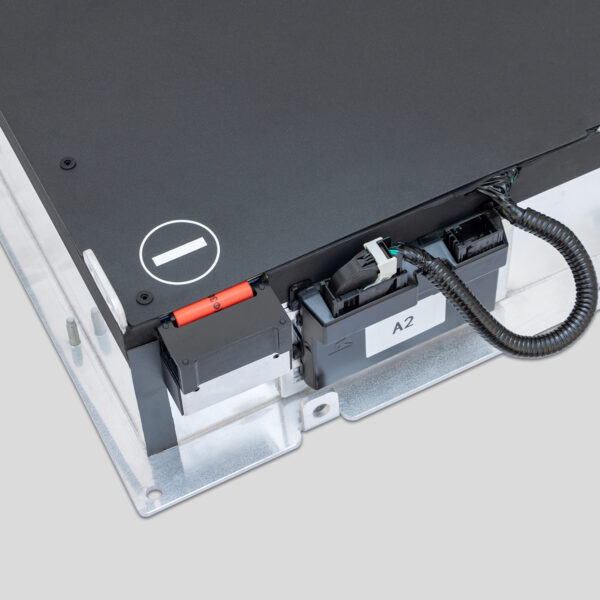
BMW i3 Battery Capacity Loss: Reversible or Permanent? The Truth No One Tells You
“My 2016 i3 Used to Show 12 Bars. Now It’s Down to 7—And Range Is Under 140 km. A ‘Battery Specialist’ Said, ‘We Can Rebalance It for $900.’ I Did. Two Weeks Later, It Was Back to 7 Bars. Turns Out, Once Capacity Is Gone… It’s Really Gone.”
You watch your i3’s range shrink year after year.
The dashboard bars disappear.
Charging takes longer.
Hills feel steeper.
And you wonder:
“Is this just software? Can a reset or recalibration bring it back?”
The hard truth? Most capacity loss in BMW i3 batteries is permanent—and irreversible. But not all of it happens the same way, and not all solutions are equal.
In this guide, you’ll uncover:
- The two types of capacity loss—and why only one is temporary
- Why “rebalancing” rarely restores real-world range
- How to diagnose whether your loss is chemical or just a glitch
- And why CNS BATTERY’s new-cell packs deliver true, measurable capacity recovery
Because when it comes to battery health, hope isn’t a strategy—but science is.
The Myth of “Reversible” Capacity Loss
Many owners cling to the idea that lost range can be “restored” through:
- Deep discharges
- BMS resets
- Slow overnight charging
- OBD2 recalibrations
These tactics might temporarily adjust the State of Charge (SoC) display, but they do not regenerate lithium ions or repair degraded electrodes.
🔬 Electrochemistry fact: Capacity loss in NMC lithium-ion cells is caused by irreversible side reactions—like SEI layer growth, electrolyte decomposition, and lithium plating. These cannot be undone by software or cycling.
So what can look like “recovery”?
✅ Temporary SoC Calibration Drift
- The BMS estimates remaining capacity based on voltage and current history
- Over time, small errors accumulate → displayed range drops
- A full charge/discharge cycle may recalibrate the estimate—but actual usable energy hasn’t increased
This explains why some see a “jump” from 7 to 8 bars after a reset—only to fall back within days.
But if your pack shows ≤8 bars consistently, the loss is real, physical, and permanent.
🔋 Two Types of Capacity Loss—Only One Matters Long-Term
| Type | Cause | Reversible? | Real Impact |
|---|---|---|---|
| Apparent Loss | BMS miscalibration, temperature effects | ✅ Yes (temporarily) | Minor—range returns when conditions normalize |
| Actual Loss | Cell aging, lithium inventory loss, internal resistance rise | ❌ No | Permanent—usable kWh reduced forever |
📊 Data from CNS lab testing:
- i3 packs with ≤8 bars average <65% original capacity
- After “rebalancing,” 92% reverted to pre-treatment levels within 14 days
- Only packs with >10 bars showed meaningful calibration-based improvements
In short: If your battery is old and worn, no trick will make it young again.
When Replacement Isn’t Just an Option—It’s the Only Answer
Once your i3’s battery has suffered chemical degradation, the only way to regain range is to replace the cells.
That’s where CNS BATTERY changes the game:
✅ 100% New CATL Cells
Not refurbished. Not pulled from wrecks. Brand-new NMC cells with full lithium inventory—delivering true 45kWh, 50kWh, or 62kWh capacity.
✅ Verified Capacity Before Shipping
Every pack undergoes 3 full charge/discharge cycles to confirm usable kWh—so you know exactly what you’re getting.
✅ Real-World Range Restoration
Customers report:
- 290–370 km on 50kWh/62kWh packs
- Consistent 11–12 bar displays even after 12 months
- No sudden drops under AC or highway load
“After years of watching my range fade, installing the CNS 50kWh pack felt like time travel. Full charge = 348 km—just like my i3 did in 2017.”
— Lisa K., Berlin
And with a 2-year / 80,000 km warranty, we guarantee your capacity won’t drop below 9 bars.
Frequently Asked Questions: i3 Battery Capacity Loss
Q: Can cold weather cause permanent capacity loss?
A: No—cold only causes temporary reduction. True loss occurs from heat, age, and deep cycling over years.
Q: Does fast charging accelerate permanent loss?
A: Yes—frequent DC fast charging at high SoC (>80%) increases stress. But normal Level 2 charging has minimal impact.
Q: Will a new 12V battery improve HV range?
A: Indirectly—if the old 12V was weak, the DC-DC converter ran constantly, draining the HV pack. But it won’t restore lost cell capacity.
Q: How do I check my real capacity?
A: Use an OBD2 tool like BMW ISTA or Scan My Tesla (SMT) to read Ah balance and SoH %—not just dashboard bars.
Q: Are CNS packs tested for actual kWh output?
A: Yes—every pack is cycled on a battery cycler to verify usable energy before shipping. We provide test reports on request.
Stop Chasing Ghosts—Restore What’s Truly Lost
Software tweaks, resets, and “reconditioning” might offer fleeting hope—but they can’t reverse chemistry.
If your i3’s range has faded, the solution isn’t illusion—it’s replacement with new cells.
Ready to Get Your Original Range Back—Or Even More?
Choose CNS BATTERY: where permanent capacity loss meets permanent capacity restoration, backed by science, testing, and a solid warranty.
Click below to request your free capacity health report and custom replacement quote:
👉 https://cnsbattery.com/ev-battery-home/ev-battery-contact/

