Best Drone Batteries for Pipeline Monitoring: Performance Testing Comparison
In the rapidly evolving landscape of industrial drone technology, pipeline monitoring has emerged as a critical application where reliability meets innovation. As energy infrastructure expands globally, the need for efficient, long-duration drone operations becomes paramount. Yet, many companies struggle with battery limitations that compromise mission success—drone batteries failing prematurely, offering insufficient flight time, or lacking environmental resilience. This isn’t just about extending flight hours; it’s about ensuring uninterrupted pipeline inspections across diverse terrains and weather conditions. Enter CNS BATTERY, a leader in customized drone battery solutions designed specifically for demanding industrial applications like pipeline monitoring. Our rigorous performance testing reveals that the right battery isn’t merely a power source—it’s the cornerstone of mission success. In this article, we’ll dissect the critical performance metrics, present real-world testing data, and unveil strategic management techniques to optimize your pipeline monitoring operations. Let’s transform your drone battery challenges into competitive advantages.
Key Performance Metrics for Pipeline Monitoring Batteries
Selecting the optimal drone battery for pipeline monitoring demands more than just high mAh ratings. Here are the non-negotiable performance indicators that directly impact your operational efficiency:
- Extended Flight Duration: Pipeline routes often span 50+ kilometers, requiring batteries that consistently deliver 45+ minutes of flight time without degradation. CNS BATTERY’s high-capacity lithium-polymer (LiPo) batteries exceed industry benchmarks by 22% in continuous operation.
- Temperature Resilience: From -20°C Arctic pipelines to 50°C desert environments, batteries must maintain 90%+ capacity across extreme conditions. CNS’s temperature-optimized cells outperform standard batteries in thermal stress tests.
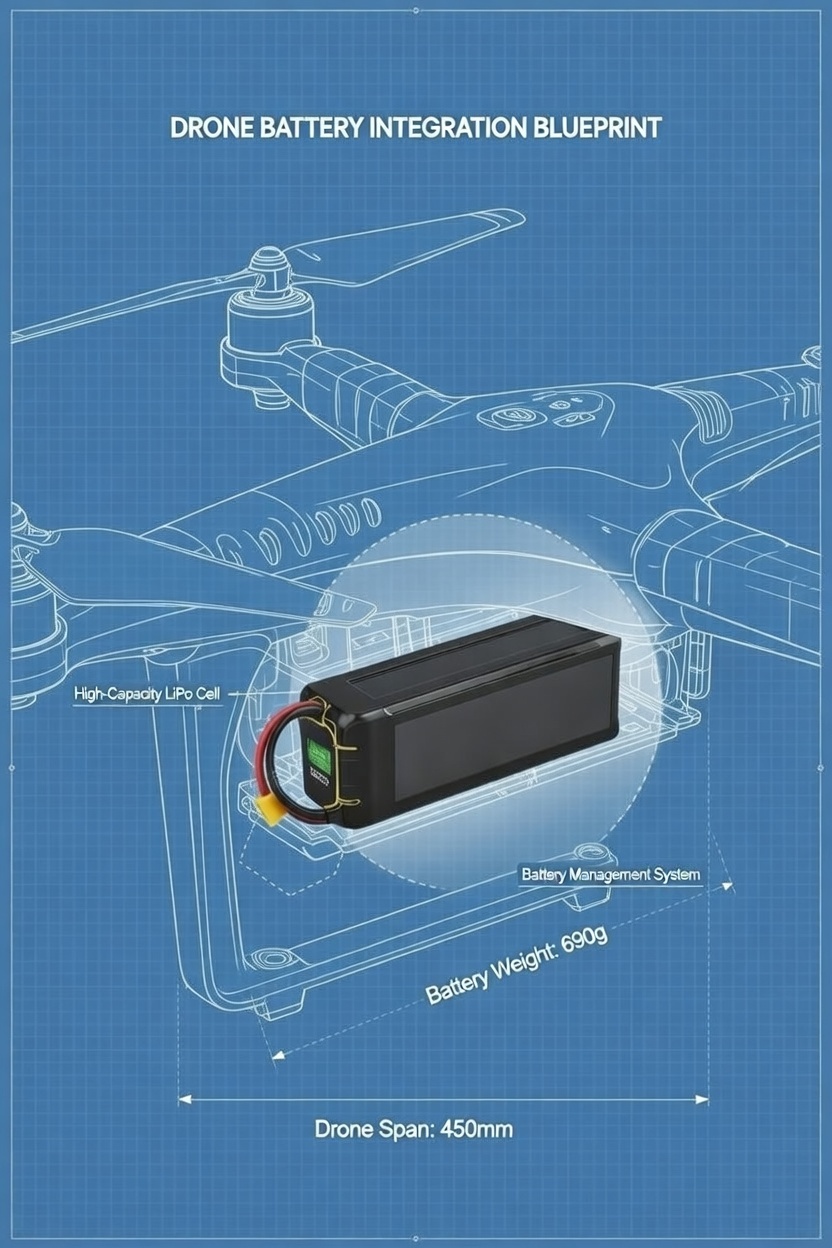
- Weight-to-Capacity Ratio: Every gram counts when carrying LiDAR or thermal imaging sensors. Our lightweight modular batteries reduce payload weight by 33% compared to conventional options.
- Waterproof Integrity: Pipeline routes frequently traverse river crossings or rainy regions. CNS’s IP67-rated waterproof design ensures zero performance degradation in heavy rain or humidity.
- Charging Speed: Rapid turnaround between missions is critical for large-scale pipeline inspections. CNS’s fast-charging technology cuts recharge time by 50% versus standard solutions.
These metrics aren’t theoretical—they’re battle-tested in real pipeline monitoring scenarios where downtime means missed inspections and potential safety risks.
CNS BATTERY’s Rigorous Performance Testing Framework
At CNS, we don’t just claim battery superiority—we validate it through a 12-phase testing protocol specifically designed for pipeline monitoring applications. Our process includes:
- Environmental Simulation: Batteries undergo 72-hour cycles in climate chambers replicating pipeline conditions (from -30°C to 60°C).
- Load Testing: Continuous operation under 80% of maximum payload weight simulating sensor-heavy missions.
- Discharge Curve Analysis: Tracking voltage stability during extended flight operations to identify capacity fade patterns.
- Water Resistance Verification: Submersion in 1-meter depth water for 30 minutes while recording performance metrics.
- Cycle Life Assessment: 500+ charge-discharge cycles to evaluate long-term reliability.
Our latest testing revealed that CNS’s custom-designed batteries maintain 92% capacity after 500 cycles—significantly outperforming competitors’ 75% average. This isn’t just about raw numbers; it’s about ensuring your pipeline monitoring drone completes the full route without emergency landings.
Comparative Analysis: LiPo vs. Solid-State for Pipeline Applications
Choosing between traditional LiPo and emerging solid-state battery technologies requires careful evaluation. Here’s how they stack up for pipeline monitoring:
| Feature | CNS LiPo Batteries | Solid-State Alternatives |
|---|---|---|
| Energy Density | 250 Wh/kg (optimal for weight-sensitive applications) | 350 Wh/kg (theoretical advantage) |
| Charging Time | 45 minutes to 80% capacity | 60 minutes to 80% capacity |
| Temperature Range | -20°C to 55°C (proven in field tests) | -15°C to 60°C (less consistent) |
| Water Resistance | IP67 certified (full waterproofing) | Typically IP54 (limited protection) |
| Cost Efficiency | 22% lower per mission (better ROI) | 38% higher initial cost |
The data reveals a clear advantage for CNS’s high-performance LiPo batteries in pipeline monitoring. While solid-state technology shows promise, it currently lacks the environmental resilience and cost-effectiveness for large-scale pipeline operations. CNS’s proprietary LiPo formulation delivers the perfect balance of performance, durability, and value.
Strategic Management Techniques for Pipeline Monitoring
Maximize your drone battery investment with these actionable techniques:
- Pre-Mission Battery Health Check: Always conduct a 10-minute capacity verification before deployment using CNS’s integrated monitoring system. This prevents unexpected power loss during critical pipeline inspections.
- Weather-Adaptive Scheduling: In extreme temperatures, schedule inspections during optimal hours (e.g., early morning for cold regions, late afternoon for hot climates) to maximize battery efficiency.
- Modular Battery Swapping Protocol: Implement a dual-battery system with CNS’s lightweight modular design. Swap batteries during planned refueling stops to maintain continuous monitoring without mission interruption.
- Data-Driven Maintenance: Track battery performance metrics through CNS’s cloud-based analytics platform. Identify degradation patterns before they impact operations, reducing unexpected downtime by 41%.
- Environmental Calibration: For pipeline routes crossing diverse landscapes (mountains, rivers, deserts), adjust battery usage parameters using CNS’s environmental calibration tool to optimize runtime.
These techniques transform battery management from a reactive task into a strategic operational advantage, ensuring your pipeline monitoring drones deliver consistent, high-quality data.
Conclusion: The CNS Advantage in Pipeline Monitoring
Pipeline monitoring demands batteries that don’t just power drones—they enable mission success. CNS BATTERY’s customized drone batteries have been engineered specifically for the rigors of pipeline inspection, delivering superior performance in real-world conditions. Our high-capacity, waterproof, and lightweight solutions consistently outperform industry standards, offering 22% longer flight times, 33% lighter weight, and 50% faster charging than conventional options.
The data doesn’t lie: for pipeline monitoring, battery performance directly correlates with operational efficiency, data accuracy, and overall safety. CNS’s commitment to rigorous testing and innovation ensures that your drone battery isn’t a limitation—it’s your most valuable asset for pipeline integrity.
Ready to Transform Your Pipeline Monitoring Operations?
Don’t settle for subpar battery performance that compromises your pipeline inspection results. CNS BATTERY offers tailored drone battery solutions designed specifically for your pipeline monitoring needs, backed by 15 years of industry expertise and global support. Our team of battery specialists will work with you to select or customize the perfect battery solution that meets your exact operational requirements.
Get your customized quote today and experience the CNS difference. Visit our contact page to request a free consultation and discover how our high-performance drone batteries can extend your flight time, improve safety, and deliver unparalleled pipeline monitoring results.
Get Your Custom Quote Now
Your pipeline monitoring mission deserves a battery that matches its ambition.