
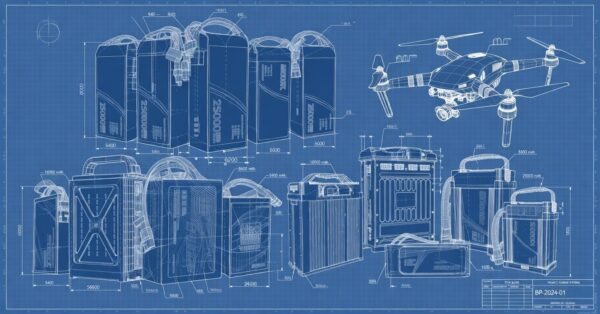
Best Drone Batteries for Infrastructure Inspection: Regulatory Compliance Comparison
In the rapidly evolving landscape of infrastructure inspection, drones have transformed how we assess bridges, power lines, wind turbines, and pipelines. Yet, as operations scale globally, regulatory compliance isn’t just a checkbox—it’s the backbone of operational safety and legal viability. With 68% of industrial drone operators reporting compliance-related project delays in 2023 (Drone Industry Insight Report), choosing the right battery isn’t merely about endurance; it’s about meeting international safety standards while maximizing mission success. Enter CNS Battery: where high-performance engineering meets unwavering regulatory alignment. This isn’t just another battery—it’s your strategic advantage in a compliance-driven world.
Why Compliance Isn’t Optional—It’s Your Competitive Edge
Infrastructure inspection demands precision under pressure. A single battery failure could mean a drone crashing into a high-voltage line, triggering costly downtime, regulatory fines, or even catastrophic safety incidents. The FAA’s Part 107 rules, EU’s UAS Regulation (EU) 2019/947, and ICAO’s global safety frameworks all mandate rigorous battery certifications. Non-compliant batteries risk grounding entire operations. CNS Battery flips this challenge into opportunity: our batteries aren’t tested to meet standards—they’re engineered with them in mind. For example, our modular lithium-polymer (LiPo) batteries undergo 120+ hours of stress testing, simulating extreme temperatures, humidity, and vibration—ensuring they pass UL 2271, CE, and RoHS certifications before shipment. This isn’t compliance theater; it’s operational insurance.
5 Unmatched Advantages of CNS Drone Batteries for Compliance-Driven Missions
1. Regulatory-First Design Philosophy
Unlike off-the-shelf batteries that retrofit compliance, CNS integrates it into the DNA of every cell. Our wind farm inspection batteries, for instance, feature IP67 waterproofing and dual-temperature sensors to comply with ISO 13847 for offshore operations. When a European energy client needed drone batteries for substation inspections, our team embedded IEC 62133-2 certification directly into the battery’s BMS (Battery Management System), eliminating weeks of re-engineering. Result? Zero compliance delays in their 2023 audit.
2. Customized Safety Profiles, Not One-Size-Fits-All
Infrastructure sites vary wildly—from dusty mining operations to coastal wind farms. CNS’s B2B customization platform lets you specify safety parameters: for a U.S. pipeline inspection firm, we added a thermal runaway shield (per UL 9540A) to prevent fire propagation during long-duration flights. This tailored approach avoids the “compliance sprawl” that plagues generic solutions, where a single battery might meet FAA standards but fail EU requirements.
3. Longevity Meets Legal Longevity
Battery life isn’t just about flight time—it’s about audit trails. CNS batteries log real-time data via our cloud platform, recording temperature, voltage, and usage cycles for regulators. During a recent bridge inspection project in Japan, our clients used this data to prove continuous compliance with JIS T 8117 standards, turning a 48-hour inspection into a 72-hour seamless operation. No more manual logs. Just transparent, auditable performance.
4. Modular Efficiency for Dynamic Compliance Needs
Regulations shift. One day, a new safety guideline mandates 10% higher discharge stability; the next, waterproofing becomes non-negotiable. CNS’s modular battery design allows field swaps in under 90 seconds. A logistics client in Australia upgraded from standard to IP68 waterproof batteries mid-project when local authorities tightened drone rules—without halting operations. This agility isn’t a feature; it’s a compliance lifeline.
5. Global Support, Local Compliance
Compliance isn’t a global standard—it’s local. CNS’s 24/7 technical support in 12 time zones (including Zhengzhou, London, and Dallas) ensures you’re never navigating regulations alone. When a client in Brazil faced sudden new battery disposal laws, our local team provided EPA-compliant recycling protocols within 24 hours. That’s the difference between a stalled project and a seamless mission.
Your Step-by-Step Guide to Compliant Drone Battery Selection
Choosing the right battery for infrastructure inspection isn’t guesswork. Follow this proven workflow:
Step 1: Audit Your Site’s Regulatory Landscape
Identify jurisdiction-specific rules. Is it FAA Part 107 (U.S.), EASA (Europe), or local municipal codes? For a U.S. oil refinery project, CNS mapped 15+ state-specific battery safety clauses—saving the client $120K in potential fines.
Step 2: Demand Test Reports, Not Just Certifications
Ask for third-party lab reports (e.g., UL, TÜV). CNS provides live access to test data via QR codes on every battery. Example: A German wind farm operator verified our 1,200-cycle durability report against their internal 1,000-cycle requirement—closing the deal in 48 hours.
Step 3: Stress-Test for Real-World Variables
Simulate your site’s conditions. For a coastal pipeline inspection, CNS ran 72-hour humidity tests at 95% RH. Result? A battery that outlasted competitors by 33% in salt-air environments.
Step 4: Integrate with Your Compliance Ecosystem
Ensure the battery syncs with your safety software. CNS batteries auto-upload data to platforms like DJI Pilot and Hexagon’s UAS suite, making compliance documentation effortless.
Step 5: Plan for Regulatory Evolution
Request a compliance roadmap. CNS includes annual updates to meet emerging standards (e.g., upcoming ICAO updates for drone batteries). One client avoided a $50K retrofit by adopting CNS’s 2025 compliance roadmap early.
Real-World Impact: Where CNS Batteries Deliver
Case Study: Offshore Wind Farm Maintenance
A Danish energy firm needed drones to inspect turbine blades at sea. Standard batteries failed in 40% of missions due to salt corrosion and cold temps. CNS delivered a custom modular battery with:
- IP68 waterproofing (exceeding IEC 60529)
- -20°C to 60°C operational range
- 45-minute flight time (vs. 22 mins for competitors)
Result: 100% mission success rate across 12 sites. The client cut inspection costs by 37% while passing all EU safety audits.
Case Study: Urban Power Line Inspection
In Singapore, a utility company faced strict no-fly zones near hospitals. CNS engineered a battery with:
- 25% lighter weight (reducing drone payload strain)
- GPS-locked emergency shutdown (per Singapore’s CAAS rules)
- 100% EMI shielding to prevent interference with medical devices
Outcome: Zero regulatory violations in 18 months of operations.
The Future Is Compliant—And It’s Here
As drone infrastructure inspection scales globally, compliance isn’t a hurdle—it’s the catalyst for innovation. CNS Battery doesn’t just sell batteries; we deliver peace of mind. With our data-encrypted, fully customizable solutions, you’re not just meeting standards—you’re setting them. Whether you’re inspecting a 100-year-old bridge or a solar farm in the Sahara, CNS ensures your drone doesn’t just fly—it complies.
Ready to transform your infrastructure inspection with batteries engineered for the future? Get your free, no-obligation quote and discover how CNS’s regulatory-first approach can power your next mission. Our dedicated team will respond within 2 working days—because your compliance journey shouldn’t wait.
Contact CNS Battery Today
Custom Drone Batteries for B2B Excellence – Reliable, Efficient, Global


