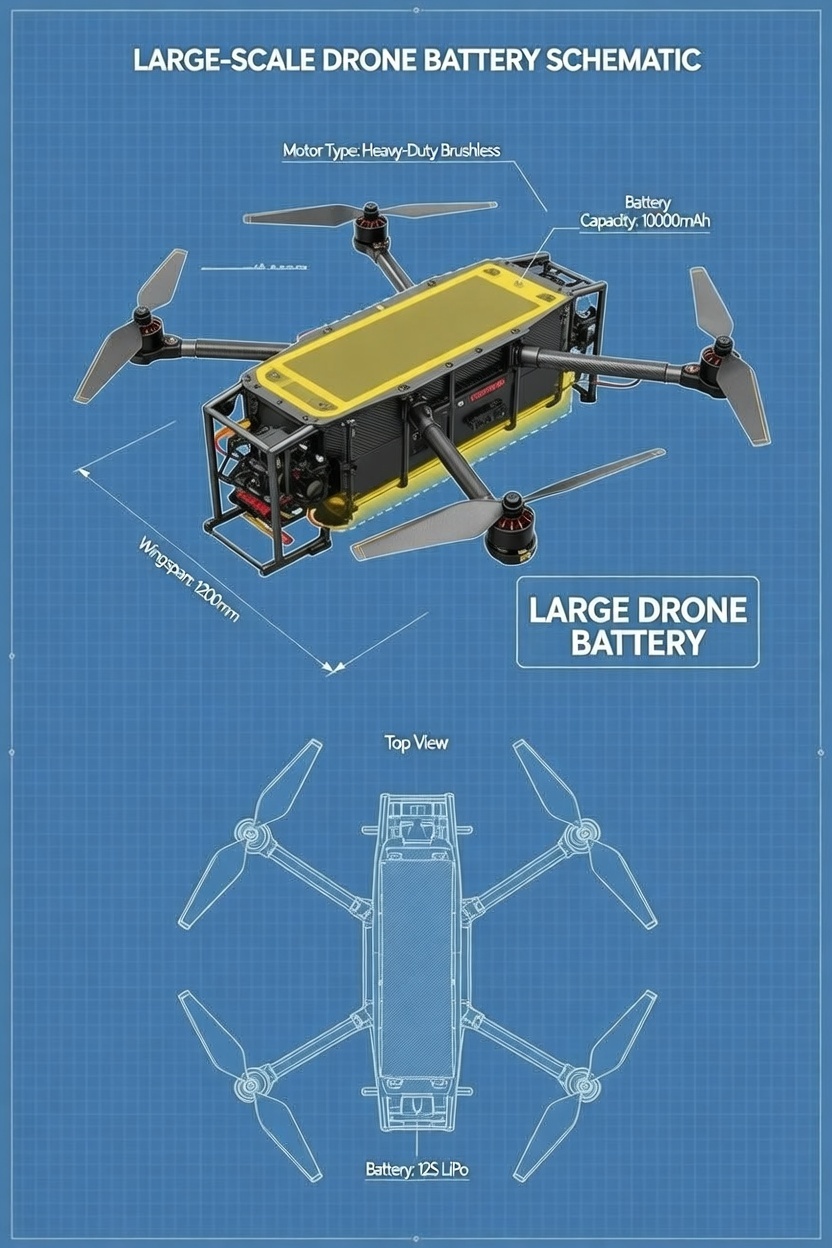
The Hidden Danger in Emergency Response Skies
When a firefighting drone fails mid-mission, the consequences extend far beyond equipment loss. In 2024, thermal runaway incidents in lithium polymer batteries have become a critical concern for emergency response teams worldwide. According to the EESA 2024 China Energy Storage Development White Paper, thermal runaway occurs when batteries experience specific conditions such as high temperatures, overcharging, or internal short circuits, triggering uncontrolled chemical reactions that generate excessive heat and may lead to fire or explosion.
For firefighting units operating in already hazardous environments, a drone battery failure can escalate an emergency situation into a catastrophic event. The stakes are exceptionally high when these unmanned aerial vehicles (UAVs) are deployed for wildfire detection, hazardous material assessment, or search and rescue operations in burning structures.
Understanding the Risk: Key Causes and Prevention Measures
Primary Risk Factors
| Risk Category | Specific Causes | Impact Level |
|---|---|---|
| Thermal Abuse | High ambient temperatures, direct flame exposure | Critical |
| Electrical Abuse | Overcharging, over-discharging, cell imbalance | High |
| Mechanical Damage | Impact during flight, vibration stress | High |
| Internal Short Circuit | Manufacturing defects, dendrite formation | Critical |
Essential Prevention Strategies
✓ Advanced BMS Monitoring
- Real-time voltage, current, and temperature tracking across all cells
- Multi-level temperature alarm systems that warn before thermal runaway initiates
- State of Health (SOH) data logging for predictive maintenance
✓ Thermal Management Design
- Liquid cooling systems outperform natural convection and forced air cooling
- Heat dissipation efficiency improvements prevent heat accumulation
- Environmental temperature compensation algorithms
✓ Compliance Standards
- UL9540A thermal runaway testing requirements (2025 revised standards)
- EU Battery Regulation (EU2023/1542) effective August 2024
- IATA Dangerous Goods Regulations for lithium battery transport (30% SoC limit from 2026)
Engineering Insights: What Makes Firefighting Drone Batteries Different
Firefighting drones operate under conditions that would ground commercial UAVs. The Battery Management System (BMS) serves as the brain and nervous system of the power pack, protecting against both electrical and thermal abuse while optimizing performance and extending battery lifespan.
Critical BMS Features for Emergency Response
1. Cell-Level Monitoring Precision
Modern BMS architecture must monitor individual cell voltages within ±2mV accuracy. This precision enables early detection of cell imbalance that could lead to thermal runaway. For firefighting applications, this monitoring must continue functioning even when the drone experiences extreme temperature variations from -20°C to 60°C ambient conditions.
2. Predictive Analytics Integration
The 2024 trend shows BMS systems incorporating machine learning algorithms that analyze historical performance data to predict potential failures. According to industry research from NEXTBMS European project, physics-based and data-driven BMS approaches enable higher performance, safety, and longer lifetime of battery cells.
3. Wireless BMS Technology
Emerging wireless BMS solutions eliminate internal wiring, reducing weight and complexity while improving reliability. This is particularly valuable for firefighting drones where every gram affects flight time and payload capacity.
4. Rapid Communication Protocols
UART, CAN bus, and RS485 communication interfaces allow the BMS to transmit real-time data to ground control stations. Emergency responders need immediate alerts when battery parameters exceed safe thresholds.
Market Trends and Regulatory Landscape
The global BMS market is experiencing unprecedented growth. QY Research data indicates the automotive BMS market will reach 88.474 billion yuan by 2027, with a compound annual growth rate of 26.35% from 2021-2027. GGII predicts China’s energy storage BMS market value will reach 17.8 billion yuan by 2025, with a 47% annual compound growth rate.
For firefighting drone manufacturers, this translates to more sophisticated, affordable, and reliable battery management solutions. However, the regulatory environment is tightening simultaneously.
2024-2025 Regulatory Changes
- EU Battery Regulation: Comprehensive lifecycle management requirements covering hazardous substance limits (mercury ≤0.0005%, cadmium ≤0.002% for portable batteries)
- IATA DGR 66th Edition: Lithium batteries must be transported at no more than 30% state of charge from January 2026
- UL9540A Updates: More stringent thermal runaway testing protocols for energy storage systems
These regulations affect not only battery manufacturers but also firefighting agencies that must maintain compliance for equipment procurement, storage, and transportation.
Practical Solutions for Firefighting Units
Implementation Checklist
- Pre-Mission Battery Inspection
- Verify BMS communication with ground station
- Check cell voltage balance (maximum 0.05V difference)
- Confirm temperature sensors are functional
- Review SOH data from previous flights
- During Operation Monitoring
- Set temperature alerts at 45°C (warning) and 55°C (critical)
- Monitor discharge rates against manufacturer specifications
- Maintain communication link for real-time BMS data streaming
- Post-Mission Procedures
- Allow batteries to cool before charging (minimum 30 minutes)
- Store at 40-60% state of charge for extended periods
- Log all performance data for trend analysis
- Schedule preventive maintenance based on cycle count
Technology Recommendations
For firefighting drone fleets, LiFePO4 (Lithium Iron Phosphate) chemistry offers superior thermal stability compared to traditional LiPo batteries. While energy density is slightly lower, the safety margin is significantly higher—critical when operating near active fire zones.
Smart BMS systems with UART communication provide the data transparency emergency commanders need. Look for systems that support:
- Individual cell voltage monitoring (4S to 12S configurations)
- Current ratings matching drone power requirements (60A to 100A continuous)
- Temperature sensor integration (minimum 3 points per pack)
- Fault code diagnostics for troubleshooting
The Path Forward: Safety Without Compromise
The evolution of drone battery technology in 2024 demonstrates that safety and performance are no longer competing priorities. Advanced BMS features enable firefighting units to deploy UAVs with confidence, knowing that multiple layers of protection guard against catastrophic failure.
The integration of predictive analytics, wireless monitoring, and enhanced thermal management creates a safety ecosystem that learns from each mission. As the industry moves toward 2025 and beyond, we expect to see:
- AI-Enhanced BMS: Machine learning models that predict failures before they occur
- Standardized Communication: Universal protocols for cross-manufacturer compatibility
- Enhanced Energy Density: Safer chemistries that don’t sacrifice flight time
- Regulatory Harmonization: Global standards that simplify compliance
For emergency response teams, the message is clear: investing in quality BMS technology isn’t optional—it’s essential for mission success and personnel safety.
Explore Advanced Drone Battery Solutions
Your firefighting unit deserves battery systems engineered for the most demanding conditions. Modern BMS technology provides the intelligence, protection, and reliability that emergency operations require.
Ready to upgrade your drone battery infrastructure?
Discover how advanced BMS features can transform your emergency response capabilities. Our engineering team specializes in custom battery solutions for firefighting UAVs, combining cutting-edge safety features with mission-critical performance.
Contact us today to discuss your specific requirements:
🔗 https://cnsbattery.com/drone-battery-home/drone-battery-contact
Let’s build safer skies for those who protect us on the ground. Your next mission depends on the power you trust—make sure it’s engineered to deliver.
This article references industry standards including EESA 2024 White Paper, UL9540A, EU Battery Regulation 2023/1542, and IATA DGR 66th Edition. All technical recommendations should be validated against your specific operational requirements and local regulations.