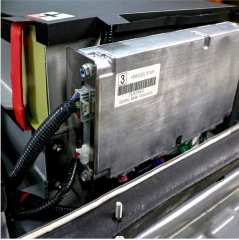
Battery Swap vs. Battery Upgrade: What’s Best for Your e-NV200?
Is your Nissan e-NV200 struggling to keep up with your delivery routes or daily commutes? If the range anxiety is setting in or the battery health has dropped significantly, you’re likely facing a critical decision: Should you simply swap the old battery for a new one of the same specification, or should you invest in a capacity upgrade?
At CNS BATTERY, we understand that for e-NV200 owners—whether you’re a fleet manager or a private user—downtime and operational costs are the biggest concerns. Based on our decade of experience in OEM-compatible powertrain solutions, we will break down the pros and cons of each option to help you make the most cost-effective choice for your 2026 needs.
🛠️ The “Battery Swap” Strategy: Reliable & Budget-Friendly
A battery swap typically means replacing your degraded unit with a new pack of the same capacity (usually 40kWh or 50kWh for the e-NV200). This is often the go-to solution for those looking for a quick fix without modifying the vehicle’s software or charging infrastructure.
✅ Pros of a Standard Swap
- Cost Efficiency: It is significantly cheaper than an upgrade. At CNS, our standard replacement packs start at roughly 50% less than dealership prices.
- Plug-and-Play Simplicity: There is no need for complex BMS reprogramming or physical modifications to the chassis. It fits exactly like the original factory part.
- Predictable Performance: You get the original manufacturer’s specifications back, restoring the vehicle to its “as-new” state without the risk of unknown compatibility issues.
❌ Cons of a Standard Swap
- Limited Range: You are stuck with the original range (approx. 180km-200km real-world), which might not be sufficient for longer routes.
- Same Charging Cycles: You are inheriting the same charging characteristics and degradation timeline as the original design.
🚀 The “Battery Upgrade” Strategy: More Power, Less Anxiety
Upgrading your e-NV200 involves installing a higher capacity battery pack (such as a 62kWh or even a custom 68kWh solution). This isn’t just a replacement; it is a modification to enhance the vehicle’s capabilities.
✅ Pros of an Upgrade
- Extended Range: This is the primary benefit. By upgrading to a 62kWh+ pack, you can potentially double your range to over 350km on a single charge, making it viable for longer inter-city trips.
- Future-Proofing: It allows you to utilize newer, higher-density NMC cells which offer better thermal management and longer lifespans than older packs.
- Better Resale Value: A vehicle with a modern, high-capacity battery is far more attractive on the used market than one with a standard or degraded pack.
⚠️ Cons of an Upgrade
- Higher Initial Investment: Upgrades cost more upfront due to the increased cell count and potential need for BMS adjustments.
- Technical Complexity: It may require professional installation to ensure the Battery Management System (BMS) communicates correctly with the new cell chemistry.
Expert Insight: For commercial users, the math is often simple. If an upgrade allows you to complete 30% more delivery routes per day without needing a second vehicle, the return on investment (ROI) happens much faster than you think.
📊 Head-to-Head Comparison: Making the Decision
To help you visualize the difference, here is a direct comparison based on real-world data from our service center.
| Feature | Standard Battery Swap (40kWh/50kWh) | Battery Upgrade (62kWh/68kWh) |
|---|---|---|
| Estimated Cost | $$ (Lower initial outlay) | $$$ (Higher, but better long-term value) |
| Real-World Range | ~180km – 220km | ~340km – 400km+ |
| Installation Time | 1-2 Hours (DIY Friendly) | 2-3 Hours (Professional Recommended) |
| Warranty | 2 Years / 80,000km | 2 Years / 80,000km |
| Best For | City driving, tight budgets, short routes | Long commutes, commercial use, family trips |
🛡️ Why Quality Matters: Avoiding “Refurbished” Traps
Whether you choose to swap or upgrade, the quality of the cells is non-negotiable. We often see customers regret purchasing “cheap” refurbished batteries only to face swelling or sudden death within months.
CNS BATTERY stands apart by using only Brand New CATL Cells. Unlike recycled or second-life cells found in many generic swaps, our packs are built with brand new, A-grade lithium cells. This ensures:
- Zero Defects: No risk of hidden damage from previous degradation cycles.
- Ultimate Safety: Built-in protection against overheating and short circuits.
- Consistent Performance: Every cell is matched for optimal voltage and capacity.
We specialize in OEM-compatible solutions for the Nissan e-NV200. This means our packs are engineered to fit the chassis perfectly without cutting or welding, combining the safety of a factory part with the value of an aftermarket price.
💡 The Verdict: Which Path Should You Take?
- Choose a Battery Swap if you are on a strict budget and your driving needs are strictly limited to short urban commutes. You want the car back on the road quickly and cheaply.
- Choose a Battery Upgrade if you want to transform your e-NV200 into a long-range vehicle. If you are tired of charging anxiety and want to match the performance of modern EVs, upgrading to a 62kWh or higher pack is the only logical choice.
At CNS, we offer both paths. We have standard 40kWh/50kWh packs for a direct swap, and we are experts in sourcing and installing high-capacity modules for those seeking an upgrade.
❓ Frequently Asked Questions (FAQ)
Q1: Can I install a higher capacity battery (like 62kWh) in my e-NV200 myself?
While the physical installation (disconnecting old cables and bolting in the new pack) is similar to a standard swap, upgrading capacity often requires BMS (Battery Management System) reprogramming to recognize the new cell parameters. We highly recommend professional installation for upgrades to avoid damaging the vehicle’s electronics. For standard swaps, our video tutorials make it a feasible DIY project for those with mechanical experience.
Q2: How much does a battery upgrade cost compared to a standard swap?
Generally, a capacity upgrade costs approximately 20-30% more than a standard OEM-spec replacement. However, considering the lifespan and the doubled range, the cost-per-kilometer is often lower with the upgrade.
Q3: Are CNS batteries compatible with all e-NV200 models?
Yes, we support a wide range of Nissan models, including various e-NV200 generations. To ensure perfect compatibility, we offer a free VIN (Vehicle Identification Number) check. Simply contact our team with your VIN, and we will confirm the exact fitment for your vehicle.
Q4: What warranty do you offer on your e-NV200 batteries?
We offer an industry-leading 2-year or 80,000km warranty (whichever comes first) on all our automotive batteries. This covers defects in materials and workmanship, as well as performance degradation (ensuring the battery maintains at least 70% capacity over the warranty period).
Ready to restore your e-NV200 to peak performance? Don’t let an old battery limit your potential. Whether you need a simple swap or a full capacity upgrade, CNS BATTERY has the OEM-compatible solution for you.
Get a Free Custom Quote for Your e-NV200 Today! Contact our technical experts now for customization.