The Invisible Anchor: How to Shave Grams and Gain Hours in the Sky
In the high-stakes world of commercial drones, every gram is a currency, and every second of flight time is a transaction. If you are operating in logistics, inspection, or surveillance, you know that the battery is not just a power source; it is the beating heart of your operation. However, the relentless pursuit of “more flight time” often hits a wall called “physics.” You cannot simply add more cells without adding more weight, which in turn requires more energy to lift, creating a vicious cycle.
This is the paradox of weight performance. To break this cycle, you need to move beyond the simplistic mindset of “bigger battery = better.” True optimization lies in a holistic strategy that balances energy density, aerodynamic integration, and intelligent management. This guide will walk you through the advanced tactics used by top-tier B2B operators to improve weight performance, ensuring your drones are not just flying, but soaring with purpose.
The Physics of Flight: Why Weight Matters More Than You Think
Before diving into the solutions, it is crucial to understand the enemy: gravity. In drone engineering, weight is the primary factor determining energy consumption. The heavier the drone (including the battery), the more thrust is required. More thrust means higher current draw, which drains the battery faster.
This creates a diminishing return curve. If you increase the battery weight by 20% to get more capacity, you might only see a 10% increase in flight time because the motors are now working harder to carry the extra load.
Therefore, improving weight performance is not about carrying dead weight; it is about maximizing the specific energy—the amount of energy stored per unit of weight. This is where the choice of chemistry and form factor becomes critical.
The Hierarchy of Energy Density
Not all batteries are created equal. To improve your payload-to-battery ratio, you must select the chemistry that offers the highest energy density for your specific use case.
| Battery Chemistry | Typical Energy Density | Best Use Case | Weight Performance Rating |
|---|---|---|---|
| Lithium Polymer (LiPo) | 150-250 Wh/kg | High-Performance Racing & Cinematography | ⭐⭐⭐⭐⭐ |
| Lithium-Ion (Li-Ion) | 100-265 Wh/kg | Standard Industrial Inspection & Mapping | ⭐⭐⭐⭐ |
| Lithium Iron Phosphate (LiFePO4) | 90-120 Wh/kg | Agricultural Spraying & Extreme Safety Environments | ⭐⭐⭐ |
The Insight: For most commercial applications where weight is the primary constraint, LiPo remains the king. However, modern high-density Li-Ion cells are closing the gap, offering better cycle life and safety without the extreme fragility of traditional “pouch” style LiPos.
Strategy 1: The Material Science Advantage
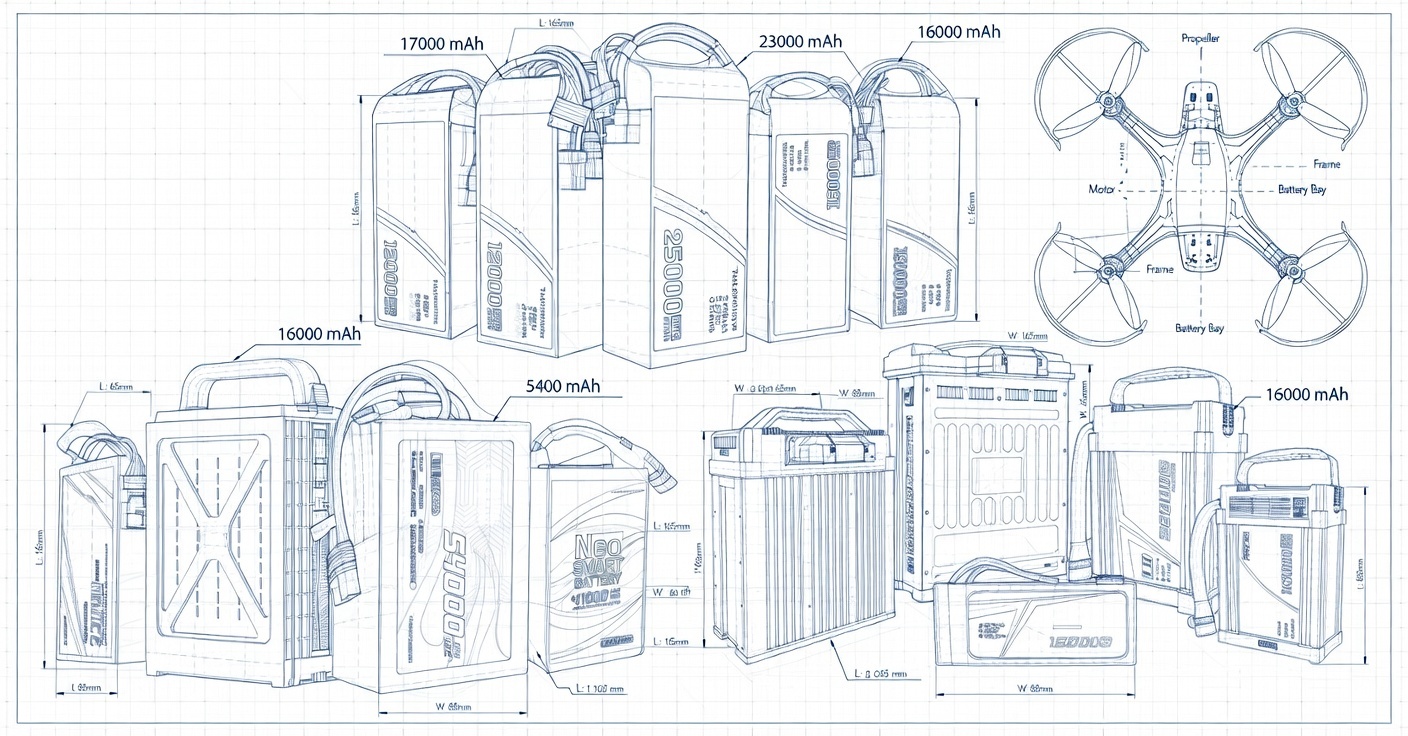
The first step in our strategy is to look at the raw materials. The shift from traditional cylindrical cells (like the 18650) to pouch cells (common in LiPo) is the most significant lever you have for weight reduction.
Embracing the Pouch Form Factor
Cylindrical cells are heavy. The steel or aluminum casing required to contain the pressure adds significant “tare weight.” Pouch cells, on the other hand, use a lightweight aluminum laminate film. This allows for a much higher ratio of active material (the stuff that makes electricity) to packaging.
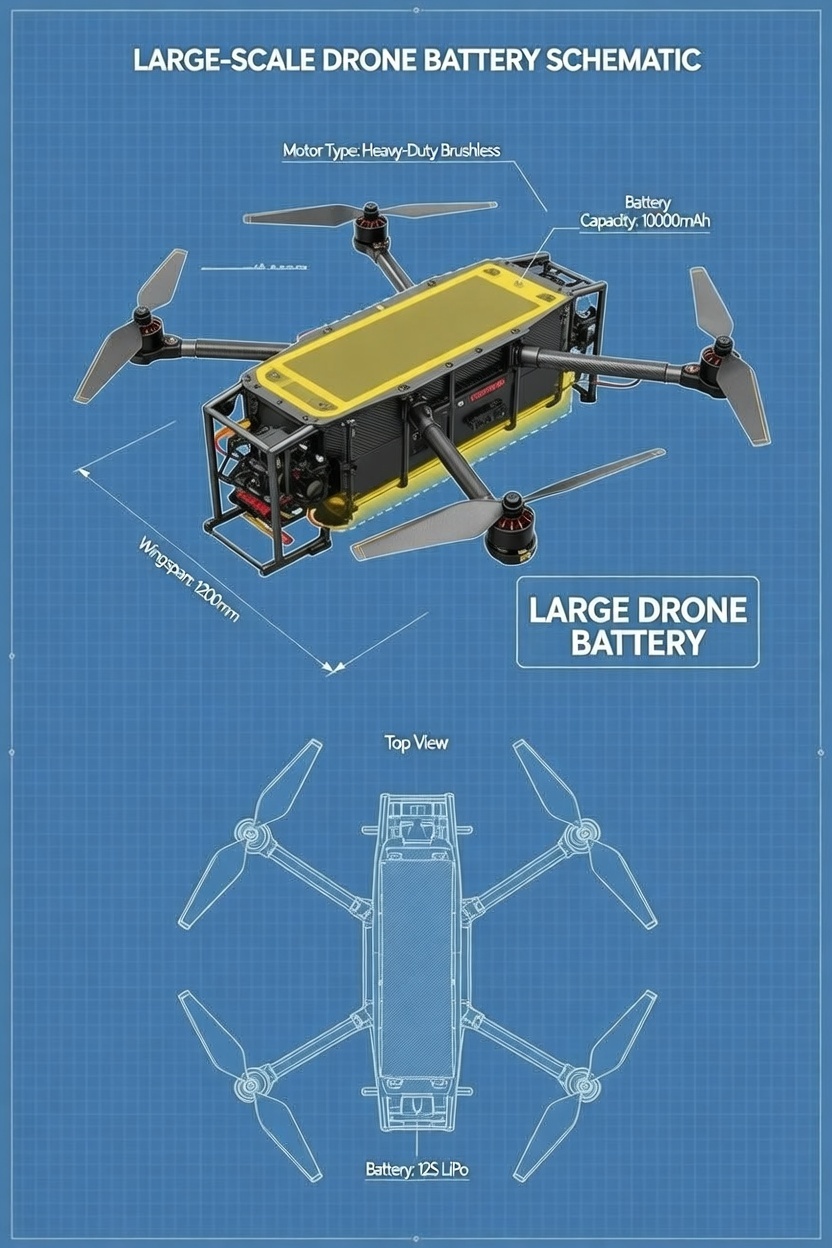
- The Design Shift: By utilizing custom-shaped pouch cells, manufacturers can fill the aerodynamic contours of a drone’s fuselage. This eliminates the wasted air gaps found in rigid battery boxes, reducing the need for structural support materials.
- The Result: A lighter overall package and a lower center of gravity, which further reduces the energy required for stabilization.
The Lightweight Modular Approach
One-size-fits-all is the enemy of weight optimization. A “modular” battery system allows you to mix and match voltage and capacity based on the mission profile.
- Scenario A (Mapping): You need maximum endurance. You use a 6S high-capacity configuration.
- Scenario B (Racing/Agility): You need speed and maneuverability. You swap in a 4S lightweight configuration.
This modularity ensures you are never carrying “heavy” volts when you don’t need them. At CNS Battery, our engineering focus is on creating these lightweight modular batteries that snap into place without adding the bulk of traditional connectors or heavy casings.
Strategy 2: Aerodynamics and Integration
Weight performance is not just about the chemistry; it is about how the battery interacts with the air.
Form Follows Function
A bulky, boxy battery creates drag. Drag requires energy to overcome. When designing for weight performance, the battery must be an aerodynamic element, not an appendage.
- Streamlined Profiles: Custom battery shapes that conform to the drone’s airflow reduce the parasitic drag that saps energy.
- Structural Integration: In some advanced designs, the battery pack itself becomes a structural member of the airframe. By bonding the battery directly to the carbon fiber chassis, you eliminate the weight of a separate plastic housing and the mounting hardware.
The Thermal Equation
Heat is the silent killer of efficiency. A battery that gets too hot will throttle its output and degrade faster. However, cooling systems (like fans or liquid cooling) add weight.
The solution is passive thermal management through material selection.
- Thermally Conductive Adhesives: These allow heat to dissipate directly into the drone’s frame, using the airframe as a heatsink.
- Graphene Coatings: Advanced materials like graphene can be integrated into the cell layers to spread heat evenly, preventing hot spots without adding significant weight.
By keeping the cells within their optimal temperature window passively, you maintain peak voltage output throughout the flight, ensuring that every gram of battery is delivering maximum power.
Strategy 3: The Intelligence Factor (BMS)
You can have the lightest battery in the world, but if it is inefficient, you are wasting weight. This is where the Battery Management System (BMS) comes into play.
Precision Monitoring
A sophisticated BMS does more than just prevent overcharging; it optimizes the discharge curve. Cheap batteries often have a “lazy” discharge curve, where the voltage sags under load. This sag means the motors are receiving less than optimal voltage, forcing them to draw more current (and thus more energy) to maintain RPM.
A high-performance BMS with low internal resistance ensures a flat voltage curve. This means the motors receive a consistent, high voltage punch from takeoff to landing, allowing them to operate at peak efficiency. When the motors are efficient, they consume less energy, effectively making your battery last longer without adding any weight.
Real-Time Diagnostics
Weight performance also means safety. An unbalanced cell adds “dead weight” and creates instability. A smart BMS provides real-time telemetry to the pilot, allowing for predictive maintenance. If a cell is starting to degrade (adding internal resistance), you can replace it before it drags down the entire pack, ensuring your battery fleet maintains its peak power-to-weight ratio.
Strategy 4: The Total Cost of Ownership (TCO) Perspective
Improving weight performance is not just about the initial purchase; it is about the lifecycle.
The Cycle Life Balance
Sometimes, the lightest battery is not the one with the highest initial energy density, but the one that lasts the longest. Lithium Iron Phosphate (LiFePO4), while heavier, can last 2000+ cycles compared to 300 cycles for a standard LiPo.
For operations like agricultural monitoring or security patrol, where the drone is in the air daily, choosing a slightly heavier but vastly more durable chemistry can improve your operational weight performance over the long haul by reducing downtime and replacement frequency.
Supply Chain Traceability
Finally, weight performance relies on consistency. If your battery supplier cannot guarantee the quality of the raw materials, you might end up with “cell phone waste” cells repackaged into drone batteries. These cells have high internal resistance and inconsistent weight.
Partnering with a manufacturer that utilizes a traceable supply chain ensures that every batch of cells meets the exact energy density specifications. This consistency allows you to plan your missions with absolute confidence, knowing that the battery weight translates directly into the promised flight time.
Conclusion: Beyond the Spec Sheet
Improving weight performance in drone batteries is an art form. It is the delicate balance of shedding grams from the casing while adding intelligence to the circuitry. It is about understanding that a lighter drone is not just about flying longer; it is about flying smarter, reacting faster, and operating with a lower risk profile.
You cannot afford to treat your battery as a commodity. In the world of B2B drone operations, it is your most critical asset. Whether you are mapping vast landscapes or delivering critical payloads, the difference between success and failure often comes down to a few grams saved here and a few watts conserved there.
If you are ready to move beyond generic off-the-shelf solutions and explore how customized drone batteries can unlock the true potential of your fleet, it is time to talk to the experts.
Take the Next Step:
Stop compromising on flight time. Visit our Technology Center to learn more about our lightweight modular solutions, or head directly to our Contact Page to get a free consultation on how we can engineer a battery specifically for your mission requirements.