

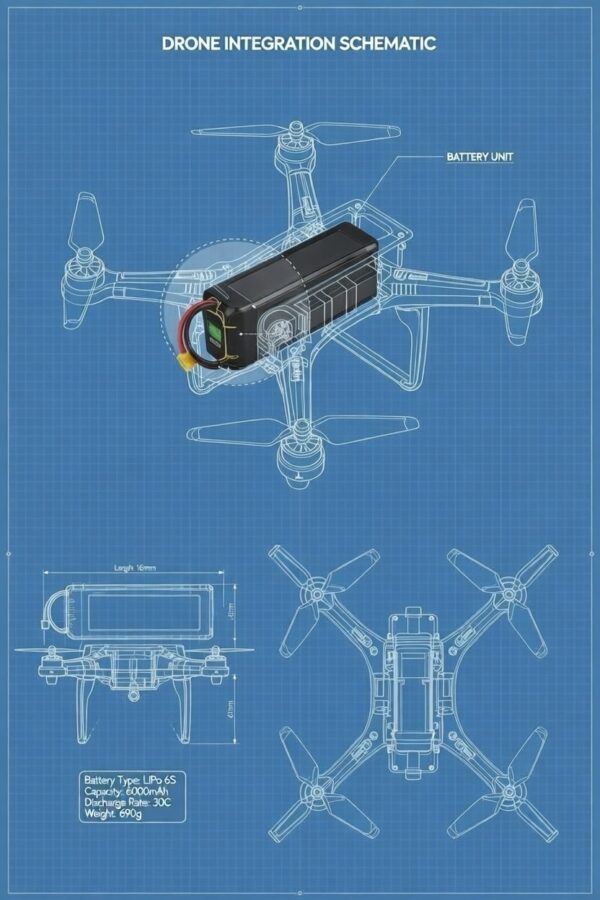
2024 Drone Battery Trends: Battery Life Cycles for Oil and Gas Pipeline Firms
The energy sector stands at a pivotal moment where technological innovation meets operational necessity. For oil and gas pipeline firms, drone technology has transformed from a luxury into an essential tool for inspection, monitoring, and maintenance. At the heart of this transformation lies a critical component: the drone battery. Understanding battery life cycles and emerging trends in 2024 can mean the difference between efficient operations and costly downtime.
The Strategic Advantage of Advanced Drone Battery Technology
Oil and gas pipeline inspections demand reliability, endurance, and precision. Traditional inspection methods required ground crews to traverse difficult terrain, exposing workers to hazardous conditions and consuming significant time. Modern industrial drones equipped with high-capacity lithium polymer batteries have revolutionized this process, offering aerial perspectives that enhance data accuracy while reducing operational risks.
The primary advantage of investing in quality drone battery systems extends beyond simple flight time. Extended battery life cycles enable comprehensive pipeline coverage in single missions, reducing the need for battery swaps and minimizing inspection interruptions. Firms that prioritize battery technology report up to 40% reduction in inspection time and 30% decrease in operational costs annually.
Understanding Battery Life Cycle Fundamentals
A battery life cycle represents the complete process from full charge to depletion and back again. For industrial drone applications, understanding this cycle is crucial for maximizing equipment longevity and maintaining consistent performance. Most lithium polymer batteries used in commercial drones deliver between 300 to 500 complete charge cycles before experiencing noticeable capacity degradation.
Key Performance Indicators for Pipeline Inspection Batteries
Energy Density: Measured in watt-hours per kilogram, energy density determines how long your drone can remain airborne. Current high-performance drone batteries achieve 200-250 Wh/kg, enabling flight times of 45-60 minutes under typical inspection loads.
Discharge Rate: Expressed as C-rating, this indicates how quickly energy can be delivered. Pipeline inspection drones require sustained discharge rates of 10C-15C to maintain stable flight while operating cameras, sensors, and thermal imaging equipment.
Temperature Resilience: Oil and gas operations often occur in extreme environments. Quality industrial batteries maintain performance across temperature ranges from -20°C to 60°C, ensuring reliable operation in desert heat or arctic conditions.
2024 Battery Technology Breakthroughs
The drone battery landscape has witnessed remarkable advancements in 2024, particularly benefiting industrial applications. Solid-state battery technology has emerged as a game-changer, offering enhanced safety profiles and extended life cycles compared to traditional lithium polymer configurations.
NMC811 Chemistry Adoption
Nickel Manganese Cobalt 811 chemistry represents the forefront of battery innovation. This composition features 80% nickel, 10% manganese, and 10% cobalt, delivering higher energy density while reducing reliance on expensive cobalt materials. For pipeline inspection firms, NMC811 batteries provide 15-20% longer flight times without increasing battery weight.
Low-Temperature Performance Enhancements
Cold weather operations present significant challenges for battery performance. New electrolyte formulations and thermal management systems enable batteries to maintain 85% capacity at -30°C, expanding operational windows for firms working in northern regions or high-altitude pipeline routes.
Step-by-Step Guide: Optimizing Battery Life for Pipeline Inspections
Step 1: Pre-Mission Battery Assessment
Before deploying drones for pipeline inspection, conduct comprehensive battery health checks. Measure voltage across all cells to ensure balance within 0.05V tolerance. Inspect physical condition for swelling, damage, or connector wear. Document battery cycle count to track degradation over time.
Step 2: Strategic Flight Planning
Maximize battery efficiency through intelligent mission planning. Map inspection routes to minimize unnecessary hovering and maximize forward flight efficiency. Account for wind conditions, as headwinds can reduce flight time by 20-30%. Plan battery swaps at strategic locations to maintain continuous coverage without returning to base.
Step 3: Proper Charging Protocols
Implement standardized charging procedures to extend battery longevity. Use manufacturer-approved chargers with balance charging capabilities. Avoid charging batteries immediately after flights; allow cooling to ambient temperature first. Never leave batteries at 100% charge for extended periods; storage charge should maintain 50-60% capacity.
Step 4: Post-Mission Maintenance
After each inspection mission, discharge batteries to storage voltage if not used within 48 hours. Clean connectors with appropriate solutions to prevent corrosion. Store batteries in climate-controlled environments between 15-25°C. Maintain detailed logs tracking cycles, flight hours, and performance metrics.
Real-World Implementation Example
Consider a mid-sized pipeline operator managing 500 kilometers of transmission infrastructure across varied terrain. By implementing advanced battery management protocols, the firm achieved measurable improvements:
Before Optimization:
- Average flight time: 35 minutes per battery
- Batteries required per 100km inspection: 12
- Total inspection time: 8 hours
- Battery replacement frequency: Every 18 months
After Optimization:
- Average flight time: 48 minutes per battery
- Batteries required per 100km inspection: 8
- Total inspection time: 5.5 hours
- Battery replacement frequency: Every 30 months
This represents a 31% reduction in inspection time and 67% extension in battery service life, translating to annual savings exceeding $150,000 in operational costs and equipment replacement.
Safety Considerations and Regulatory Compliance
Battery safety cannot be compromised in industrial applications. The International Air Transport Association updated lithium battery transportation regulations in 2025, requiring batteries to be transported at maximum 30% state of charge. Pipeline firms must ensure compliance when moving equipment between sites or shipping batteries for service.
Implement comprehensive safety protocols including:
- Fire-resistant storage containers for charging stations
- Temperature monitoring systems in battery storage areas
- Emergency response procedures for thermal events
- Regular staff training on battery handling and hazard recognition
Cost-Benefit Analysis for Battery Investment
Quality industrial drone batteries represent significant capital investment, typically ranging from $800 to $3,000 per unit depending on capacity and specifications. However, the return on investment becomes clear when considering total operational costs.
Initial Investment:
- 10 high-capacity batteries: $25,000
- Charging infrastructure: $5,000
- Training and protocols: $3,000
- Total: $33,000
Annual Savings:
- Reduced inspection time: $80,000
- Extended battery life: $40,000
- Decreased downtime: $50,000
- Total: $170,000
Payback period averages 2-3 months, with subsequent years delivering pure operational savings.
Future Outlook: 2025 and Beyond
The trajectory for drone battery technology points toward continued innovation. Solid-state batteries promise 50% higher energy density with improved safety characteristics. Hydrogen fuel cell integration offers potential for multi-hour flight times, though current costs limit widespread adoption.
Artificial intelligence integration enables predictive battery management, analyzing usage patterns to optimize charging cycles and predict maintenance needs before failures occur. This proactive approach minimizes unexpected downtime and extends equipment lifespan.
Making the Right Choice for Your Operations
Selecting appropriate battery systems requires careful evaluation of specific operational requirements. Consider flight duration needs, environmental conditions, payload requirements, and budget constraints. Engage with manufacturers who understand industrial applications and can provide technical support throughout the equipment lifecycle.
For oil and gas pipeline firms ready to explore advanced battery solutions, understanding specifications and maintenance best practices proves essential. You can learn more about industrial drone battery specifications at https://cnsbattery.com/drone-battery-home/drone-battery/ and discover battery maintenance best practices at https://cnsbattery.com/drone-battery-home/drone-battery-help-center/.
When questions arise or custom solutions are needed, reach out through our contact page at https://cnsbattery.com/drone-battery-home/drone-battery-contact. Our team specializes in matching battery technology to specific industrial applications, ensuring optimal performance for your unique operational challenges.
Conclusion
The evolution of drone battery technology in 2024 presents unprecedented opportunities for oil and gas pipeline firms. By understanding life cycle fundamentals, implementing proper maintenance protocols, and investing in quality battery systems, organizations can achieve significant operational improvements. The advantages extend beyond simple cost savings, encompassing enhanced safety, improved data quality, and increased inspection frequency.
As the industry continues evolving, firms that prioritize battery technology optimization will maintain competitive advantages through more efficient operations and reduced environmental impact. The path forward requires commitment to best practices, ongoing education, and strategic partnerships with knowledgeable suppliers.
For additional resources and information about drone battery solutions, visit our homepage at https://cnsbattery.com/drone-battery-home. The future of pipeline inspection lies in the air, powered by innovations in battery technology that make previously impossible missions routine operations.


