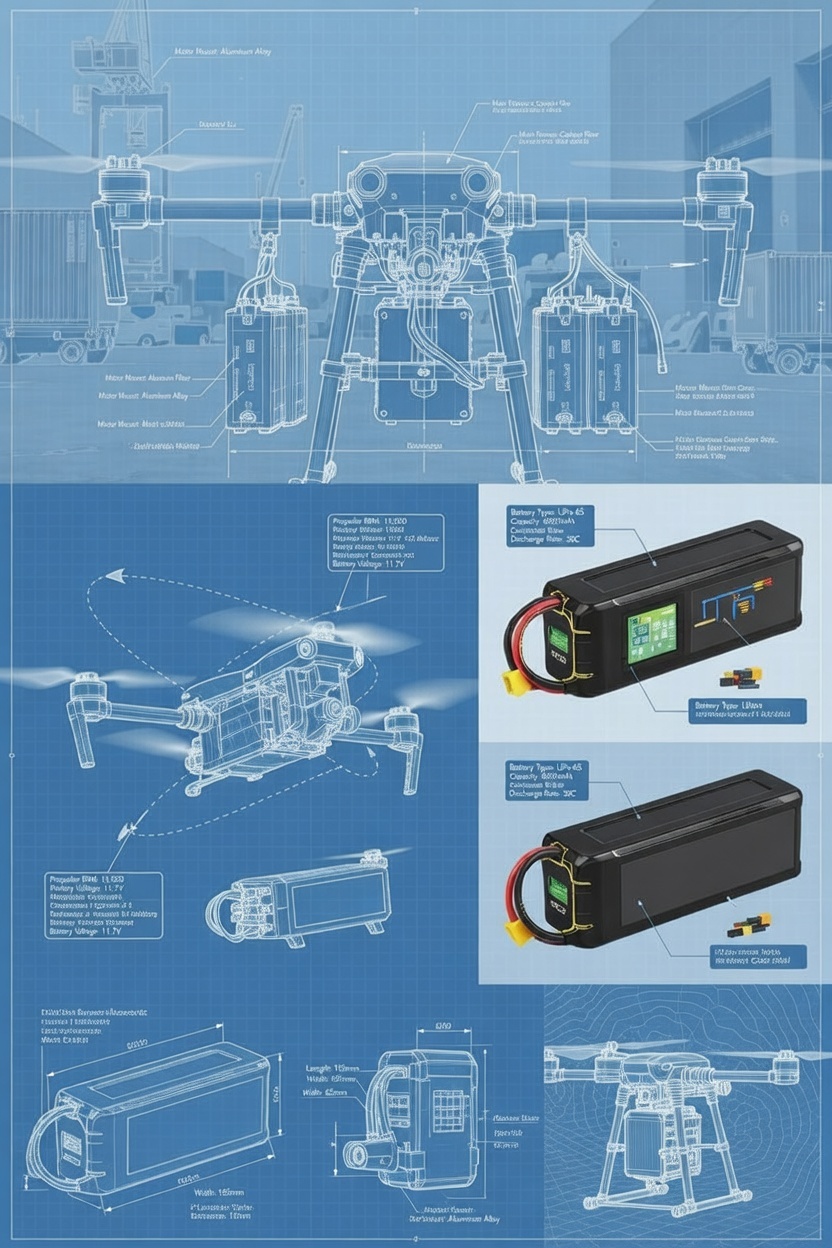
Introduction: Why Technical Compatibility Matters for Bulk Drone Battery Purchases
For pipeline monitoring firms operating industrial UAVs at scale, selecting the right drone battery isn’t just about flight time—it’s about operational continuity, safety compliance, and total cost of ownership. When you’re managing fleets of inspection drones across hundreds of miles of pipeline infrastructure, battery compatibility becomes the critical factor that determines whether your aerial monitoring program succeeds or fails.
This comprehensive drone battery buyer’s guide is specifically designed for procurement managers and technical directors at pipeline monitoring companies making bulk purchase decisions. Understanding technical compatibility specifications before committing to large-scale orders can save your organization from costly downtime, equipment damage, and safety incidents. Whether you’re deploying fixed-wing UAVs for long-range corridor surveys or multirotor drones for detailed infrastructure inspection, matching battery specifications to your operational requirements ensures maximum return on investment.
Step-by-Step Guide: Evaluating Drone Battery Technical Compatibility
Step 1: Identify Your UAV Platform Requirements
Before evaluating any drone battery options, document your existing UAV fleet specifications. Different manufacturers use proprietary communication protocols between battery management systems (BMS) and flight controllers. For pipeline monitoring operations, common platforms include DJI Matrice series, senseFly eBee fixed-wing aircraft, and custom-built industrial UAVs equipped with thermal imaging and LiDAR sensors.
Check your drone manufacturer’s documentation for required voltage ranges, connector types, and communication protocols. A mismatch in any of these areas can render otherwise excellent batteries completely incompatible with your equipment.
Step 2: Understand Battery Chemistry Options
The two primary battery chemistries for industrial UAV applications are Lithium Polymer (LiPo) and Lithium-ion (Li-ion). Each offers distinct advantages for pipeline monitoring scenarios:
LiPo Batteries: Deliver high discharge rates essential for multirotor drones carrying heavy sensor payloads. Typical configurations range from 4S (14.8V) to 6S (22.2V) with capacities between 5000mAh to 22000mAh. LiPo technology excels in applications requiring rapid power delivery during takeoff and maneuvering.
Li-ion Batteries: Provide superior energy density and longer cycle life, making them ideal for fixed-wing UAVs conducting extended pipeline corridor surveys. Standard voltages include 10.8V, 14.4V, and 22.2V configurations with capacities often exceeding 15000mAh.
Step 3: Calculate Required Capacity for Your Mission Profiles
Pipeline monitoring missions vary significantly in duration and power consumption. A typical thermal inspection flight covering 15 kilometers may require 45-60 minutes of airborne time, while detailed corrosion assessment using high-resolution cameras might demand 30-40 minutes with higher power draw.
Use this formula for capacity planning:
Required Capacity (mAh) = Average Current Draw (A) × Flight Time (hours) × 1000 × Safety Factor (1.2-1.5)
For bulk purchases, always include 20-30% additional capacity to account for battery degradation over time and unexpected mission extensions.
Step 4: Verify Safety Certifications and Transport Compliance
Industrial drone batteries fall under dangerous goods regulations for transportation. Ensure your supplier provides proper UN38.3 testing certification, IATA DGR compliance documentation, and MSDS sheets. For international pipeline monitoring operations, batteries must meet varying regional standards including CE marking for European operations and FCC compliance for North American deployments.
Comparative Analysis: Battery Options for Pipeline Monitoring Applications
| Specification | LiPo Standard | Li-ion Premium | Solid-State Emerging |
|---|---|---|---|
| Energy Density | 150-200 Wh/kg | 250-300 Wh/kg | 300-400 Wh/kg |
| Cycle Life | 300-500 cycles | 800-1200 cycles | 1500+ cycles |
| Discharge Rate | 15-25C continuous | 5-10C continuous | 10-15C continuous |
| Operating Temperature | -10°C to 50°C | -20°C to 60°C | -30°C to 70°C |
| Cost per Wh | $0.50-$0.80 | $0.80-$1.20 | $1.50-$2.50 |
| Best For | Multirotor inspection | Fixed-wing surveys | Future applications |
For pipeline monitoring firms managing mixed fleets, a hybrid approach often delivers optimal results. Deploy LiPo batteries for multirotor drones conducting detailed infrastructure assessments where high discharge rates matter most. Utilize Li-ion packs for fixed-wing UAVs performing long-range corridor monitoring where energy density and cycle life provide better total cost of ownership.
Critical Technical Compatibility Factors Often Overlooked
Battery Management System Communication
Modern industrial drones employ sophisticated BMS protocols that communicate real-time data to flight controllers. Incompatible communication protocols can prevent battery recognition, disable intelligent flight features, or trigger false low-voltage warnings. Always verify that your chosen battery supplier supports the specific BMS protocol used by your UAV platform.
Connector Standardization Across Fleets
Pipeline monitoring companies often operate drones from multiple manufacturers. Standardizing on common connector types (such as XT90, AS150, or proprietary DJI connectors) across your battery inventory reduces operational complexity and enables emergency battery sharing between platforms during critical inspection campaigns.
Charging Infrastructure Compatibility
Bulk battery purchases require corresponding investment in charging infrastructure. Verify that your chosen battery voltage configurations match existing charging stations, or budget for new smart chargers capable of handling multiple chemistry types. For large fleets, consider investing in parallel charging systems that can simultaneously charge 6-12 battery packs, dramatically reducing turnaround time between missions.
Frequently Asked Questions
Q: How many spare drone batteries should pipeline monitoring firms purchase for bulk operations?
A: Industry best practice recommends a 3:1 ratio of batteries to drones for continuous operations. This accounts for charging cycles, battery rotation for longevity, and contingency reserves for extended missions. For a fleet of 10 drones, plan for 30-35 battery packs minimum.
Q: What’s the expected lifespan of industrial UAV batteries in pipeline monitoring applications?
A: With proper maintenance and storage, LiPo batteries typically deliver 300-500 full charge cycles before reaching 80% capacity. Li-ion variants extend to 800-1200 cycles. For pipeline monitoring firms flying 3-4 times weekly, expect 18-24 months of service life before replacement becomes necessary.
Q: Can I mix different battery brands across my drone fleet?
A: While technically possible with compatible specifications, mixing brands introduces operational risks. Different BMS calibration can cause inconsistent flight time estimates and uneven battery degradation. For bulk procurement, standardize on one or two qualified suppliers to maintain fleet consistency.
Q: What storage conditions maximize drone battery longevity for reserve inventory?
A: Store batteries at 40-60% charge in climate-controlled environments between 15-25°C. Avoid extreme temperatures and humidity. For long-term storage beyond 30 days, implement monthly maintenance charging cycles to prevent deep discharge damage.
Q: How do cold weather conditions affect drone battery performance during pipeline inspections?
A: Battery capacity decreases approximately 20% at 0°C and 40% at -20°C compared to standard 25°C performance. For cold climate pipeline monitoring, specify batteries with enhanced low-temperature performance and consider battery warming solutions before flight operations.
Making the Right Bulk Purchase Decision
Technical compatibility isn’t negotiable when your pipeline monitoring operations depend on reliable aerial inspection capabilities. The upfront investment in thorough battery evaluation pays dividends through reduced downtime, extended equipment life, and consistent mission success rates.
Prioritize suppliers who provide comprehensive technical documentation, offer sample units for compatibility testing, and maintain transparent communication about specification tolerances. Request detailed test reports showing actual performance under load conditions matching your operational profiles rather than relying solely on manufacturer specifications.
For pipeline monitoring firms scaling their UAV operations, consider establishing long-term supply agreements with qualified battery manufacturers. This ensures consistent quality across purchase batches, priority support during peak inspection seasons, and potential volume pricing advantages that improve overall program economics.
Take Action: Optimize Your Drone Battery Procurement Strategy
Ready to evaluate drone battery options specifically configured for your pipeline monitoring fleet? Our technical team specializes in industrial UAV power solutions with deep expertise in technical compatibility assessment for bulk procurement scenarios.
Contact our drone battery specialists today for personalized consultation on your specific requirements: https://cnsbattery.com/drone-battery-home/drone-battery-contact
Explore our complete range of industrial drone battery solutions and technical resources at our Drone Battery Home page to discover how proper technical compatibility planning can transform your pipeline monitoring operations.
Remember: The right drone battery investment today prevents costly operational disruptions tomorrow. Make technical compatibility your priority, and your pipeline monitoring program will soar to new heights of efficiency and reliability.