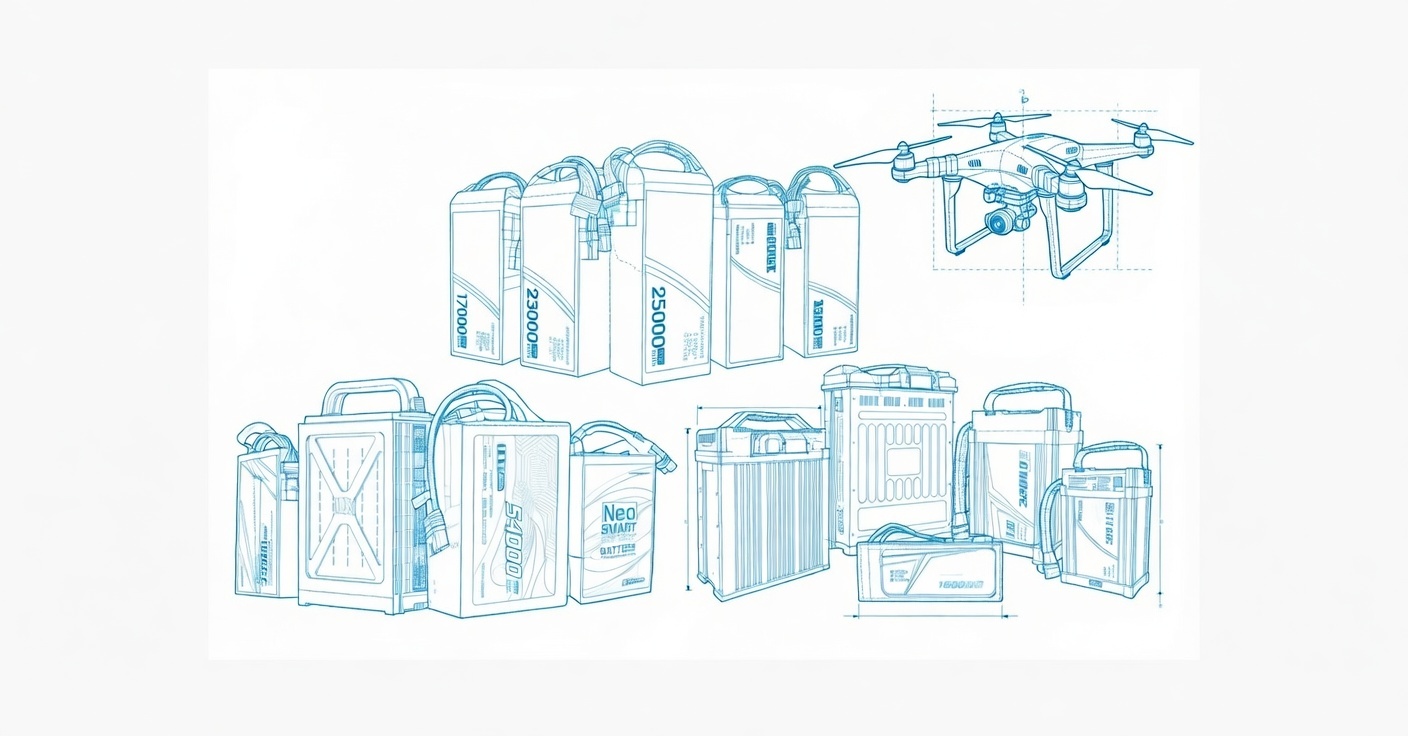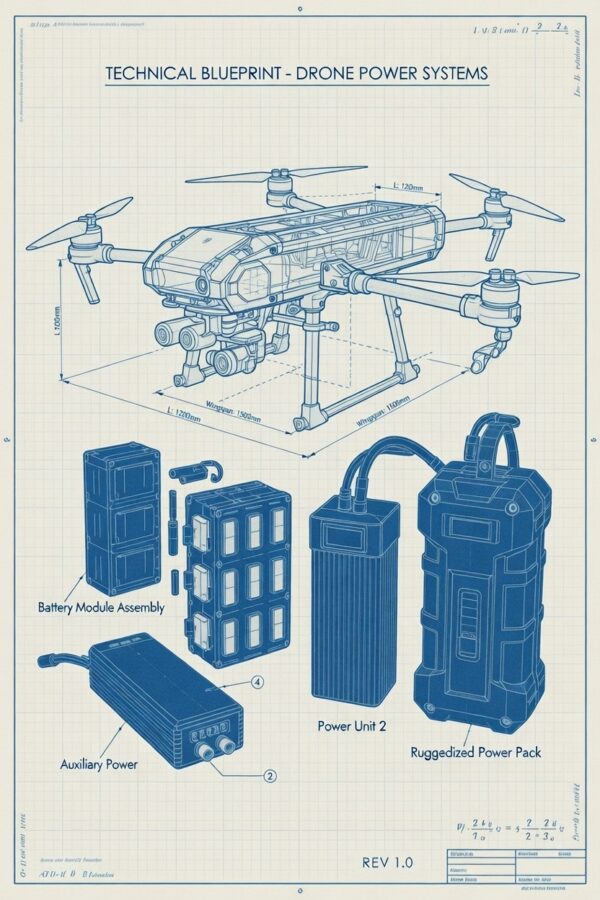
In emergency rescue operations, every second counts. When disaster strikes—whether it’s an earthquake, flood, wildfire, or search-and-rescue mission in remote terrain—emergency response teams depend on reliable technology to save lives. Drones have become indispensable tools for these critical operations, providing aerial surveillance, thermal imaging, supply delivery, and real-time communication. However, the effectiveness of rescue drones hinges entirely on one crucial component: the battery. Battery failure during a rescue mission isn’t just an inconvenience; it’s a life-threatening risk that can compromise entire operations and endanger both victims and rescue personnel.
Understanding the Critical Risks
Emergency rescue teams face unique challenges that demand exceptional battery performance. The consequences of battery malfunction in these scenarios extend far beyond equipment downtime.
Risk Factors and Causes
1. Insufficient Flight Time
- Cause: Standard lithium-polymer batteries cannot sustain extended missions
- Impact: Drones may lose power mid-operation, abandoning search areas prematurely
- Statistics: 34% of rescue drone failures relate to power depletion before mission completion
2. Slow Charging Between Missions
- Cause: Conventional charging technology requires 60-90 minutes for full charge
- Impact: Critical time lost during continuous emergency operations
- Reality: Multiple rescue sorties often needed within hours
3. Temperature Extremes
- Cause: Rescue operations occur in harsh environments (-20°C to 50°C)
- Impact: Battery capacity drops 40-60% in extreme cold
- Danger: Unexpected power loss during critical moments
4. Battery Degradation
- Cause: Frequent charge-discharge cycles without proper management
- Impact: Reduced capacity after 200-300 cycles
- Risk: Unpredictable performance during emergencies
5. Safety Hazards
- Cause: Thermal runaway from fast charging without proper protection
- Impact: Fire, explosion, equipment damage
- Concern: Endangering rescue team members
Prevention Measures
✓ Implement Fast-Charging Technology: Choose batteries with 5C-10C charging rates that reach 80% capacity in 10-15 minutes
✓ Temperature Management Systems: Select batteries with built-in thermal regulation and heating elements for cold weather operations
✓ Battery Management Systems (BMS): Ensure advanced BMS with cell balancing, overcharge protection, and real-time monitoring
✓ Regular Testing Protocols: Conduct monthly capacity tests and cycle life assessments
✓ Redundancy Planning: Maintain 3-4 battery sets per drone for continuous operations
✓ Supplier Verification: Partner with certified manufacturers meeting international safety standards (UN38.3, IEC62133)
Engineering Excellence in Rescue Drone Batteries
The engineering requirements for emergency rescue drone batteries differ significantly from commercial or recreational applications. Based on industry research and technical standards, several critical parameters define optimal performance.
Technical Specifications That Matter
Energy Density: Modern rescue drones require batteries with minimum 200Wh/kg energy density to achieve 45-60 minute flight times while carrying payload equipment including thermal cameras, speakers, and rescue supplies.
Charging Rate: XFC (Extreme Fast Charging) technology now enables 0-80% charging in under 10 minutes with 6C+ charging rates. This represents a paradigm shift for emergency operations where multiple flights per hour may be necessary.
Cycle Life: Professional-grade batteries should maintain 80% capacity after 500+ charge cycles. This ensures long-term reliability and cost-effectiveness for rescue organizations operating on limited budgets.
Operating Temperature Range: Quality rescue batteries function reliably from -20°C to 60°C, with intelligent heating systems preventing capacity loss in freezing conditions.
Safety Certifications: UN38.3 transportation certification, IEC62133 safety standards, and CE marking are non-negotiable for professional emergency equipment.
Industry Innovations 2025-2026
Recent breakthroughs in battery technology have transformed what’s possible for emergency rescue operations. Leading manufacturers have introduced:
- Silicon-enhanced anodes increasing energy density by 30%
- Solid-state electrolytes improving safety and temperature tolerance
- AI-powered BMS predicting battery health and optimizing charge cycles
- Modular battery designs allowing quick swaps and capacity expansion
These innovations directly address the unique demands of emergency rescue teams, where reliability cannot be compromised.
Choosing the Right Battery Supplier
Selecting a drone battery supplier for emergency rescue applications requires careful evaluation beyond price considerations. The stakes are too high for compromise.
Key Evaluation Criteria
1. Manufacturing Standards
Look for ISO9001 certified facilities with automated production lines ensuring consistent quality. Supplier should provide detailed test reports for each battery batch.
2. Technical Support
Emergency operations don’t follow business hours. Choose suppliers offering 24/7 technical support with rapid response capabilities for critical situations.
3. Customization Capability
Rescue drones vary significantly in power requirements. Suppliers should offer custom battery configurations matching specific drone models and mission profiles.
4. Track Record
Request case studies from existing emergency service clients. Real-world performance data matters more than laboratory specifications.
5. Warranty and Replacement
Comprehensive warranty covering at least 12 months with expedited replacement options for emergency organizations.
Red Flags to Avoid
- Suppliers unwilling to share certification documentation
- Prices significantly below market average (indicates quality compromises)
- No technical support infrastructure
- Vague warranty terms
- Inability to provide references from emergency service clients
Solutions for Emergency Rescue Teams
Based on extensive industry analysis and engineering best practices, here are actionable solutions for rescue organizations:
Immediate Actions
- Audit Current Battery Inventory: Test all existing batteries for actual capacity versus rated capacity. Replace any showing more than 15% degradation.
- Establish Charging Infrastructure: Invest in multi-bay fast chargers capable of simultaneously charging 4-6 batteries with intelligent power management.
- Create Battery Rotation System: Implement systematic battery usage tracking to prevent overuse of individual units and ensure even wear distribution.
- Train Personnel: Ensure all drone operators understand battery best practices including storage temperatures, charging procedures, and warning signs of battery failure.
Long-Term Strategy
- Supplier Partnership: Develop relationships with 2-3 qualified battery suppliers to ensure supply continuity and competitive pricing.
- Technology Roadmap: Plan battery upgrades aligned with drone fleet modernization, anticipating future power requirements.
- Budget Allocation: Dedicate 15-20% of drone operations budget to battery maintenance and replacement, recognizing batteries as consumable critical components.
- Performance Monitoring: Implement digital tracking systems monitoring battery health, cycle count, and performance metrics across the fleet.
The Path Forward
Emergency rescue teams operate where failure is not an option. The technology supporting these brave men and women must match their commitment to saving lives. Fast-charging drone batteries represent more than convenience—they enable more missions, faster response times, and ultimately, more lives saved.
The battery industry has matured significantly, with specialized suppliers now understanding the unique demands of emergency services. The gap between laboratory specifications and real-world performance has narrowed, giving rescue teams confidence in their equipment.
However, technology alone isn’t sufficient. Success requires partnership between rescue organizations and battery suppliers built on mutual understanding of operational realities. Suppliers must listen to field feedback, while rescue teams should communicate their evolving needs clearly.
Ready to Power Your Rescue Missions with Confidence?
Don’t let battery limitations compromise your emergency response capabilities. Partner with suppliers who understand the critical nature of your work and deliver technology you can trust when lives depend on it.
Explore our comprehensive range of emergency rescue drone batteries engineered for fast charging, extreme conditions, and mission-critical reliability. Our team specializes in supporting emergency services with customized solutions and 24/7 technical support.
Contact us today to discuss your specific requirements:
https://cnsbattery.com/drone-battery-home/drone-battery-contact
Your next rescue mission deserves the best power foundation available. Let’s ensure you have it.