
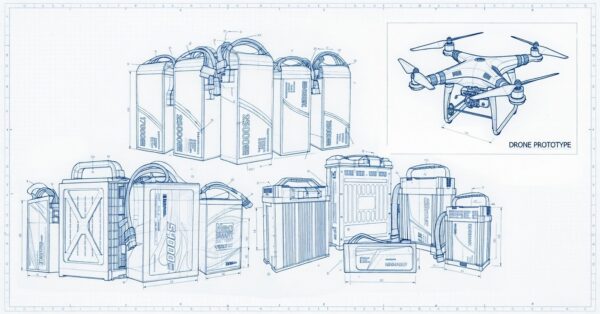
The low-altitude economy is experiencing unprecedented growth, with drones and eVTOL aircraft transforming industries from logistics to emergency response. However, developers face a critical challenge: navigating the complex web of regulatory compliance for drone batteries. As 2026 marks a pivotal year for global battery regulations, understanding and implementing compliance best practices has become not just advantageous—but essential for market access and operational safety.
The Critical Compliance Challenges Facing Drone Battery Developers
The regulatory landscape for low-altitude aircraft batteries has grown significantly more complex. According to joint statements from the FAA and EASA, the existing Technical Standard Order (TSO) C179b for rechargeable lithium batteries is insufficient for propulsion battery performance evaluation. This creates a substantial gap that developers must address through alternative compliance pathways.
Key challenges include:
- Thermal runaway prevention remains the primary safety concern for aviation authorities worldwide
- EU Battery Regulation enters substantive enforcement in 2026, requiring battery passports for industrial batteries over 2kWh
- IATA Dangerous Goods Regulations (DGR) 67th Edition took effect January 1, 2026, introducing stricter transportation requirements
- UN classification system changes eliminate the previous UN3171 designation, requiring more precise battery categorization
- State of Charge (SoC) limitations now mandate lithium battery cells and packs be transported at no more than 30% of rated capacity
Understanding Global Regulatory Frameworks
FAA and EASA Coordination on Propulsion Battery Standards
The FAA and EASA Coordination Group has clarified that high-energy batteries used for propulsion should not be equated with starter/system lithium batteries. This distinction is crucial for developers seeking airworthiness certification. As noted in their joint statement, “at this stage of technical development and knowledge, there is no TSO/ETSO to address Propulsion Battery Systems (PBS).”
This regulatory gap means developers must work closely with aviation authorities to establish equivalent safety levels through special conditions and means of compliance.
EU Battery Regulation: The 2026 Implementation Year
The European Union’s New Battery Regulation represents the world’s strictest access barrier for battery manufacturers. Key requirements include:
- Battery Passport: Launching in 2026 with partial data requirements, becoming fully mandatory by 2027
- Digital identification: Each battery must have a unique digital passport (typically QR code) containing chemical composition, manufacturing data, and lifecycle information
- Lifecycle compliance: Full traceability from raw materials to end-of-life recycling
Transportation Compliance: IATA DGR 67th Edition
The 2026 updates to IATA’s Dangerous Goods Regulations introduce four core requirements for lithium battery-powered vehicle transportation:
- Clear classification by battery type with corresponding UN numbers
- Enhanced packaging standards to prevent short circuits and thermal events
- Updated labeling requirements with specific hazard communications
- Documentation updates including revised shipping papers and emergency response information
Best Practices for Achieving Regulatory Compliance
1. Implement Comprehensive Thermal Management Systems
Thermal runaway prevention is the cornerstone of battery safety certification. Developers should adopt multi-layered protection strategies:
- Cell-level monitoring: Individual cell voltage and temperature tracking
- Battery Management System (BMS): Advanced algorithms for anomaly detection
- Physical isolation: Fire-resistant barriers between cell modules
- Active cooling: Liquid or air cooling systems for high-power applications
Example: Leading eVTOL manufacturers now incorporate thermal propagation testing that demonstrates no cell-to-cell thermal runaway within critical timeframes, meeting EASA’s special condition requirements.
2. Establish Robust Testing and Documentation Protocols
Compliance requires extensive testing documentation that authorities can review and validate:
- UN 38.3 testing: Mandatory for all lithium battery transportation
- IEC 62660 series: Safety requirements for lithium-ion cells
- RTCA DO-311A: Minimum operational performance standards for rechargeable lithium battery systems
- Custom test plans: Developed in coordination with certification authorities
3. Design for Battery Passport Requirements
With the EU Battery Passport becoming mandatory, developers must build traceability into their products from the design phase:
- Unique identifier assignment: Each battery pack receives a permanent digital ID
- Data collection infrastructure: Systems to capture manufacturing, usage, and recycling data
- QR code integration: Physical marking that links to digital passport information
- Supply chain transparency: Documentation of all component sources and materials
4. Optimize Transportation Compliance
The 2026 transportation regulations require careful attention to shipping procedures:
- SoC management: Ensure batteries ship at ≤30% state of charge
- Packaging certification: Use UN-certified packaging appropriate for battery type
- Label updates: Apply new hazard labels per current regulations
- Training programs: Ensure all personnel handling batteries receive current dangerous goods training
Practical Implementation Roadmap
Phase 1: Regulatory Assessment (Months 1-2)
- Map all target market requirements (FAA, EASA, CAAC, etc.)
- Identify compliance gaps in current designs
- Engage with certification authorities early in the process
- Budget for testing and certification costs
Phase 2: Design Optimization (Months 3-6)
- Integrate thermal management solutions
- Implement BMS with compliance-focused features
- Design for battery passport data requirements
- Conduct preliminary testing to identify issues
Phase 3: Testing and Certification (Months 7-12)
- Complete all required safety testing
- Submit documentation to relevant authorities
- Address any findings or additional requirements
- Obtain necessary certifications before market launch
Phase 4: Production and Ongoing Compliance (Ongoing)
- Maintain quality management systems
- Track regulatory updates and adapt accordingly
- Implement battery passport data collection
- Establish recall and incident response procedures
The Cost of Non-Compliance
Ignoring regulatory requirements carries significant risks:
- Market access denial: Products cannot be sold in regulated markets
- Shipping delays: Non-compliant shipments face port detention or return
- Liability exposure: Safety incidents without proper certification increase legal risk
- Reputation damage: Compliance failures can permanently harm brand credibility
According to industry analysis, companies that proactively address compliance requirements reduce time-to-market by 40% compared to those attempting retroactive certification.
Moving Forward: Your Compliance Action Plan
The regulatory landscape for drone batteries will continue evolving, with China aiming to establish a comprehensive low-altitude economy standards system by 2027. Staying ahead requires proactive engagement and continuous adaptation.
Immediate actions for developers:
- Conduct a compliance audit of current battery designs against 2026 regulations
- Engage certification consultants with specific low-altitude aircraft experience
- Invest in testing infrastructure or partner with accredited laboratories
- Build regulatory monitoring into your product development lifecycle
- Establish authority relationships early in the certification process
Partner with Compliance Experts
Navigating the complex regulatory environment for drone batteries requires specialized expertise and proven solutions. Whether you’re developing batteries for commercial drones, eVTOL aircraft, or other low-altitude applications, partnering with experienced manufacturers can accelerate your path to compliance.
Ready to solve your regulatory compliance challenges? Our team specializes in drone battery solutions designed to meet the most stringent international standards. From thermal management to battery passport integration, we provide comprehensive support for your certification journey.
Contact us today to discuss your specific compliance requirements and discover how our drone battery solutions can help you achieve market access faster. Visit our contact page at https://cnsbattery.com/drone-battery-home/drone-battery-contact to connect with our regulatory compliance specialists.
The low-altitude economy opportunity is immense, but only for those who navigate the regulatory landscape successfully. Don’t let compliance challenges ground your innovation—take action now to ensure your drone battery developments meet global standards and reach their full market potential.


