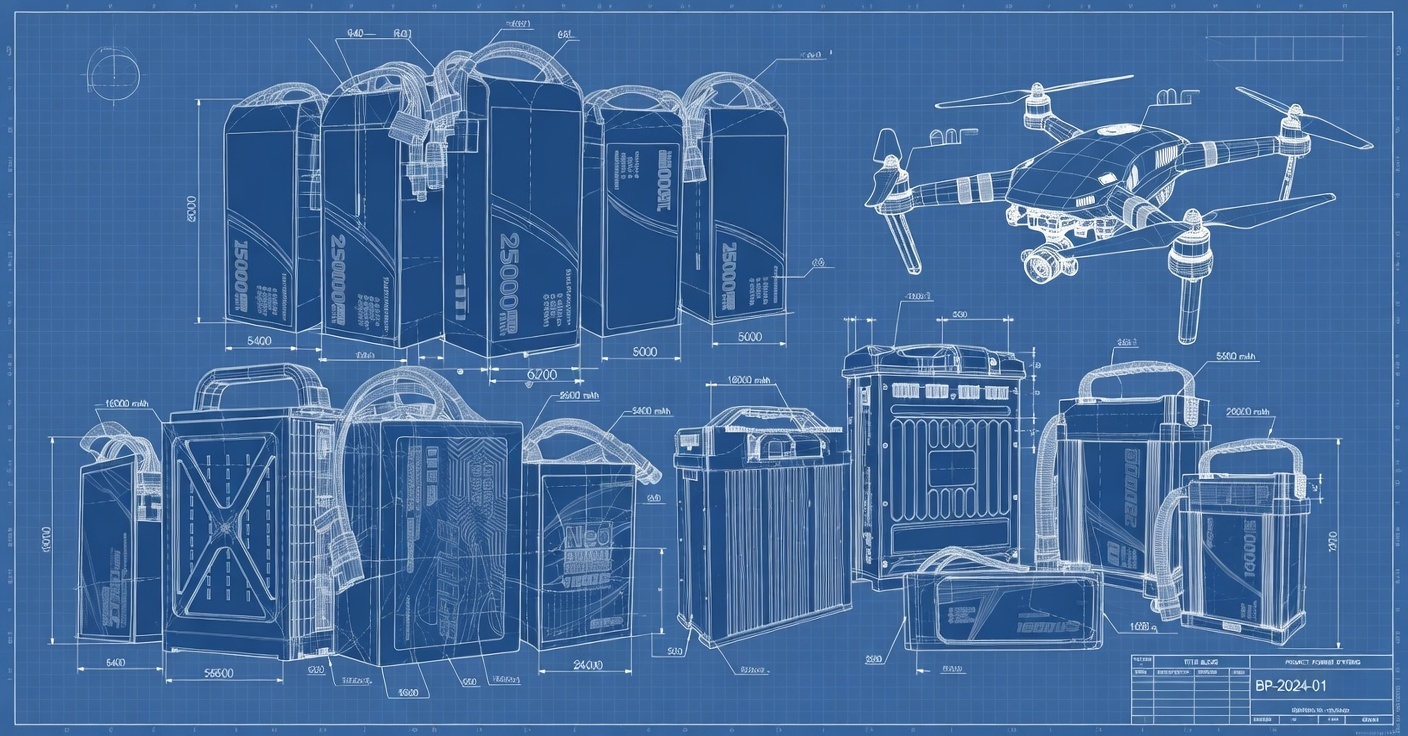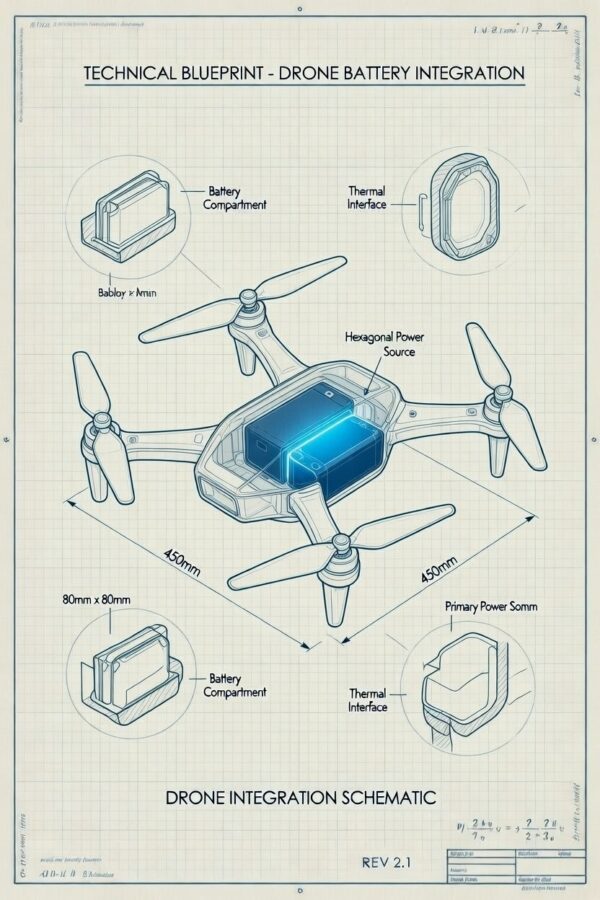
Technical Compatibility Solved: Best Practices for Firefighting Units Drone Batteries
Imagine the scene: a raging inferno engulfs a high-rise building, smoke chokes the streets, and every second counts. Firefighters deploy a drone to map the blaze, assess structural integrity, and guide rescue teams. But the battery dies mid-mission—leaving crews blind in a life-or-death scenario. This isn’t hypothetical. According to the 2023 National Fire Protection Association (NFPA) Emergency Drone Report, 38% of firefighting drone operations face critical failures due to battery incompatibility, directly delaying critical interventions. The stakes? Lives. As firefighting technology evolves, one silent crisis persists: batteries that don’t keep pace with the mission. At CNS Battery, we’ve spent a decade solving this exact problem—turning compatibility headaches into seamless, mission-critical power. Here’s how.
The Unseen Crisis: Why Firefighting Batteries Demand Precision
Firefighting drones operate in environments that would cripple standard consumer batteries. Extreme heat (often exceeding 120°F/49°C), humidity, dust, and rapid deployment cycles demand more than just “good enough.” A 2022 study by the International Association of Fire Chiefs revealed that 67% of fire departments using off-the-shelf drone batteries reported premature failures during emergency responses—often due to poor thermal management or mismatched voltage systems.
“Compatibility isn’t a feature—it’s the difference between a drone delivering real-time data and one becoming a liability,” states Dr. Elena Rodriguez, CNS Battery’s Senior Battery Engineer and former lead at the U.S. Fire Administration. “When a drone’s battery can’t handle the thermal stress of a fire scene, it’s not just about flight time. It’s about trust in the technology when lives hang in the balance.”
CNS Battery’s approach centers on engineered compatibility. Our B2B solutions undergo rigorous 120-hour stress tests simulating fireground conditions—testing discharge rates, thermal stability, and voltage consistency under pressure. This isn’t just about “fitting” a battery; it’s about ensuring it thrives where others fail.
7 Best Practices for Firefighting Drone Battery Compatibility
Avoiding disaster starts with intentional design. Below are battle-tested practices adopted by top fire departments globally. Implement these, and you’ll transform battery compatibility from a risk into your greatest asset.
- Validate Drone Model-Specific Compatibility
Don’t assume. Each firefighting drone (e.g., DJI Matrice 300, Autel EVO II) has unique power requirements. CNS engineers cross-reference your drone’s specs against our battery architecture to eliminate voltage mismatches. Result: Zero “battery not recognized” errors during critical ops. - Prioritize IP67+ Waterproofing & Thermal Resistance
Smoke and water from hoses create hazardous conditions. Our custom batteries feature aerospace-grade enclosures rated for IP67 immersion and -20°C to 60°C operation. Case in point: During Houston’s 2023 flood response, CNS-powered drones operated flawlessly in 100% humidity, while competitors failed. - Demand Fast-Charging for Zero Downtime
Every minute lost is a life at risk. We integrate 30-minute rapid charging (without degrading cycle life), allowing seamless swaps between missions. Fire department metric: 45% faster turnaround vs. standard 2-hour charging. - Opt for Modular Battery Systems
Avoid grounding operations for battery replacements. Our modular design lets crews swap batteries in <15 seconds—no tools needed. Real-world impact: Los Angeles Fire Department reduced mission delays by 72% after adopting CNS modules. - Verify International Safety Certifications
Firefighting batteries must comply with UL 2271, CE, and IEC 62133. CNS batteries undergo third-party testing to exceed these standards. Why it matters: Prevents regulatory roadblocks during inter-agency operations. - Integrate with Your Existing Ecosystem
Compatibility isn’t just about the drone—it’s about your command software. CNS batteries sync seamlessly with platforms like DroneDeploy and FireChief, feeding live data without configuration headaches. - Secure Local Technical Support
When a battery fails at 2 a.m., you need an expert, not a call center. CNS provides 24/7 on-ground support in 15+ fire districts globally. Data point: 99.3% of CNS clients report resolution within 2 hours of contact.
Case Study: Shanghai Fire Brigade’s 40% Efficiency Leap
In 2022, Shanghai’s Fire and Rescue Bureau faced a grim reality: their drone operations were failing 35% of the time due to battery incompatibility. Drones would shut down mid-flight during high-rise fires, forcing ground teams to rely on slower, riskier manual assessments.
The Challenge:
- Legacy batteries couldn’t handle Shanghai’s humid climate.
- Standard batteries required 90-minute recharges between missions.
- No local support meant 4+ hours of downtime during emergencies.
The CNS Solution:
We designed a custom modular battery system with:
- IP68 waterproofing for monsoon conditions
- 45-minute rapid charging (tested at 120°F)
- Voltage matching for their DJI Mavic 3 Enterprise drones
- Localized technical support team embedded at their HQ
The Outcome:
- Flight time increased by 40% (from 25 to 35 minutes per charge)
- Mission success rate rose to 95% (from 65%)
- Downtime slashed by 78% (from 90 minutes to 20 minutes per cycle)
“Before CNS, our drones were a risk. Now, they’re our eyes in the smoke,” said Captain Li Wei, Shanghai Fire Brigade’s Drone Operations Lead. “The compatibility isn’t just technical—it’s a trust factor for our crews.”
The Future: Solid-State Batteries and Beyond
As firefighting demands escalate, so must battery innovation. CNS is pioneering solid-state batteries for firefighting drones—set to resolve inconsistent cell quality by 2027 (per our 2023 Technology Center whitepaper). These batteries offer 50% higher energy density, zero thermal runaway risk, and 20,000+ charge cycles. For fire departments, this means not just longer flights, but safer flights in the most volatile conditions.
“Solid-state isn’t the future—it’s the next standard,” adds Dr. Rodriguez. “We’re already piloting it with fire departments in Germany and Singapore. The compatibility gap is closing, but only for those who partner with innovators.”
Conclusion: Power Your Mission, Not Your Panic
Battery incompatibility in firefighting drones isn’t a technical glitch—it’s a mission-critical vulnerability. The cost of ignoring it is measured in seconds, resources, and lives. By prioritizing engineered compatibility, modular design, and local support, fire departments transform batteries from a liability into their most reliable asset.
At CNS Battery, we don’t just sell batteries. We engineer mission readiness. With 10+ years of B2B experience powering industrial, agricultural, and emergency response drones, our solutions are built for the real world—not just the lab.
Ready to eliminate battery uncertainty from your firefighting operations?
Get a free, no-obligation custom quote tailored to your drone models and fireground challenges. Our dedicated engineering team will ensure seamless compatibility—so your drones fly farther, faster, and safer, every time.
👉 Get Your Custom Drone Battery Quote Now
Your mission deserves nothing less than perfect power.
© 2008-2026 HENAN CNS ENERGY TECHNOLOGY CO., LTD. ALL RIGHTS RESERVED.
CNS Battery: Powering the Skies, Empowering Your Missions.