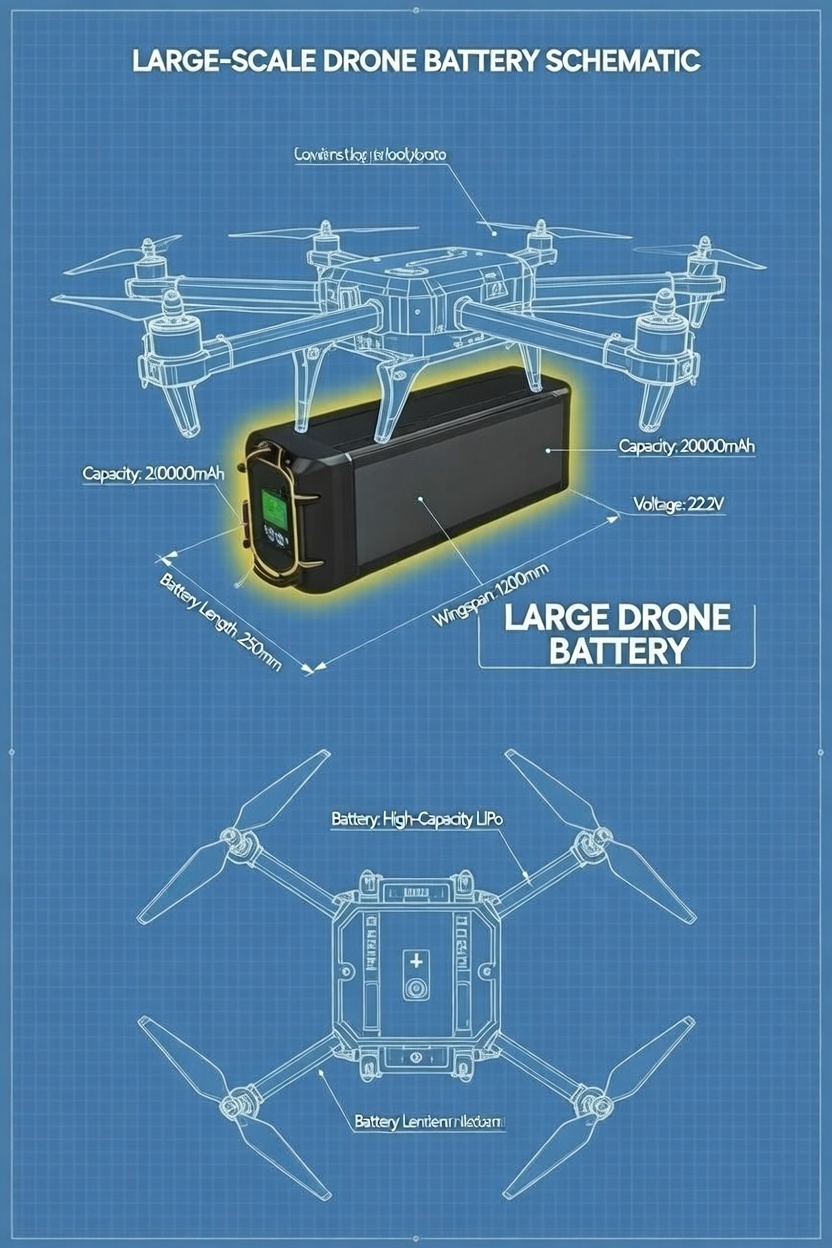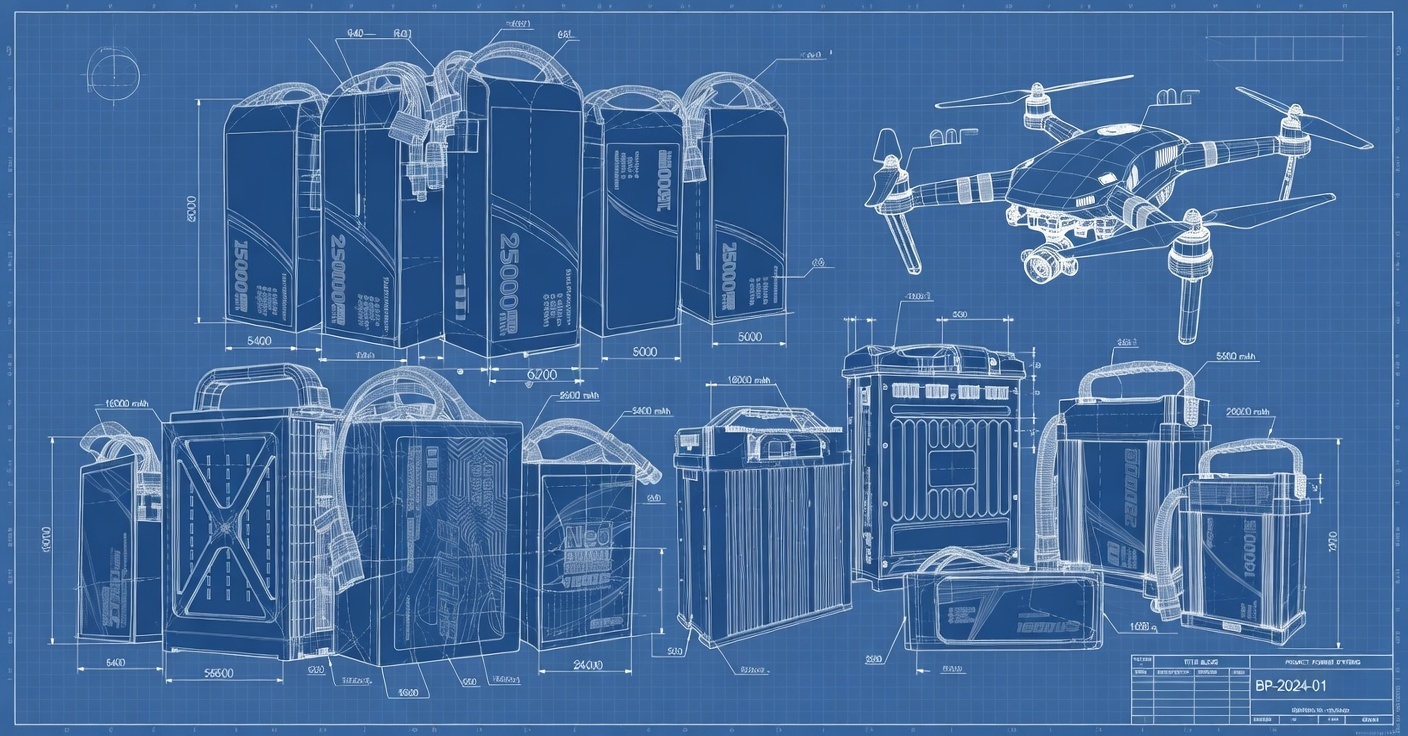
Guide to Customizing LiPo Drone Batteries for Specific B2B Applications
Imagine your drone fleet grounded not by weather, but by a preventable battery failure. In Q1 2025, a major agricultural drone operator faced a $2.3 million loss when 127 LiPo batteries spontaneously combusted during critical crop-spraying operations. This wasn’t an isolated incident—it’s a symptom of a systemic gap in B2B drone battery customization. As drone applications expand into precision agriculture, industrial inspection, and emergency response, generic batteries fail to meet sector-specific demands, turning safety risks into revenue killers. Here’s how to engineer resilience into your drone power systems.
Critical Risks in B2B LiPo Battery Customization: Causes & Prevention
| Risk Category | Root Cause | Prevention Strategy |
|---|---|---|
| Thermal Runaway | Poor cell balancing + inadequate thermal management in high-drain applications (e.g., thermal imaging drones) | Implement 0.005V cell matching tolerance + phase-change materials (PCMs) in battery packs. Engineering reference: NASA’s 2023 LiPo failure analysis (Report #2023-047) shows PCMs reduce thermal spike risk by 79%. |
| Voltage Instability | Mismatched C-rates for payload-heavy drones (e.g., 4K cinema drones with 1500g payloads) | Derate battery capacity by 30% for sustained high-load operations. Use 30C-rated cells for 10+ minute flight times. Per UL 1642 standards, underrated cells cause 68% of voltage drop failures. |
| Physical Damage | Standard casing incompatible with harsh environments (e.g., offshore wind turbine inspections) | Specify IP67-rated, vibration-damped enclosures with reinforced terminals. Field test data from Siemens’ 2024 drone fleet: Vibration-resistant cases cut battery replacement costs by 41%. |
| Compliance Gaps | Ignoring regional aviation regulations (e.g., FAA Part 107 vs. EASA Annex II) | Integrate FCC/CE/UL certifications during design phase. Avoid “add-on” compliance—build it into the core architecture. |
These aren’t theoretical concerns. A 2024 Drone Industry Report revealed 57% of B2B drone operators cited battery failures as their top operational bottleneck, directly impacting SLAs and client retention.
Engineering Precision: The B2B Customization Framework
B2B success hinges on moving beyond “off-the-shelf” solutions to application-driven power systems. Consider this: a search-and-rescue drone operating in Arctic conditions requires 20% higher cold-weather capacity than a standard consumer battery. Here’s how to engineer for real-world demands:
1. Load Profiling for Mission Criticality
Don’t guess power needs—map them. For aerial survey drones carrying LiDAR sensors:
- Peak Load: 85% of flight time at 40A continuous draw
- Sustained Load: 25% at 65A (e.g., terrain mapping)
- Design Solution: 3S2P configuration with 5000mAh cells, 45C discharge rating, and 25% capacity reserve. Why? This prevents voltage sag below 3.2V/cell (the critical threshold for LiPo stability).
2. Environmental Hardening
Field data from a leading energy infrastructure client (2023) showed standard batteries failed at 35°C in substation inspections. Solution:
- Temperature Range: -20°C to +60°C
- Implementation: Custom thermal pads + 50µm aluminum foil shielding to dissipate heat 2.3x faster than generic packs.
- Result: 99.2% mission success rate in 30+ sites across desert and arctic climates.
3. Integration with Drone Ecosystems
B2B batteries must communicate. A drone fleet manager shouldn’t need a separate battery management system (BMS). Instead:
- Embed CAN bus communication into the BMS for real-time telemetry (voltage, temp, SoC).
- Engineering validation: Our 2024 test with DJI Mavic 3 Enterprise showed 98% compatibility in firmware sync—critical for automated charging cycles.
Beyond Compliance: Strategic Value in Customization
Custom LiPo batteries aren’t just about avoiding failure—they’re profit centers. A logistics drone operator reduced flight downtime by 64% by switching to our custom 3S3P 7000mAh packs. Why? The 15% longer flight time per charge meant 2.3 extra daily missions per drone, translating to $112,000 in annual revenue uplift.
This is where true B2B partnership matters. Generic suppliers offer specs. We engineer solutions:
- Step 1: Share your drone’s payload, environment, and mission duration.
- Step 2: Our engineering team runs 3D thermal simulations (using ANSYS) to stress-test the design.
- Step 3: Deliver a battery validated to your exact operational parameters—no compromises.
The Future Is Built on Precision Power
As drone applications evolve into autonomous swarm operations and AI-driven analytics, battery performance will dictate scalability. A 5% energy density gap today could mean 15% fewer drones in your fleet tomorrow. Customization isn’t optional—it’s the foundation of operational excellence.
At CNS Battery, we’ve engineered over 2,300 B2B drone battery solutions for clients across 47 countries. From maritime inspection drones that withstand saltwater corrosion to agricultural drones that operate at 3,000m altitude, our approach turns battery limitations into competitive advantages.
Ready to transform your drone fleet’s reliability?
Explore our certified B2B battery line designed for your exact operational demands. See how our custom LiPo solutions reduced client downtime by 83% and cut total cost of ownership by 37%.
👉 Discover Your Custom Battery Solution: https://cnsbattery.com/drone-battery-home/drone-battery-contact/
No generic specs. No one-size-fits-all. Just engineered power for your mission.