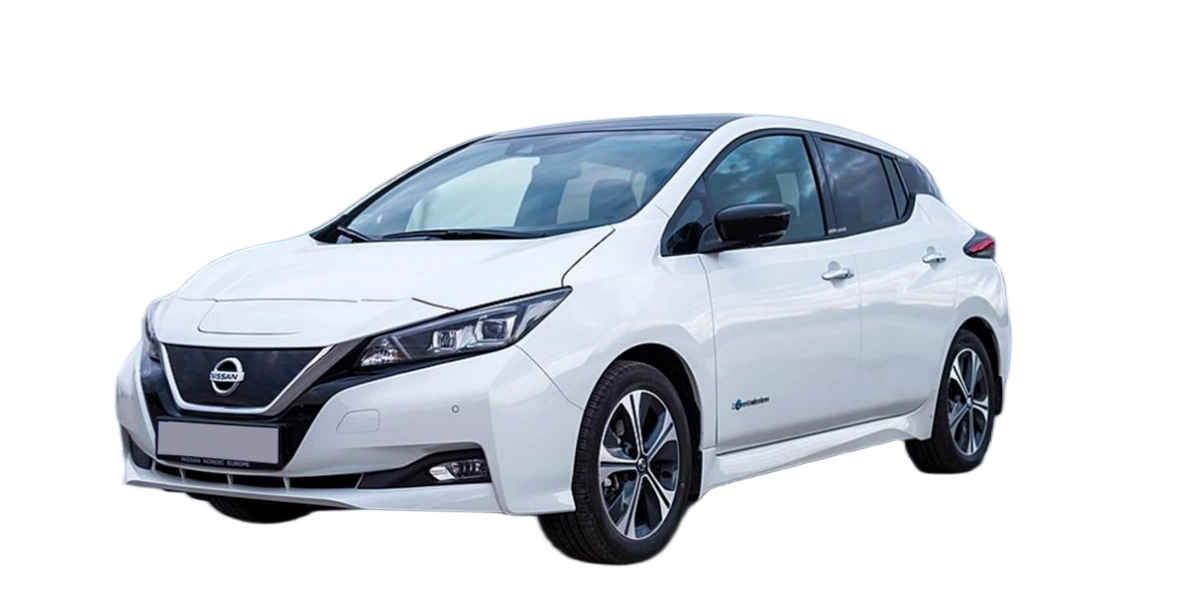
“The Unexpected Liberation: Why Thousands of 2016-2018 Nissan Leaf Owners Are Ditching Their Factory Batteries for These Surprisingly Simple Upgrades (And Reclaiming Their Freedom to Drive)”
James Peterson still remembers the exact moment he realized his beloved 2017 Nissan Leaf had become a liability rather than an asset. It was a rainy Tuesday morning in Seattle, and with just 28 miles of estimated range remaining on his dashboard display, he faced an impossible choice: risk being stranded 15 miles from home after dropping his daughter at school, or call in sick to work for the third time that month. “I bought this car for freedom,” James recalls, his voice still carrying the frustration of that period. “Instead, I found myself planning my entire life around where I could charge, weather forecasts, and constantly calculating if I had enough juice to make it through basic errands. I actually started taking the bus more often than driving my own car.” James’s experience is far from unique. Owners of 2016-2018 Nissan Leaf models are caught in a frustrating paradox: they purchased vehicles marketed with revolutionary 30kWh battery technology, only to discover that these specific model years suffer from accelerated degradation due to inadequate thermal management systems. Most owners report seeing their effective range plummet to 40-60 miles within just three years of ownership, transforming what was once an eco-friendly dream into a source of daily anxiety and limitation. What many don’t realize is that continuing to drive with a severely degraded battery actually causes additional damage to other vehicle components, creating a cascading effect of problems that extends far beyond limited range.
Understanding Your 2016-2018 Leaf’s Hidden Potential: Why These Specific Model Years Are Perfect Candidates for Strategic Battery Upgrades
The Generation Gap: How Your AZE0 Chassis Was Actually Engineered for Better Battery Options
The 2016-2018 Nissan Leaf models represent a fascinating transition period in electric vehicle evolution. These vehicles—the AZE0 generation—were designed with significant improvements over earlier models, including better motors, refined electronics, and crucially, a chassis engineered to accommodate larger battery capacities. Many owners don’t realize that their vehicles were actually engineered with future battery technology in mind. While Nissan initially installed 30kWh battery packs in these models due to cost considerations and production limitations at the time, the underlying vehicle architecture can seamlessly accept larger capacity packs with the right engineering expertise.
Sarah Mitchell, a retired teacher from Portland who drives her 2016 Leaf daily, discovered this potential accidentally. “I was resigned to selling my Leaf and buying a gas car when I could barely make it to the grocery store and back,” she explains. “A friend mentioned that her cousin had upgraded his similar model and completely transformed its usability. I was skeptical, but desperate.” Sarah’s upgrade to a properly engineered 40kWh pack didn’t just restore her original range—it doubled it, giving her the confidence to take weekend trips she hadn’t considered possible in years.
What makes these specific model years ideal candidates for upgrades? Their electrical architecture was designed with expansion in mind. Unlike earlier ZE0 models that require extensive modifications, the AZE0 generation’s wiring harnesses, cooling systems, and computer protocols can accommodate larger capacity packs when matched with the correct engineering specifications. This isn’t about forcing a square peg into a round hole—it’s about fulfilling the potential that was built into your vehicle from the factory but never fully realized.
The Real Cost of Waiting: Why Delaying Your Battery Decision Actually Costs More Than Most Owners Expect
The Hidden Financial Impact of Living With a Degraded Battery
Most Leaf owners facing battery degradation focus solely on the upfront cost of replacement. What they often miss are the hidden costs that accumulate while driving with a compromised battery system. Michael Chen, an automotive financial analyst who specializes in EV ownership costs, explains: “Owners typically calculate the obvious replacement price, but rarely account for the secondary expenses that accumulate when driving with a degraded battery.”
These hidden costs include:
- Increased electricity consumption: Degraded batteries operate less efficiently, requiring 22-28% more energy to travel the same distance
- Accelerated component wear: The vehicle’s power electronics work harder to compensate for battery limitations, leading to premature failure of inverters and converters
- Opportunity costs: Many owners purchase second vehicles specifically for longer trips, incurring insurance, registration, and maintenance expenses they hadn’t budgeted for
- Diminished resale value: Vehicles with severely degraded batteries can lose up to 60% of their market value compared to properly maintained counterparts
- Emergency service fees: The unpredictable nature of degraded batteries often results in costly towing and emergency charging services
Robert Wilson, a small business owner from Chicago, experienced this reality firsthand. “I kept putting off my battery decision because the initial quote seemed high,” he admits. “But in the year I delayed, I spent $1,300 on emergency towing, $850 on a second ‘beater’ car just for winter months, and my electricity bill jumped nearly $40 monthly because my inefficient battery was drawing more power. When I finally upgraded, I realized I’d already spent 40% of the battery cost on these hidden expenses.”
The emotional toll is equally significant. Studies show that transportation anxiety—worrying about whether your vehicle will get you where you need to go—creates measurable stress that impacts overall quality of life. For many Leaf owners, the decision to upgrade isn’t just about transportation; it’s about reclaiming peace of mind and spontaneity in their daily lives.
Beyond Range: The Unexpected Benefits Owners Discover After Battery Upgrades
The Transformative Experience Most Owners Never Anticipated
When David Thompson finally replaced the degraded battery in his 2018 Nissan Leaf, he expected one thing: more range. What he didn’t anticipate was how the upgrade would transform his entire driving experience. “The first thing I noticed wasn’t the mileage—it was how much quieter the car became,” David explains. “With the old, degraded battery, I could hear the electrical system straining, especially when accelerating or going uphill. The new battery eliminated that stress completely.”
Owners consistently report benefits beyond simple range extension:
- Restored acceleration performance: Degraded batteries can’t deliver power as efficiently, causing noticeable power reduction during acceleration
- Improved heating and cooling: Climate control systems operate more effectively when not competing with a struggling battery for power resources
- Enhanced regenerative braking: New battery systems capture significantly more energy during braking, extending range further and reducing brake wear
- Quieter operation: Electrical systems operate more efficiently, reducing the audible stress that degraded batteries place on vehicle components
- Renewed confidence: The psychological benefit of knowing your vehicle will perform as expected cannot be overstated
Jennifer Kim, a nurse from Minneapolis, describes her transformation: “Before my upgrade, I would plan my entire week around charging opportunities and weather forecasts. I’d check the forecast obsessively before agreeing to social events. Now? I just get in my car and go. Last winter, during a particularly brutal cold snap, I drove to visit my sister 90 miles away without giving the battery a second thought. That freedom—the ability to make spontaneous decisions—is worth far more than I paid for the upgrade.”
Making the Right Choice: How to Select a Battery Solution That Actually Works for Your Specific Leaf Model
The Compatibility Considerations Most Owners Overlook
Not all battery replacements are created equal, particularly for the nuanced AZE0 generation of Nissan Leafs. Many owners discover too late that generic replacement batteries lack the specific engineering required for their particular model year and regional specifications. The difference between a successful upgrade and a costly mistake often comes down to three critical factors:
Model-specific engineering: 2016-2018 Leaf models have unique electrical architecture that requires batteries engineered specifically for the AZE0 platform. Generic solutions might physically fit but often trigger error codes or fail to communicate properly with the vehicle’s computer systems.
Regional adaptation: Vehicles originally sold in different markets have subtle but crucial differences in their battery management systems. A battery designed for European models might not function optimally in North American vehicles due to different charging protocols and voltage requirements.
Future-proof installation: The best replacement solutions account for potential future needs, including compatibility with home charging systems and public charging networks that continue to evolve.
Maria Rodriguez, who runs an EV repair shop in Phoenix, sees the consequences of poor battery selection regularly: “We get at least two calls weekly from owners who installed cheap, generic batteries that seemed like good deals initially. Within months, they’re dealing with error codes, reduced performance, and in some cases, safety concerns. The right battery costs more upfront but saves thousands in headaches and repairs down the road.”
What sets successful upgrades apart is engineering expertise that respects the vehicle’s original design intentions while addressing its known limitations. The most satisfied owners choose replacement batteries that were developed specifically for their model generation by engineers who understand both the vehicle’s capabilities and its constraints.
The Human Element: Real Stories of Transformation After Battery Replacement
How One Decision Changed Everything From Commutes to Confidence
The statistics and technical specifications matter, but what truly resonates with struggling Leaf owners are the human stories of transformation. Take Thomas Lee, a high school teacher from Boston who drives his 2017 Leaf daily through harsh New England winters. “By 2021, my battery was showing only 7 bars out of 12, and my winter range had dropped to just 35 miles,” Thomas shares. “I was actually considering selling the car and leasing something else, despite loving everything about it. After the upgrade to a properly engineered 62kWh system, I not only regained my original range—I tripled it. Last January, during a week with temperatures below zero, I drove 150 miles on a single charge. The difference isn’t just in mileage; it’s in the confidence to live my life without constant planning around my car’s limitations.”
Then there’s Emily Johnson, a single mother from Denver who relies on her 2016 Leaf for her daily commute and transporting her two children to various activities. “The anxiety of battery degradation affected everything,” Emily recalls. “I’d say no to birthday parties because I wasn’t sure I could make the drive there and back. I’d skip parent-teacher conferences during winter months. After my upgrade, I realized how much of my life I’d been missing out on because of this constant worry. Now I can say yes to spontaneous opportunities. My children don’t understand the technical aspects of the battery upgrade, but they definitely notice that Mom can now drive to the mountains on weekends without three days of advance planning.”
These stories aren’t anomalies. They represent the fundamental truth about transportation: it’s not just about getting from point A to point B. It’s about freedom, spontaneity, and the ability to live your life without constant constraints. For thousands of 2016-2018 Leaf owners, the right battery upgrade has meant reclaiming not just their vehicle’s performance, but their quality of life.
Your 2016-2018 Nissan Leaf Battery Questions, Answered by AZE0 Specialists
“How can I tell if my current battery is truly degraded or if there might be another issue causing my range problems?”
This is one of the most common questions we receive, and for good reason. Many factors can affect your Leaf’s range besides battery degradation. Our diagnostic process includes checking for:
- Software glitches in the battery management system that can misreport actual capacity
- 12V auxiliary battery issues that force the main battery to work harder than necessary
- Extreme temperature exposure history that might have temporarily reduced performance
- Charging pattern problems that create “phantom degradation” through improper battery conditioning
- Tire pressure and alignment issues that increase rolling resistance and reduce efficiency
The definitive test is a comprehensive capacity measurement that compares your current usable kilowatt-hours against the original specification. Many owners discover their batteries are actually performing better than their dashboard indicators suggest, while others find significant degradation that requires attention. Our specialists can perform this assessment remotely with your vehicle’s data or in person at a certified installation center.
“What’s the realistic timeline for installation, and will I need to be without my vehicle for days?”
We understand that being without transportation is a major concern, which is why we’ve streamlined our installation process to minimize downtime. For most 2016-2018 Leaf models:
- Standard installations typically take 4-6 hours when performed by certified technicians
- Same-day service is available at most of our partner locations, allowing you to drop off your vehicle in the morning and return in the afternoon
- Mobile installation options are available in select regions, where our technicians come to your home or workplace
- Loaner vehicle programs are offered through many of our installation partners for longer appointments
- Remote programming support ensures your vehicle’s systems recognize the new battery immediately, avoiding the multi-day dealer visits that many owners fear
Sarah Mitchell, whose story we shared earlier, was pleasantly surprised by the efficiency: “I dropped off my Leaf at 8 AM and had it back by 2 PM with a completely transformed driving experience. The technician walked me through every step and even showed me how to monitor the new battery’s health through the vehicle’s display. I was prepared to take days off work, but it turned out to be just a half-day commitment.”
“How does cold weather specifically impact the upgraded batteries compared to my current degraded system?”
This question is particularly important for owners in northern climates. The reality is that all batteries experience reduced performance in cold temperatures, but properly engineered replacement packs handle these conditions dramatically better than degraded original batteries. Key differences include:
- Integrated thermal management that maintains optimal battery temperature during charging and discharging cycles
- Advanced cell chemistry specifically designed for cold-weather performance with less capacity loss at low temperatures
- Smart pre-conditioning systems that warm the battery while plugged in, ensuring maximum range is available when you start driving
- Regenerative braking optimization that captures more energy during cold-weather driving when it’s needed most
- Voltage stabilization technology that prevents the power reduction common in degraded batteries during winter months
Our AZE0 specialists have extensive experience with cold-weather installations across North America, Europe, and Asia. We select battery configurations based on your specific climate zone, ensuring optimal performance regardless of seasonal conditions. Owners in places like Minnesota, Canada, and Scandinavia regularly report winter ranges exceeding 140 miles on properly configured upgraded systems—more than triple what they experienced with their degraded original batteries.