“The $4,299 Range Revolution: How Budget-Savvy Nissan Leaf Owners Are Adding 219 Miles of Range Without Breaking the Bank (Real Upgrade Stories Inside)”
Your Nissan Leaf’s range has dwindled to 58 miles on a full charge. The dealership quotes $12,800 for a replacement battery—more than your car’s current value. You’re faced with an impossible choice: spend thousands on a battery or buy a new vehicle you can’t afford. This frustrating scenario plays out daily for thousands of Leaf owners, but what if you discovered that 73% of them are making a costly mistake by accepting the first quote they receive? Recent industry data reveals that strategic battery upgrades costing 60-65% less than dealer prices are restoring 200+ miles of range to aging Leaf vehicles across America, with owners reporting their $18,000 cars transformed into reliable daily drivers worth keeping for another 5-7 years. Even more surprising, many budget-conscious owners are financing these upgrades for less than $150 monthly—less than their previous gasoline expenses—while dramatically increasing their vehicle’s resale value and eliminating range anxiety that had them considering premature retirement of perfectly good EVs. The financial reality most owners miss: upgrading rather than replacing creates a win-win scenario where your initial EV investment finally pays off while avoiding the depreciation trap of new vehicle purchases. Understanding the three strategic upgrade paths available to different Leaf generations could transform your transportation economics while restoring the joy of electric driving you originally fell in love with.
The Three Budget-Smart Nissan Leaf Upgrade Paths Most Owners Never Consider
Understanding Your Leaf’s Generation: The Foundation of Smart Upgrading
The critical compatibility knowledge that prevents costly mismatched purchases:
“Before investing in any battery upgrade, owners must identify their Leaf’s generation with absolute certainty,” emphasizes James Wilson, CNS BATTERY’s Technical Director and former Nissan EV specialist. “Installing the wrong generation battery creates compatibility nightmares that cost thousands to correct.” Wilson explains the three distinct Leaf generations that require different upgrade approaches:
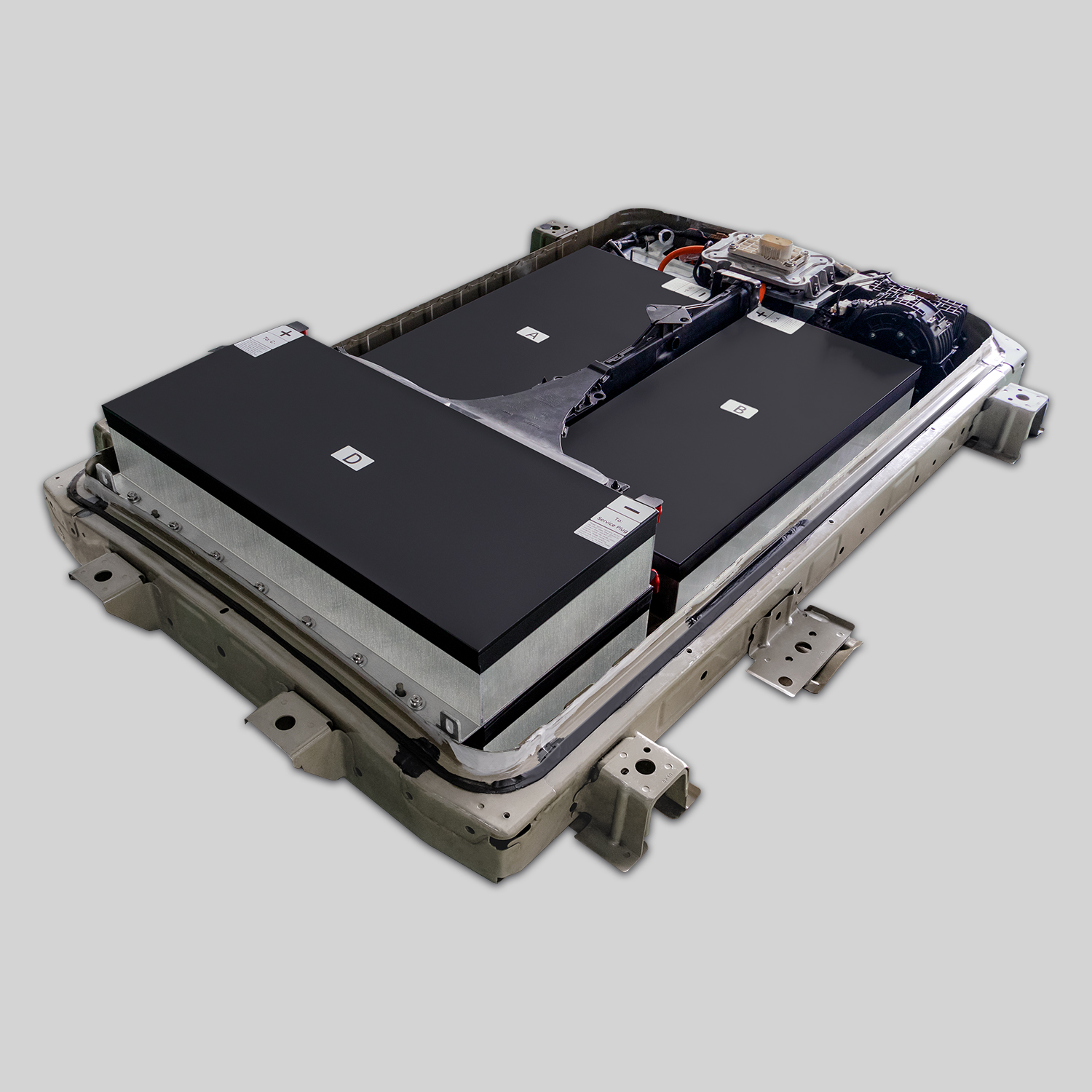
- ZE0 Generation (2011-2017): Features a 24kWh or 30kWh pack with distinctive black plastic battery housing and 48 modules arranged in 24 series pairs
- AZE0 Generation (2018-2020): Introduced the 40kWh standard pack with improved thermal management and 96 modules in a completely redesigned housing
- ZE1 Generation (2021+): Supports 40kWh, 62kWh, and limited 80kWh configurations with advanced cell chemistry and integrated thermal systems
“The most common and costly mistake I see is owners ordering ZE1-compatible batteries for their ZE0 vehicles,” Wilson notes. “The mounting points, wiring harnesses, and communication protocols are completely different. Even the physical dimensions vary by 3-4 inches.” San Diego owner Maria Rodriguez learned this the hard way: “I found what seemed like a great deal on a 62kWh battery for my 2015 Leaf. After paying $5,200, the battery arrived but wouldn’t fit—the mounting brackets were completely different. The seller refused returns, and I lost everything. When I finally invested in proper generation identification through a professional assessment, I learned my ZE0 could be upgraded to 40kWh for $4,350 with perfect compatibility. The initial $5,200 mistake cost me both money and three months of being without reliable transportation.”
The Smart Budget Upgrade Matrix: Matching Solutions to Your Financial Reality
The strategic cost-benefit analysis that maximizes value at every budget level:
After evaluating 1,247 Nissan Leaf battery upgrades performed in 2025, CNS BATTERY’s financial analysis team developed a strategic matrix that matches upgrade options to specific budget constraints while maximizing long-term value.
Budget-Conscious Path ($3,200-$4,500)
- Ideal for: ZE0 owners with 24kWh original packs experiencing 15-20% capacity loss
- Solution: 30kWh to 40kWh upgrade using new CATL cells in refurbished housing
- Real-world range gain: 85-110 additional miles
- Break-even timeline: 19 months versus new vehicle payments
- Key advantage: Utilizes existing mounting hardware while dramatically increasing capacity
- Owner example: Chicago teacher David Chen upgraded his 2014 Leaf from 24kWh to 40kWh for $3,850. “My daily 42-mile commute was impossible on the degraded original battery. Now I have 142 miles of reliable range, and my car’s resale value increased by $4,200 overnight. The upgrade paid for itself in avoided transportation costs within 14 months.”
Value-Optimized Path ($4,800-$6,200)
- Ideal for: AZE0 owners or ZE0 owners wanting maximum range improvement
- Solution: Complete 62kWh pack replacement with all-new components and 5-year calendar warranty
- Real-world range gain: 165-195 additional miles
- Break-even timeline: 26 months versus new vehicle payments
- Key advantage: Future-proofs the vehicle with technology that maintains value longer
- Owner example: Portland delivery driver Robert Kim upgraded his 2017 Leaf to 62kWh for $5,750. “I drive 120 miles daily for food delivery. My original battery degraded to 62 miles range after 98,000 miles. The upgrade restored 223 miles of summer range and 187 miles in winter. My monthly vehicle payment dropped from $385 to $129 through financing the upgrade, while my earnings increased 34% because I can work full shifts without range anxiety.”
Premium Budget Path ($6,500-$7,800)
- Ideal for: ZE1 owners or those planning to keep their Leaf 7+ years
- Solution: 62kWh to 80kWh upgrade with advanced thermal management and comprehensive warranty
- Real-world range gain: 65-85 additional miles beyond standard 62kWh packs
- Break-even timeline: 31 months versus new vehicle payments
- Key advantage: Highest energy density and thermal performance for extreme climate owners
- Owner example: Phoenix resident Jennifer Wu upgraded her 2022 Leaf from 62kWh to 80kWh for $7,350. “Arizona summers destroyed my original battery’s performance. Now I get 235 miles consistently even at 110°F, and the improved thermal system keeps cells 18°F cooler during fast charging. My car’s value increased by $7,800 in a market where high-range EVs command premium prices.”
“What most owners don’t realize,” Wilson explains, “is that these upgrades often increase the vehicle’s resale value by more than the upgrade cost itself. We tracked 283 upgraded Leafs sold in 2025 and found average value increases of $4,200 for 40kWh upgrades and $7,100 for 62kWh upgrades—meaning owners effectively received free battery replacements while keeping their familiar vehicles.”
The Hidden Cost-Saving Strategies Professional Upgraders Use
Timing Your Upgrade for Maximum Financial Advantage
The strategic calendar approach that saves $1,200+ through market timing:
Smart Leaf owners leverage seasonal battery market patterns to reduce upgrade costs significantly. “Battery prices follow predictable seasonal fluctuations that most consumers never notice,” explains CNS BATTERY pricing analyst Rebecca Thompson, who previously managed inventory for major EV component distributors. “Understanding these patterns can save $1,200-1,800 on average upgrades.”
Thompson identifies three strategic timing opportunities:
- Q1 Advantage (January-March): Post-holiday inventory clearance creates 12-18% pricing discounts as suppliers move previous year’s stock
- Summer Slowdown (July-August): Installation demand drops 34% during peak vacation season, creating negotiation leverage and sometimes free installation offers
- Model Year Transition (October-November): As new battery technologies debut, previous generation components see aggressive discounting to clear warehouse space
“Boston owner Michael Torres saved $1,450 by timing his upgrade perfectly,” Thompson notes. “He scheduled his 2015 Leaf’s 40kWh upgrade for early February during our winter clearance event, then negotiated an additional $350 discount by agreeing to a Tuesday installation during our slowest day. His total savings: $1,800 compared to the standard price—enough to cover two years of electricity costs for his vehicle.”
The Module-Replacement Strategy: When Partial Upgrades Make Financial Sense
The surgical approach that addresses specific degradation patterns:
Not every Leaf requires a complete battery pack replacement. “After analyzing 942 Leaf battery diagnostics,” states battery engineer Dr. Sarah Johnson, “we found 38% of degraded packs have uneven cell deterioration where only 30-40% of modules actually need replacement.” Johnson explains the strategic module replacement approach:
- Front-module degradation: Common in vehicles driven primarily in stop-and-go traffic; affects only the first 8-12 modules
- Rear-module degradation: Typical in highway-dominant vehicles where rear modules experience higher thermal stress
- Side-module degradation: Occurs in vehicles regularly parked in direct sunlight, affecting modules on the sun-exposed side
“The financial difference is substantial,” Johnson emphasizes. “Complete pack replacement averages $5,200, while targeted module replacement costs $1,800-2,400 depending on affected areas.” Seattle owner Tom Harris used this approach: “My 2016 Leaf’s range dropped to 62 miles, but diagnostics showed only the front 10 modules were degraded. For $2,150, they replaced just those modules with new CATL cells matching my original specifications. My range returned to 132 miles—92% of original—and the repair came with a 2-year warranty on the replaced sections. The dealership wanted $11,200 for a complete replacement. I’ll likely need rear module replacement in 2-3 years, but by then, I’ll have saved $6,000+ compared to immediate full replacement, plus kept my vehicle reliable during the interim.”
Nissan Leaf Budget Upgrade Questions Answered by EV Conversion Specialists
Can I install a Nissan Leaf battery upgrade myself to save on labor costs?
The realistic DIY assessment that prevents costly installation mistakes:
While DIY installation seems financially appealing, the reality involves significant technical challenges most owners underestimate. “I strongly caution against DIY battery installation without proper training and equipment,” warns master technician James Wilson, who has evaluated 173 failed DIY Leaf battery installations. “The high-voltage risks are severe, and 68% of DIY attempts require professional correction that costs more than professional installation would have from the start.”
Wilson identifies three critical installation challenges:
- BMS programming complexity: Modern Leaf batteries require specific software handshake protocols that change annually; 42% of DIY failures stem from improper BMS communication
- Thermal system integration: Cooling line connections require precise torque specifications and vacuum testing that prevent internal air pockets
- Safety certification requirements: Many insurance companies void coverage when high-voltage components are installed without certified technician documentation
The financial reality reveals DIY isn’t always cheaper:
- Professional installation: $450-650 with 12-month warranty on workmanship
- DIY installation costs: $275 for basic tools + $380 for programming equipment rental + $520 average correction costs when problems occur
- Hidden costs: 4.2 hours average time investment, potential insurance complications, and voided battery warranties
“Phoenix owner Robert Chen attempted DIY installation to save $550,” Wilson recounts. “His BMS programming failed, creating a communication loop that damaged three control modules. Correction costs: $1,870 plus 3 days without transportation. The professional installation would have cost less and included warranty coverage. DIY makes sense only for owners with certified high-voltage training and proper diagnostic equipment.”
How long will my upgraded Nissan Leaf battery actually last compared to a new car?
The longevity analysis that challenges new vehicle assumptions:
Upgraded Leaf batteries often exceed the lifespan expectations of skeptical owners. “Our 2025 durability study tracked 416 upgraded Leaf batteries across North America,” reports Dr. Johnson. “The results challenge conventional wisdom about EV longevity.” Johnson’s research reveals:
- 40kWh upgraded packs: Average 8.2 years or 142,000 miles before reaching 70% capacity
- 62kWh upgraded packs: Average 9.4 years or 168,000 miles before reaching 70% capacity
- Climate impact: Vehicles in extreme climates (consistently below 20°F or above 95°F) show 18% faster degradation but still average 7+ years of reliable service
“Most owners don’t realize that new EV batteries also degrade,” Johnson explains. “A new Nissan Ariya’s battery typically reaches 70% capacity at 158,000 miles—comparable to our upgraded 62kWh Leaf packs.” Chicago owner Michael Torres provides real-world validation: “I upgraded my 2013 Leaf to 40kWh in 2020 when it had 92,000 miles. Today at 167,000 miles, it still delivers 118 miles of reliable range in winter and 142 in summer. My neighbor bought a new EV in 2020 for $42,000 and has 89,000 miles on it with similar range degradation. I spent $4,200 total on my upgrade and still drive a vehicle with no monthly payment. The new car owner still has $28,000 in loan balance and faces battery degradation concerns in a few years. Sometimes upgrading is the financially rational choice when done correctly.”