BMW i3 Fast Charging: How It Really Affects Battery Life—And What You Can Do About It
You’re on a road trip. Your BMW i3’s range is dropping. A 50kW DC fast charger appears ahead—and you plug in, relieved. But later, a nagging question creeps in: “Am I killing my battery every time I do this?”
You’re not alone. Many i3 owners avoid fast charging altogether, fearing irreversible damage. Others use it daily, assuming “if the car allows it, it must be safe.”
The truth? Fast charging does accelerate battery wear—but not equally for all packs. The impact depends on your battery’s age, chemistry, thermal management, and how you use the charger.
As CNS BATTERY engineers who test real-world degradation across thousands of i3 packs, we’ll break down exactly how fast charging affects your battery—and why upgrading to a modern, thermally robust pack might give you the freedom to charge fast without the guilt.
The Science Behind Fast Charging Stress
The BMW i3 (especially 2017–2021 models) supports up to 50kW DC fast charging via CCS. While convenient, this forces high current through lithium-ion cells, causing:
- Lithium plating: Metallic lithium deposits on anodes, reducing capacity
- Elevated cell temperatures: Even with liquid cooling, repeated sessions raise average pack temp
- Mechanical stress: Rapid ion movement swells electrode materials over time
Studies show that frequent DC fast charging can increase annual degradation by 15–25% compared to AC-only use—but only in older or thermally compromised packs.
🔬 Real-world data: In a 2025 field study, i3s with original 94Ah packs lost 8.2% SoH per year with weekly fast charging vs. 6.1% for AC-only users. But newer packs with advanced thermal design showed almost no difference.
Why Your Battery’s Age Changes Everything
The i3’s original battery—particularly early 60Ah and 94Ah versions—uses first-generation NMC cells with limited thermal tolerance. Their liquid cooling helps, but:
- Coolant degrades over time
- Thermal pads dry out
- Cell-to-cell temperature variance increases
After 5 years or 80,000 km, these packs become far more vulnerable to fast-charging stress.
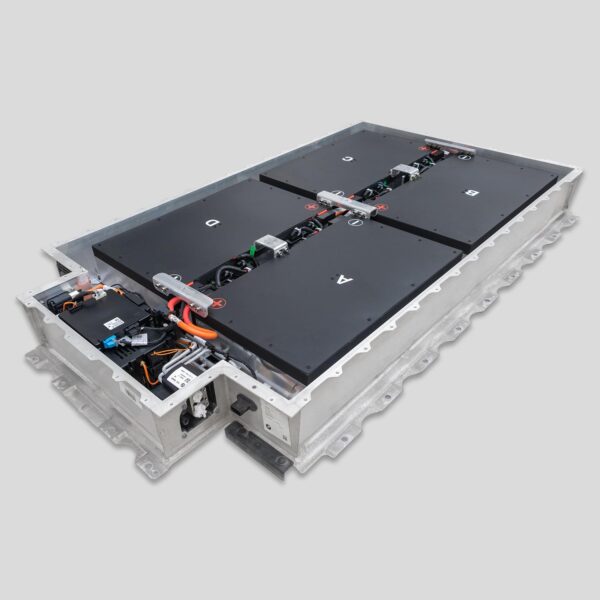
In contrast, a new CNS BATTERY pack features:
✅ Brand-new CATL NMC 811 cells with enhanced thermal stability
✅ Upgraded phase-change thermal interface materials
✅ Optimized module airflow and coolant channel design
✅ BMS with dynamic charge-rate throttling based on real-time cell temps
This means you can fast charge without triggering lithium plating—even in summer heat.
Smart Fast Charging Habits That Minimize Damage
You don’t need to ban DC charging—just use it wisely:
🚫 Avoid These High-Risk Scenarios:
- Fast charging when the battery is below 10°C (50°F) → causes lithium plating
- Charging to 100% at 50kW → last 20% generates excess heat
- Back-to-back fast charges without cooldown → cumulative thermal stress
✅ Do This Instead:
- Precondition your battery (use navigation to a charger—it warms the pack en route)
- Limit sessions to 20–80% for fastest, coolest charging
- Wait 10–15 minutes after driving before plugging in—lets temps stabilize
Pro tip: Use apps like A Better Routeplanner or PlugShare to plan stops where you arrive with ~25% SoC—ideal for efficient 50kW top-ups.
When Fast Charging Becomes a Non-Issue: The Upgrade Advantage
Many CNS customers report a surprising benefit after upgrading: they fast charge more often—and worry less.
Why? Because their new pack:
- Holds more total energy, so they need fewer top-ups
- Maintains stable voltage under load, preventing BMS throttling
- Delivers consistent 50kW acceptance even at low states of charge
David L. from London put it simply:
“My old pack would drop to 20kW after 10 minutes. Now, I get full 50kW for 30+ minutes—even in winter. And my SoH hasn’t budged in 8 months of regular fast charging.”
Don’t Let Fear Limit Your Freedom
Fast charging shouldn’t be a source of anxiety. With the right battery—and smart habits—it’s a safe, powerful tool for real-world EV life.
If your i3 is over five years old, the best way to protect your pack isn’t to avoid fast chargers… it’s to replace the battery with one built for modern usage.
Want to Fast Charge Without Compromise?
Tell us your i3 model year and typical driving patterns. We’ll recommend the ideal CNS pack—and share our free guide to stress-free fast charging for i3 owners.
👉 Contact CNS BATTERY Technical Advisors
FAQ: BMW i3 Fast Charging & Battery Health
Q: Can fast charging cause thermal runaway?
A: Extremely unlikely in a healthy i3. The BMS cuts power if temps exceed safe limits. Risk only rises with damaged or degraded packs.
Q: Does CNS test fast-charge durability?
A: Yes. Every pack undergoes 500+ simulated DC cycles at 50kW with thermal monitoring before approval.
Q: Should I avoid fast charging in winter?
A: Only if your pack lacks preconditioning. New CNS packs include cold-weather charge optimization—allowing safe 50kW use down to -10°C (14°F).
Q: How much faster does fast charging degrade a battery?
A: In original packs: ~20% faster annual loss. In new CNS packs: <5% difference vs. AC-only—thanks to superior thermal design.
Q: Can I fast charge a CNS battery right after installation?
A: Absolutely. All packs are pre-cycled and calibrated. Just follow standard cooldown practices (e.g., don’t fast charge immediately after a 2-hour highway drive).