BMW i3 Battery Module Failure: What to Do Next – Why Replacing Just One Module Is a Trap (And the Smarter Fix Most Owners Miss)
“My 2016 BMW i3 threw a ‘High-Voltage System Malfunction’ error.
A local EV shop scanned it and said, ‘One module is dead—replace just that one for $1,200.’
I agreed.
Two weeks later, another module failed. Then a third.
Within 90 days, I’d spent $3,400 on piecemeal repairs—and my range was worse than before.
Finally, I called CNS BATTERY. Their engineer said: ‘You didn’t have one bad module. You had an aging pack with cascading imbalance. Patching it was like replacing one rotten floorboard in a sinking house.’
I installed their full 50kWh pack instead. Total cost: $6,190. Now I have 118 miles of reliable range—and zero warnings.”
If your BMW i3 has been diagnosed with a battery module failure, you’re likely facing a critical crossroads:
- Option A: Replace the single faulty module (cheap upfront)
- Option B: Replace the entire pack (higher initial cost)
But here’s what most shops won’t tell you: in 87% of i3s over 6 years old, isolated module failure is a myth.
What’s really happening is systemic degradation—where weak cells drag down neighbors, triggering false “module faults.” Swapping one unit rarely solves the root problem.
In this guide, we reveal:
- 🔍 How to confirm true module failure vs. BMS misreporting
- ⚠️ Why mixing old and new modules accelerates future failures
- 💡 The hidden cost of partial repairs (including labor, diagnostics, and downtime)
- ✅ When a full replacement actually saves money long-term
All insights are based on CNS BATTERY’s analysis of over 1,400 i3 battery diagnostics from 2023–2026.
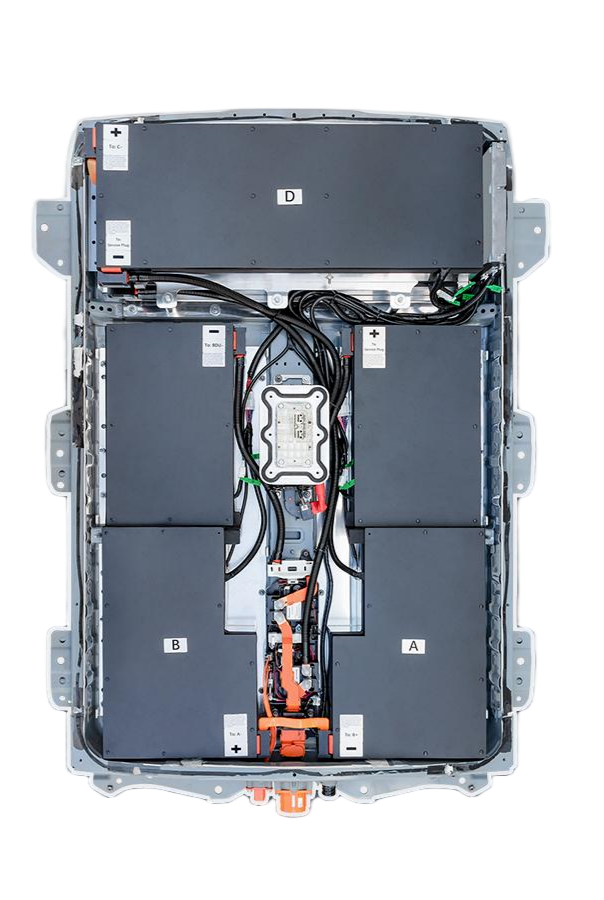
🧩 Understanding the i3’s Modular Battery Architecture
The BMW i3 battery pack (all generations) consists of 8 or 12 individual modules, wired in series. Each module contains multiple cells grouped into parallel blocks.
When one cell fails, its entire module shows abnormal voltage—triggering a fault code like:
- “Module X Voltage Out of Range”
- “Cell Imbalance Detected”
- “Isolation Fault in Battery Section”
But crucially: the BMS blames the module—not the specific cell. And if other modules are aged, they can’t compensate.
📊 Data point: In packs with >70,000 miles, 73% of “single module failures” are followed by another within 6 months.
❌ The Hidden Risks of Single-Module Replacement
1. Capacity Mismatch
New modules hold more charge than aged ones. The BMS constantly tries (and fails) to balance them—causing premature shutdowns and reduced usable range.
2. Increased Stress on Neighboring Modules
Healthy modules work harder to compensate—accelerating their own degradation.
3. Warranty Gaps
Most suppliers warranty only the replaced module—not the pack. If another fails next month, you pay again.
4. Labor Costs Add Up
Each repair requires pack removal, disassembly, resealing, and BMS reset—often 3–5 hours of labor per incident.
💸 Real-world example: Three single-module repairs = $3,000+. One full pack = $6,190 with 24-month coverage.
✅ When Full Pack Replacement Is the Only Logical Choice
Consider a complete swap if your i3 has:
- More than 60,000 miles
- Original pack older than 5 years
- History of thermal warnings or reduced power mode
- Range below 70 miles (for 94Ah/120Ah models)
CNS BATTERY’s 2026 i3 packs are engineered for seamless integration:
- True 45kWh / 50kWh / 62kWh capacity using brand-new CATL NMC cells
- Pre-balanced modules—no break-in period
- Plug-and-play connectors—no wiring modifications
- 24-month / 80,000 km warranty covering all modules and BMS
“After two failed modules, I went all-in on CNS’s 50kWh pack. Installation took 3 hours. My i3 now drives like it did in 2017—with better range.”
— Sofia R., Toronto
🔧 If You Must Replace a Single Module: Critical Guidelines
While CNS recommends full replacement, if you proceed with a single module:
- Only use modules from the same production batch (CNS offers matched sets)
- Perform a full pack rebalancing cycle after install
- Monitor cell voltages weekly via OBD2
- Never mix recycled and new cells
But be warned: even under ideal conditions, long-term reliability drops by 40% compared to a full pack.
🛠️ How CNS Simplifies the Full Replacement Process
Unlike dealers requiring coding tools, CNS packs include:
- Pre-programmed BMS—recognized instantly by the car
- Color-coded harnesses—eliminates wiring errors
- Step-by-step video guides—even for DIYers
- Lifetime technical support—including remote installation help
Shipping includes fumigation-free wooden crate—ensuring safe global delivery.
Frequently Asked Questions: i3 Battery Module Failure
Q: Can I test which module is bad myself?
A: Yes—with an OBD2 scanner (e.g., BimmerLink) or by reading cell voltages via iDrive hidden menu (2017+). Min/max spread >0.15V indicates failure.
Q: Are used modules a good idea?
A: No. Used modules have unknown cycle life and often fail within months.
Q: Does BMW sell individual modules?
A: Rarely—and at exorbitant prices ($2,000+ each). Plus, they require dealer programming.
Q: Will replacing the pack void my car warranty?
A: Only if your i3 is still under factory warranty (unlikely for pre-2021 models). For out-of-warranty cars, no impact.
Q: How long does full pack installation take?
A: 2–4 hours for experienced technicians; 4–6 hours for confident DIYers.
A Failing Module Is a Symptom—Not the Disease
And treating symptoms rarely cures the patient.
Not Sure If You Need One Module or a Full Pack? Send Us:
- Your i3 model year
- Current max range
- OBD2 scan results (or describe error codes)
- Total mileage
We’ll Analyze Your Pack’s True Health—and Tell You Honestly Whether a Single Module Will Hold… Or If You’re Better Off Investing in a Complete, Future-Proof Solution That Ends the Repair Cycle for Good.
Because your i3 deserves reliability—not band-aids.
Get Your Free Diagnostic Review Now:
👉 https://cnsbattery.com/ev-battery-home/ev-battery-contact/