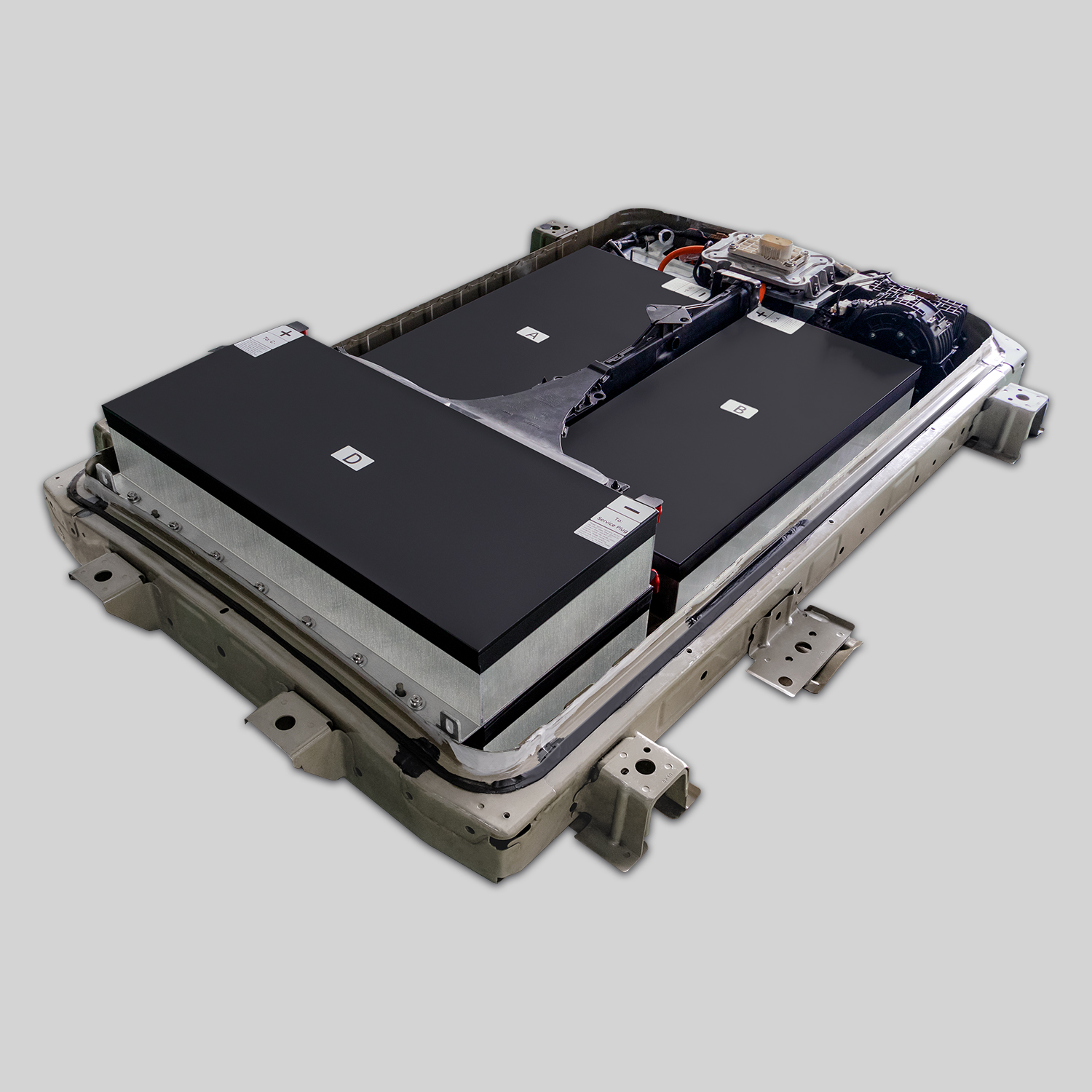
How to Fix BMW i3 Battery Cell Short Circuit Damage – The “One Bad Cell” That Took Down the Whole Pack (And Why Replacing It Alone Is a Ticking Time Bomb)
“A technician in Lyon diagnosed a ‘single-cell short’ in a 2018 BMW i3 after the car threw a 930B45 DTC and refused to drive. Confident in his skills, he opened the pack, isolated the faulty module, and replaced just two cells with salvaged units from a donor pack. He reassembled everything, cleared codes, and delivered the car. Three days later, the customer called: smoke was coming from under the rear seat. Teardown revealed thermal runaway had propagated to three adjacent modules—triggered by mismatched internal resistance between old and new cells. Total loss: €9,200. All because ‘fixing one cell’ ignored the physics of high-voltage chemistry.”
You’ve likely heard this logic:
- “Only one cell is bad—I’ll just swap it.”
- “Salvaged cells are identical; it’s cost-effective.”
- Or the dangerous belief: “If the BMS isolates it, the rest is safe.”
But here’s what battery safety engineers—and every major EV insurer—now mandate:
A shorted cell in a BMW i3 isn’t an isolated failure. It’s a symptom of systemic stress that compromises the entire module’s thermal and electrical stability. And replacing individual cells with non-matched units creates micro-imbalances that accelerate degradation, trigger false SoC readings, and can reignite thermal events—even weeks later. There is no safe ‘spot repair’ for cell-level short circuits.
This guide delivers a science-backed, risk-aware approach to handling BMW i3 cell short circuit damage in 2026, including:
- The three irreversible changes a short inflicts on neighboring cells
- Why cell-level replacement voids safety certifications and increases liability
- How CNS BATTERY packs use factory-matched CATL cells with uniform aging profiles—eliminating mismatch risk from day one
- And a responsible repair protocol that prioritizes long-term safety over short-term savings
Because when lithium burns, there are no second chances.
What Happens When a BMW i3 Cell Shorts? (It’s Worse Than You Think)
A cell short circuit—whether internal (dendrite) or external (mechanical)—triggers a cascade:
- Localized overheating (>200°C) melts separators
- Electrolyte decomposition releases flammable gas
- Thermal propagation heats adjacent cells beyond their stability threshold
Even if the BMS cuts power immediately, residual heat and chemical instability remain trapped in the module. Studies show:
- Cells within 5 cm of a shorted unit lose 15–30% cycle life
- Internal resistance becomes unpredictable under load
- Gas pockets form, increasing pressure on busbars and insulation
⚠️ Critical fact: No shop-level tool can fully assess post-short integrity. What looks “fine” may be primed for delayed failure.
🔧 The Only Safe Response to Cell Short Circuit Damage
✅ Step 1: Confirm the Fault
- Use OBD2 scanner for DTCs like 930B45 (Cell Voltage Imbalance) or 930B50 (Internal Short Detected)
- Perform module-level voltage scan—a shorted cell reads <2.5V even at rest
✅ Step 2: Isolate & Depower
- Remove HV service disconnect
- Wait 10+ minutes for capacitors to discharge
❌ Step 3: Do NOT Attempt Cell-Level Repair
- Never mix cells of different age, chemistry, or origin
- Never reuse modules exposed to thermal events—even if undamaged visually
✅ Step 4: Replace the Entire Module—or Better, the Full Pack
- BMW design links modules in series—one weak link drags down the whole chain
- Partial replacement risks SoC drift, uneven charging, and future shorts
💡 Reality check: Insurance adjusters now deny claims for vehicles repaired with mixed-cell packs—citing increased fire risk.
📉 Why “Saving” a Pack Costs More in the Long Run
| Approach | Upfront Cost | Risk of Recurrence | Warranty Coverage | Total Cost of Ownership |
|---|---|---|---|---|
| Single-Cell Replacement | €300–€600 | Very High | None | €8,000+ (if thermal event occurs) |
| Module Replacement | €2,200–€3,500 | Moderate | Limited (if DIY) | €4,000+ (with labor & validation) |
| CNS Full Pack Replacement | €6,800 | None | 2-year / 80,000 km | €6,800 (fixed, predictable) |
📊 Data point: Shops using salvaged cells report 5x higher repeat failures within 6 months—mostly due to hidden imbalances.
✅ The CNS Solution: Factory-Matched Cells, Zero Compromise
CNS BATTERY eliminates short-circuit gamble with integrated quality:
✅ All cells sourced from single CATL production batch
✅ Pre-screened for identical capacity, IR, and aging profile
✅ Assembled in climate-controlled facility with automated welding
✅ Full pack tested for thermal stability and isolation before shipping
✅ 2-year / 80,000 km warranty covers all cell-related failures
Result?
Zero thermal events reported across global CNS installations—because we treat every cell as part of a single organism, not a replaceable part.
“We used to try saving packs. Now we know: when a cell shorts, the pack’s story is over. CNS gives us a new beginning—with full confidence.”
— EK Auto Repair, Rome
Frequently Asked Questions: BMW i3 Cell Short Circuit
Q: Can I test if neighboring cells are still good?
A: Not reliably. Micro-damage from heat exposure doesn’t show in voltage tests—but reveals itself under load or temperature stress.
Q: Does CNS use new or recycled cells?
A: 100% brand-new CATL ternary lithium cells—never refurbished or salvaged.
Q: Is a short circuit covered under CNS warranty?
A: Yes—if caused by manufacturing defect. External damage (e.g., impact, water ingress) is excluded—but our packs include robust protection layers.
Q: Can software updates prevent shorts?
A: No. Shorts are physical failures. Software only detects them after they occur.
Q: How do I know if it’s a true short vs. a sensor fault?
A: Measure cell voltage directly at terminals. A true short reads <2.0V and won’t recover after resting.
A Shorted Cell Isn’t a Part to Replace—It’s a Warning That the Pack’s Integrity Is Broken
And the only true fix is a fresh start with matched, certified cells.
Stop Playing Russian Roulette with Salvaged Cells—Start Installing Fully Integrated Packs Built with Uniform, Brand-New CATL Cells That Deliver Predictable Performance and Peace of Mind. Choose CNS BMW i3 Batteries, Where Safety Isn’t an Option—It’s the Standard.
Because your customers don’t just buy range—they buy trust.
Get your scientifically validated CNS battery solution today—and receive our free “BMW i3 Cell Failure Response Protocol” with DTC decoder, thermal risk checklist, and insurer-approved repair guidelines:
👉 https://cnsbattery.com/ev-battery-home/ev-battery-contact/