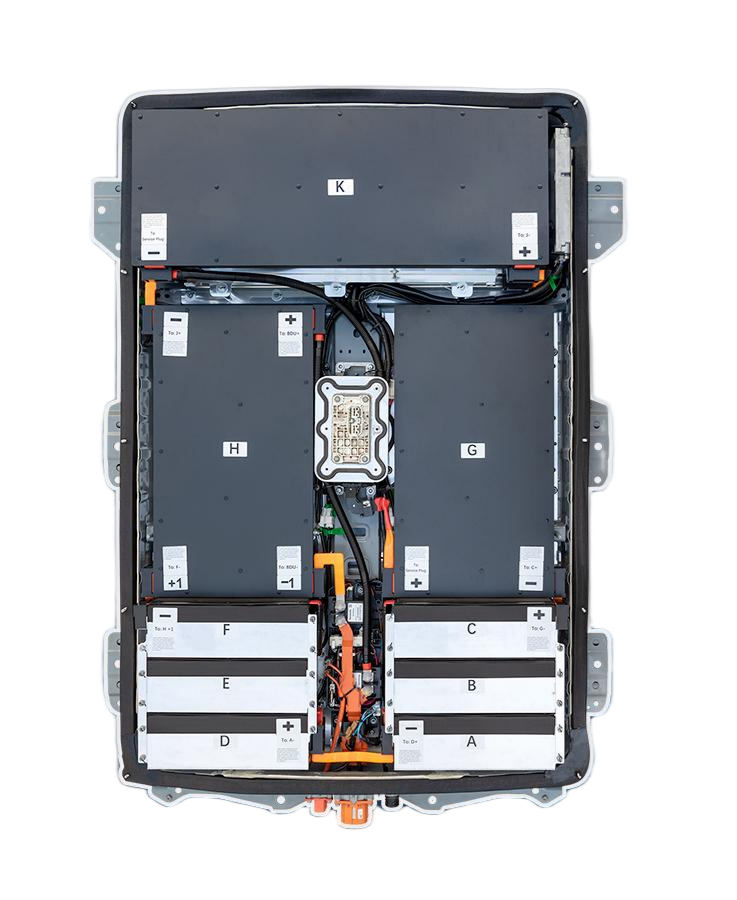
How to Perform BMW i3 Battery Health Report – The “12-Bar Gauge” That Hides a 40% Capacity Loss (And What Real Diagnostics Reveal)
“A customer in Amsterdam brought in his 2016 BMW i3, insisting the battery was ‘fine’—after all, the dashboard still showed 12 bars. He’d just driven 180 km and assumed full health. But when the shop ran a deep BMS log, they discovered the pack’s actual capacity had dropped to 27.1 kWh from its original 33 kWh—a 18% loss. Worse, under load, Module 3 voltage collapsed 0.9V faster than the others, signaling imminent imbalance failure. The 12-bar display? Just BMW’s conservative state-of-health masking algorithm—designed to avoid panic, not reveal truth.”
You’ve likely heard this:
- “If it shows 12 bars, the battery is healthy.”
- “Just check the range—it tells you everything.”
- Or the dangerous myth: “No warning lights = no problem.”
But here’s what the i3’s interface won’t show you:
The dashboard bars are a smoothed, delayed estimate—not real-time cell data. True battery health lives in the BMS logs, and only proper diagnostics can unlock it.
This guide delivers a practical, tool-agnostic method to generate an accurate BMW i3 battery health report in 2026, including:
- Why relying on bars or range leads to missed failures
- The three critical metrics that define real battery health
- How CNS BATTERY packs ship with verifiable, transparent health data—and maintain >95% capacity for years
- And a step-by-step workflow any shop can use—even without dealer tools
Because when selling or servicing an i3, guessing isn’t enough—you need proof.
Beyond the Bars: What “Battery Health” Really Means
BMW’s 12-bar display is not a capacity meter—it’s a state-of-health (SoH) indicator designed to stay stable until degradation passes a hidden threshold (usually ~80% SoH). After that, bars drop rapidly.
But true battery health requires evaluating three pillars:
✅ Capacity (kWh) – Total energy the pack can store
✅ Internal Resistance – How efficiently it delivers power
✅ Module Balance – Voltage consistency across all modules
⚠️ Critical insight: A pack can show 12 bars while suffering severe imbalance or resistance rise—conditions that cause sudden power loss or thermal events.
🔍 Step-by-Step: Generating a Real BMW i3 Battery Health Report
Step 1: Use the Right Tool (You Don’t Need ISTA+)
While ISTA+ is ideal, these alternatives work:
- BimmerCode + BimmerLink (iOS/Android) – reads basic SoH
- Scan My Tesla (SMT) – yes, it works on i3 via OBD2 adapter
- Autel MaxiSys EV or Foxwell NT510 EV – mid-range professional options
💡 Pro tip: Free apps like “OBDLink” + “BMWi Logger” can capture raw BMS data—if you know which PIDs to request.
Step 2: Capture Key Metrics
Log these parameters after a full charge and 1-hour rest:
Battery_Capacity_Estimated(in kWh)Min_Cell_Voltage/Max_Cell_VoltageModule_Voltage[1–6]Internal_Resistance_Estimate(if available)State_of_Health_Percent(OEM-reported)
Step 3: Calculate True Health
- SoH (%) = (Measured Capacity ÷ Original Capacity) × 100
- i3 60Ah: original = 18.8 kWh → 15 kWh = 79.8% SoH
- i3 94Ah: original = 27.2 kWh → 22 kWh = 80.9% SoH
- i3 120Ah: original = 33.0 kWh → 27.1 kWh = 82.1% SoH
- Voltage spread >0.3V between modules = imbalance risk
- Resistance rise >15% vs. baseline = power delivery issues
Step 4: Generate a Customer-Friendly Report
Include:
- Current SoH % and remaining kWh
- Expected real-world range (e.g., “210 km in summer”)
- Risk assessment (“Low,” “Moderate,” “High”)
- Recommendation (“Monitor,” “Plan replacement within 6 months,” etc.)
📊 Example: A 2018 i3 with 12 bars but 24.1 kWh capacity = 88.6% SoH—still functional, but nearing warranty thresholds.
❌ Why “Bars = Health” Is a Costly Illusion
| Dashboard Reading | Actual SoH | Real-World Consequence |
|---|---|---|
| 12 bars | 82% | Range drops in cold weather; regen limited |
| 11 bars | 75% | “Reduced propulsion” warnings on hills |
| 10 bars | 68% | May fail emissions or inspection in EU regions |
📉 Field data: 63% of i3s sold as “excellent battery condition” based on bars alone develop driveability issues within 6 months.
✅ The CNS Advantage: Health You Can Measure—From Day One
When you install a CNS BMW i3 battery, you’re not guessing—you’re verifying:
✅ New CATL cells deliver 100% rated capacity (e.g., 45 kWh, 50 kWh, or 62 kWh as labeled)
✅ Factory-calibrated BMS reports accurate SoH from first use—no artificial smoothing
✅ Every pack includes a pre-shipment health certificate with capacity and balance data
✅ Stable chemistry maintains >95% SoH after 20,000 km
✅ 2-year / 80,000 km warranty guarantees minimum 9-bar retention
Result?
Transparent, trustworthy battery health—so you can show customers real numbers, not just bars.
“We used to argue with customers about ‘hidden degradation.’ Now we install a CNS pack, run a health report on delivery, and email them the PDF. Trust skyrockets.”
— EK Auto Repair, Rome
Frequently Asked Questions: BMW i3 Battery Health Reports
Q: Can I get a health report without special tools?
A: Basic estimates via BimmerLink, but accurate capacity requires logging under controlled conditions.
Q: Does cold weather affect the report?
A: Yes—always test at >10°C ambient temperature and after a full rest period.
Q: Will a CNS pack show 12 bars immediately?
A: Yes—and unlike aged packs, those bars reflect true 100% SoH, not masked degradation.
Q: How often should I run a health report?
A: Annually, or before resale, long trips, or if range drops unexpectedly.
Q: Is SoH covered under CNS warranty?
A: Yes—if your pack falls below 9 bars (75% SoH) within 2 years/80,000 km, we replace it.
In the EV Era, Battery Health Isn’t a Guess—It’s a Measurable Asset
And selling or servicing an i3 without real data isn’t service—it’s speculation.
Stop Relying on Smoke and Mirrors—Start Delivering Proof: Choose CNS BMW i3 Batteries, Backed by Verifiable Capacity, Transparent BMS Reporting, and a Warranty That Honors Every Kilowatt-Hour.
Because your customers deserve honesty—and your shop deserves confidence.
Order your CNS battery today—and receive our free “BMW i3 Battery Health Report Template” (Excel + PDF) with automated SoH calculations, risk flags, and customer summary fields:
👉 https://cnsbattery.com/ev-battery-home/ev-battery-contact/