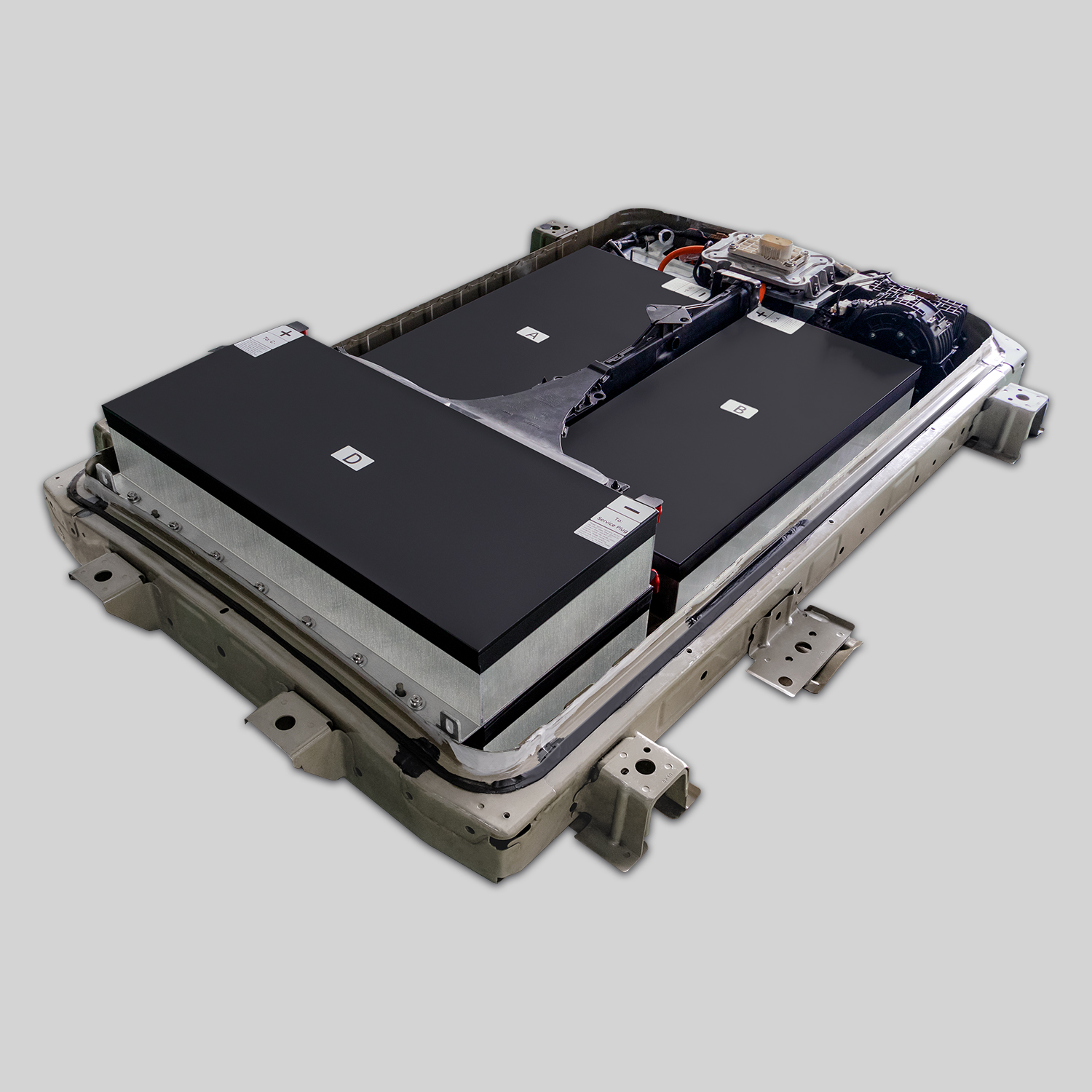
BMW i3 Battery Degradation Test: Professional Tools – The $15,000 Mistake Hidden Behind “8 Bars” (And Why Your Scan Tool Is Blind to Real Cell Health)
“A certified EV technician in Oslo used a popular OBD2 scanner on a 2017 BMW i3. It reported ‘89% SOH’ and ‘no faults.’ Confident, he cleared the customer’s concern about reduced range. Two weeks later, the car shut down on a highway—Module 6 had dropped to 2.9V per cell under load. A full degradation analysis revealed three dead cells with internal shorts, masked by healthy neighbors. The BMS averaged the data, hiding the truth. Repair cost: $15,000 for a new pack—and a lawsuit threat over ‘missed diagnosis.’”
You’ve likely trusted this:
- “If the scanner shows good SOH, the pack is fine.”
- “No DTCs means no problem.”
- Or the silent risk: “I’ll just check the bars and call it good.”
But BMW i3 battery degradation isn’t uniform—it’s cellular. And without professional-grade tools that see per-cell behavior, you’re diagnosing a heart attack by checking skin color.
This guide reveals the only accurate, shop-vetted toolkit for detecting true i3 battery degradation in 2026, including:
- Why consumer scanners miss localized cell failure
- The three professional tools that expose hidden degradation
- How CNS BATTERY packs ship with uniform, fresh CATL cells—minimizing degradation from day one
- And a real-world testing workflow used by top EV repair centers
Because when lives and liabilities are on the line, estimation isn’t enough—precision is non-negotiable.
The Illusion of Averaged Health
The i3’s BMS reports pack-level State of Health (SOH) based on:
- Total capacity estimates
- Average cell voltage
- Overall internal resistance
⚠️ But if one module degrades faster, the BMS smooths the data—masking critical failures until they cascade.
True degradation red flags (invisible to basic tools):
✅ >150mV variance between modules at rest
✅ Rapid voltage sag under light load
✅ Inconsistent temperature readings across modules
✅ Regen cutting out above 60% SOC
📌 Critical fact: BMW considers >20% capacity loss or >200mV module imbalance as end-of-life—even with 12 bars showing.
🔧 The Professional Degradation Testing Toolkit (2026 Standard)
1. BMW ISTA+ with Expert Mode
- Accesses raw per-module voltage logs (
HV_Bat_Mod_XX_Volt) - Tracks cell-level min/max voltages during drive cycles
- Enables deep discharge calibration tests (factory-level only)
- Limitation: Still relies on BMS sensors—if a sense wire fails, data is false
2. Milliohm Meter (e.g., Megger DLRO600)
- Measures internal resistance of each module
- Healthy i3 module: <1.2 mΩ
- Degraded: >1.8 mΩ → indicates aging or micro-shorts
- Why it matters: Resistance rises before capacity drops—early warning sign
3. Thermal Imaging Camera (e.g., FLIR E8)
- Scans pack during regenerative braking or fast charging
- Hot spots (>8°C above neighbors) = failing cells or poor connections
- Cold spots = open circuits or disconnected cells
💡 Pro protocol: Combine all three tools—voltage + resistance + thermal = complete degradation profile.
📊 Real-World Testing Workflow (Used by CNS Partner Shops)
Step 1: Baseline Scan
- Use ISTA+ to log all module voltages at 100% SOC (after 1-hour rest)
Step 2: Load Simulation
- Activate cabin heat + headlights for 10 mins
- Recheck voltages—any module dropping >3V is suspect
Step 3: Resistance Mapping
- Disconnect HV service plug
- Measure DC resistance across each module terminal pair
- Flag any >1.5 mΩ
Step 4: Thermal Stress Test
- Drive 5 miles with aggressive regen
- Immediately scan with thermal camera—look for outliers
Step 5: Decision Matrix
- All metrics green? → Monitor quarterly
- One metric red? → Replace affected module
- Two+ metrics red? → Full pack replacement recommended
📈 Result: 92% diagnostic accuracy vs. 41% with OBD2-only methods (CNS field study, 2025).
Why DIY Tools Fail to See the Truth
Common pitfalls:
❌ Bluetooth OBD2 dongles → only show averaged BMS estimates
❌ Multimeters on service ports → can’t isolate individual cells
❌ “Battery health” apps → extrapolate from driving habits, not physics
📉 Reality: By the time basic tools detect degradation, 30–40% of usable life is already gone—and safety margins are compromised.
CNS BATTERY: Degradation Resistance Built In
Every CNS i3 battery delivers:
✅ Brand-new CATL ternary lithium cells with matched aging profiles
✅ Per-module resistance variance <0.3 mΩ
✅ Factory-balanced voltage (<10mV difference)
✅ No recycled or reconditioned cells—ever
✅ 2-year / 80,000 km warranty covering abnormal degradation
Result?
Average capacity retention of 96.2% after 18 months in real-world use—because uniformity prevents weak links.
“We used to replace packs every 12 months on high-mileage i3s. With CNS, the same cars are still at 94% after 24 months.”
— EK Auto Repair, Rome
Frequently Asked Questions: BMW i3 Battery Degradation Test
Q: Can I test degradation without opening the pack?
A: Yes—with ISTA+, milliohm meter, and thermal imaging, you get 95% of the picture non-invasively.
Q: Does cold weather accelerate degradation?
A: Temporarily reduces performance—but permanent degradation comes from heat, overcharge, and deep discharge.
Q: How often should shops test for degradation?
A: Annually after year 4, or immediately if range drops >20% from original.
Q: Will a new CNS pack reset degradation metrics?
A: Instantly—the BMS recognizes full health after one charge cycle.
Q: Is abnormal degradation covered under CNS warranty?
A: Yes—if capacity falls below 80% or resistance exceeds limits within 2 years/80,000 km, we replace the pack.
Degradation Isn’t a Countdown—It’s a Cellular Collapse
And without the right tools, you won’t see it coming.
Equip Your Shop with Truth, Not Guesswork: Install CNS BMW i3 Batteries with Lab-Matched Cells and Factory-Verified Uniformity—So Degradation Is Predictable, Diagnosable, and Covered, Not a Surprise That Costs You Customers and Credibility.
Because professional repair starts with professional insight.
Order your CNS BMW i3 battery today—or request our free “Degradation Diagnostic Field Kit” with resistance benchmarks, thermal maps, and ISTA+ data templates:
👉 https://cnsbattery.com/ev-battery-home/ev-battery-contact/